Chinese housewife undermined Wikipedia with web of false facts over a decade
Since at least January 17, 2010, Zhemao authored several million words on fake Russian history on Wikipedia, creating 206 articles and contributing to hundreds more.
Since at least January 17, 2010, Zhemao authored several million words on fake Russian history on Wikipedia, creating 206 articles and contributing to hundreds more.

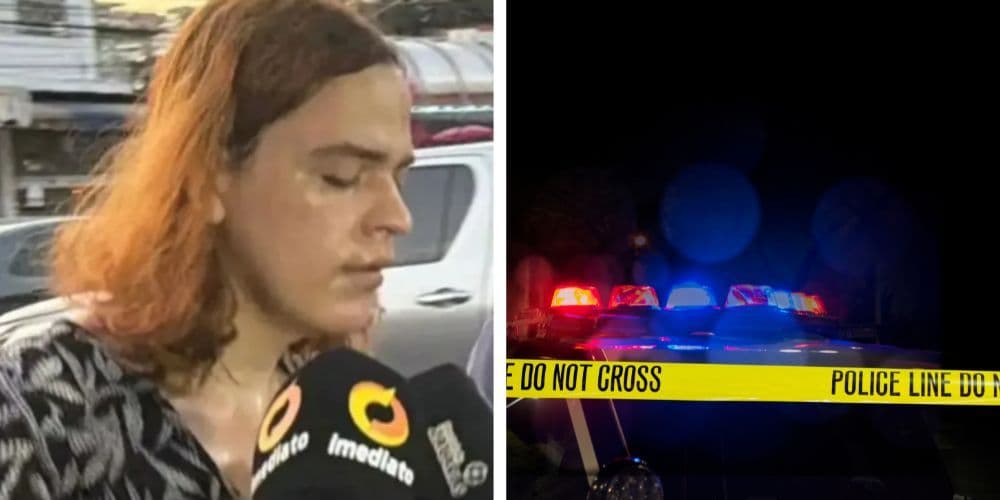
It was recently uncovered that a Chinese woman spent over a decade falsifying over 200 Chinese Wikipedia articles on Russian history in an elaborate hoax. The user, known as Zhemao, began translating work from Russian to Chinese, but then began "blindly" making up information that she couldn’t translate, citing non-existent books and non-existent page numbers from real books.
Since at least January 17, 2010, Zhemao authored several million words on fake Russian history on Wikipedia, creating 206 articles and contributing to hundreds more.
Loading this lets Rumble set cookies and collect data.
View on RumbleA Chinese fantasy novelist known as Yifan made the discovery while he was browsing Wikipedia looking for inspiration for his next book. Yifan came across an entry of Zhemao’s called the "Kashen Silver Mine'' and could not verify its validity. The rest unraveled from there when a team of Chinese Wikipedia users combed through her elaborate, lengthy contributions, where she had interwoven facts with invented details. One of her longest articles was the length of a short novel.
Chinese Wikipedian author John Yip was contacted by VICE World News for comment, saying "The content she wrote is of high quality and the entries were interconnected, creating a system that can exist on its own. Zhemao single-handedly invented a new way to undermine Wikipedia."
To appear more credible, Zhemao invented a persona whose online profile said that she was the daughter of a Chinese diplomat stationed in Russia who was married to a Russian man. She also listed fake academic credentials, including a doctoral degree in world history from Moscow State University.
The reality, she stated in an apology letter after being caught, is that she is a housewife with a high school diploma who speaks neither English nor Russian. The additional accounts she created to interact with her fake online persona she said were "cosplay." She explained in her confession that while her husband was away for work and she was without friends and had become lonely and bored. She also apologized to actual experts on Russia for impersonating them.
"As the saying goes, in order to tell a lie, you must tell more lies. I was reluctant to delete the hundreds of thousands of words I wrote, but as a result, I wound up losing millions of words, and a circle of academic friends collapsed," she wrote in her apology. "The trouble I’ve caused is hard to make up for, so maybe a permanent ban is the only option. My current knowledge is not enough to make a living, so in the future I will learn a craft, work honestly, and not do nebulous things like this any more."
Wikipedia describes itself as "an encyclopedia that anyone can edit" that is "written collaboratively by largely anonymous volunteers." This means that anyone, like Zhemao, can falsify information too. Wikipedia has its own page called Wikipedia is not a reliable source that directs to another page that lists hundreds of entries of other hoaxes, many that went undiscovered for more than a decade.
"As a user-generated source, it can be edited by anyone at any time, and any information it contains at a particular time could be vandalism, a work in progress, or simply incorrect," warns the Wikipedia disclaimer.
Wikipedia has also been investigated for their left-wing bias. Larry Sanger, the co-founder of Wikipedia has conducted his own bias analysis of the online encyclopedia and has said it is "badly biased" towards the left. AllSides media has identified 5 studies, including 2 from Harvard, that confirm a left-wing bias at Wikipedia.
Libby’s Desk
Commentary and must-reads from Libby’s desk, straight to your inbox.
TPM Newsletter
The Post Millennial’s top stories, delivered to your inbox.