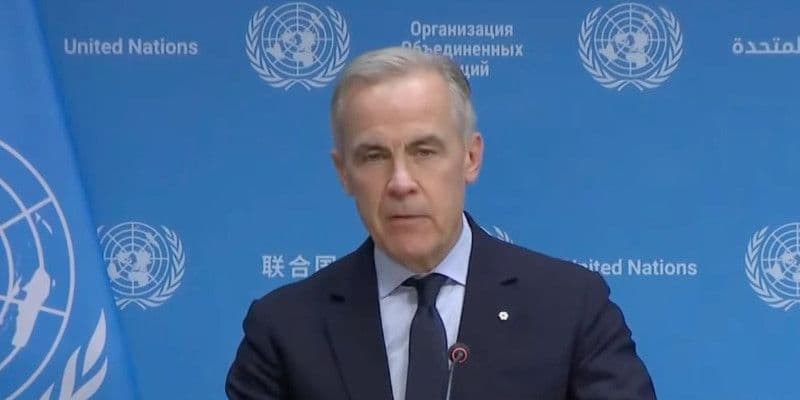
Documents show how slow Trudeau government’s coronavirus response was
Federal minister briefing notes prepared by bureaucrats show that Canada was slow to respond to the coronavirus pandemic.
Federal minister briefing notes prepared by bureaucrats show that Canada was slow to respond to the coronavirus pandemic.

Federal minister briefing notes prepared by bureaucrats show that Canada was slow to respond to the coronavirus pandemic, according to CBC News. Up until early March, public health officials were telling Canadians that the country's risk of transmission was low—recommending the economy be shut down just two weeks later.
On Thursday, Prime Minister Trudeau warned that life could take up to a year to return to normal in Canada. This follows Public Health Agency of Canada officials suggesting to policy makers that coronavirus was of low risk in the country—also that quarantines would be too hard to enforce upon returning travellers.
A department-drafted briefing note for Canadian Health Minister Patty Hajdu for March 10, noted that “the risk of the spread of the virus within Canada remains low at this time” and added that the country’s public health system is “well-equipped to contain cases coming from abroad, limiting the spread in Canada.”
Loading this lets YouTube set cookies and collect data.
View on YouTubeThere are more than 21,000 cases in Canada just a month later.
Documents show that the World Health Organization (WHO) was labelling the coronavirus risk “high at the global level” even by Jan. 28.
A large number of the January/February planning memos for the federal government show very little information of there being a possible pandemic.
Hajdu’s Jan. 19 briefing note says, “Based on the latest information that we have, there is no clear evidence that the virus is easily transmitted between people.”
The collection of contact information from travellers arriving from Hubei, China was not put into effect until Feb. 19. The information would have allowed for follow ups by public health officials in earlier stages of the outbreak.
From Jan. 22 to Feb. 18, about 58,000 people touched down in Canada—all travelling from China. Of these travellers, 2,030 were arriving from Hubei.
There were just 68 people given further assessment as only three of them were medically examined. The others received a pamphlet.
Travellers from Hubei were asked to voluntarily begin self-isolating for 14 days on Feb. 7.
Hajdu was still being told by public health officials that “the public health risk within Canada remains low” by Feb. 26 when mainland China had confirmed 78,000 cases of coronavirus. There were 1,000 cases in Ontario just a month later.
On Thursday, Trudeau was asked what went wrong with the Canadian government’s coronavirus planning. He said that reflecting can be done at a later time and he added that the “best decisions” were made by the government with “the information we have.”
“I think we've seen countries around the world caught off guard by the nature of this epidemic,” he said. “The challenges we faced in terms of getting Canadians protected are echoed in challenges faced around the world.”
“I think Canada has done a good job of keeping on a path that is going to minimize as much as possible the reality we're in right now. As we look back at the end of this, I'm sure people will say, 'You could have done this a few days before.'”
Libby’s Desk
Commentary and must-reads from Libby’s desk, straight to your inbox.
TPM Newsletter
The Post Millennial’s top stories, delivered to your inbox.