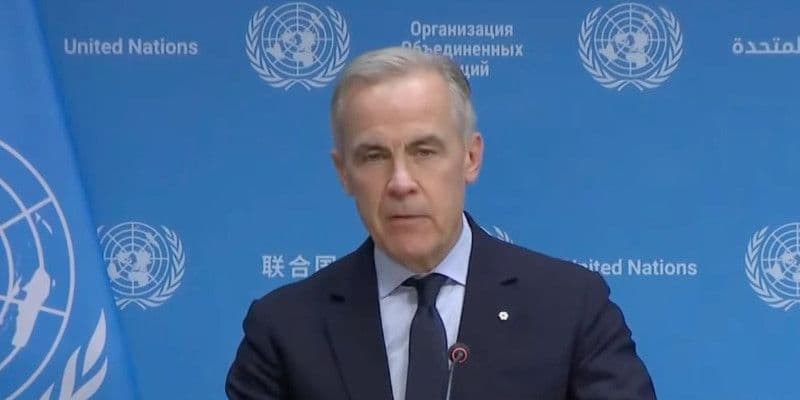
WATCH: Pakistan’s prime minister vouches for coordinated online censorship, faces no pushback from CBC
CBC interviewed the Prime Minister of Pakistan and asked him what he would do to combat “online hate.”
CBC interviewed the Prime Minister of Pakistan and asked him what he would do to combat “online hate.”

CBC's Rosemary Barton interviewed Pakistan's Prime Minister Imran Khan and asked how governments should "shut down online hate" in wake of those who become "self radicalized." Prime Minister Khan said governments should start censoring the internet "especially social media" and "online hate websites." Instead of pushing back and advocating for freedom, Barton nodded along and tacitly agreed with the strict internet censorship proposed by Khan.
Loading this lets X set cookies and collect data.
View on XKhan said that to censor "online hate" the world needs coordinated action by the "global community." "Whenever [world leaders] decide upon taking action, this will be dealt with." Khan bashed "leaders in the western countries" for not promoting more internet censorship.
The exception to this rule, according to Khan, is Justin Trudeau. Saying "we mostly agree on most things" when it comes to internet censorship. Many on Twitter pointed out the bias of the state-run media network CBC saying, "The CBC desperately wants this legislation. Almost as much as the government," referring to internet censorship bill C-10.
Bill C-10 is a Liberal bill supported by the NDP, the Bloc and the Green Party which according to a former vice-chair of the CRTC Peter Menzies, "violate[s] the rights of ordinary citizens." The bill would censor internet forums like private social media accounts and YouTube channels. Menzies says the bill would "impose itself on the free expression rights of Canadians by making their posts subject to government oversight."
B-10 is currently being hustled through the Heritage Committee which is using Parliamentary rules and privileges to keep many parts of the bill away from public eyes. "Canadians watching committee work are being kept [in] the dark and approximately 35 such amendments that were voted on were never revealed to the public," says Michael Geist, a law professor at the University of Ottawa.
Loading this lets YouTube set cookies and collect data.
View on YouTubeLibby’s Desk
Commentary and must-reads from Libby’s desk, straight to your inbox.
TPM Newsletter
The Post Millennial’s top stories, delivered to your inbox.