
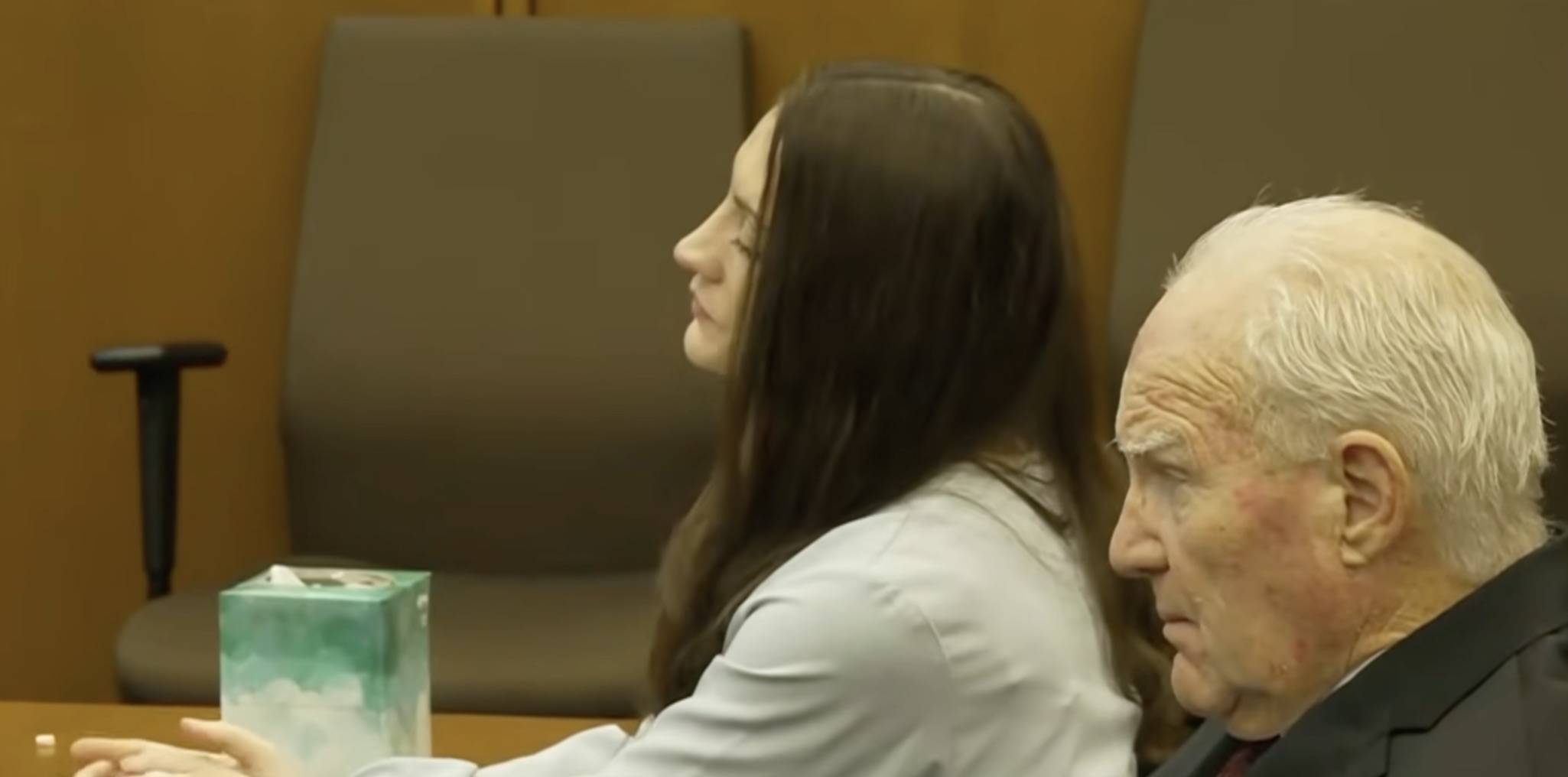
Judge William Sullivan said that in light of the jury’s note, he was going to give them "another instruction."

The jury weighing the case of Lindsay Clancy, the Massachusetts mother charged with killing her three children, has once again come back saying they are deadlocked in deliberations. The judge ordered them to go back into deliberations one more time.
Judge William Sullivan said that in light of the jury’s note, he was going to give them “another instruction.” He said, “our constitution and laws provide that in a criminal case, the principal way for deciding questions of fact is by the verdict of a jury. In most cases, perhaps strictly speaking, in all cases, absolute certainty cannot be attained, nor is it expected. The verdict to which a juror agrees must be their own, the result of their own convictions, and not a mere acquiescence in the conclusions of their fellow jurors."
“Yet, in order to bring 12 minds to a unanimous result, you must examine the questions submitted to you with candor and with proper regard and deference and respect to the opinions of each other, you should consider that it is desirable that the case be decided, and that you have been selected in the same manner and from the same source from which any future jury would be,” he added.
“There is no reason to suppose that the case will ever be submitted to 12 persons more intelligent, more impartial, or more competent to decide it, that more or clear evidence will be produced. And with this in mind, it's your duty to decide the case if you can do it conscientiously, in order to make a decision more attainable, the law imposes the burden of proof on one party or the other in all cases. In the present case, a criminal case, the burden of proof is on the Commonwealth to establish every element of the crime charge beyond reasonable doubt, if you are left in doubt of any element of the crime, the defendant is entitled to the benefit of the doubt and must be acquitted.”
He later added, "jurors for acquittal should consider whether a doubt in their own minds is a reasonable one if it makes no impression on the minds of others who are equally honest, equally intelligent, and who have heard the same evidence with the same attention, with an equal desire to arrive at the truth, and who have taken the same oath as jurors. On the other hand, jurors for conviction ought seriously to ask themselves whether they may not reasonably doubt the correctness of a judgment that is not concurred in by other members of the jury, and whether they should distrust the weight or adequacy of the evidence that fails to convince the minds of fellow jurors. With that, I now ask you to return to your deliberations with these thoughts in mind."
This is the second time the judge has ordered the jury to go back into deliberations after they said they were deadlocked. The Tuey-Rodriguez charge in the state of Massachusetts, which was what Judge Sullivan issued, can only be issued to a jury once unless the jury consents to it.
Powered by The Post Millennial CMS™ Comments
Join and support independent free thinkers!
We’re independent and can’t be cancelled. The establishment media is increasingly dedicated to divisive cancel culture, corporate wokeism, and political correctness, all while covering up corruption from the corridors of power. The need for fact-based journalism and thoughtful analysis has never been greater. When you support The Post Millennial, you support freedom of the press at a time when it's under direct attack. Join the ranks of independent, free thinkers by supporting us today for as little as $1.
Remind me next month
To find out what personal data we collect and how we use it, please visit our Privacy Policy







Comments