California activists push to bring ‘black English’ into preschool classrooms for ‘language justice’
The effort is being led by Black Californians United for Early Care & Education.
The effort is being led by Black Californians United for Early Care & Education.
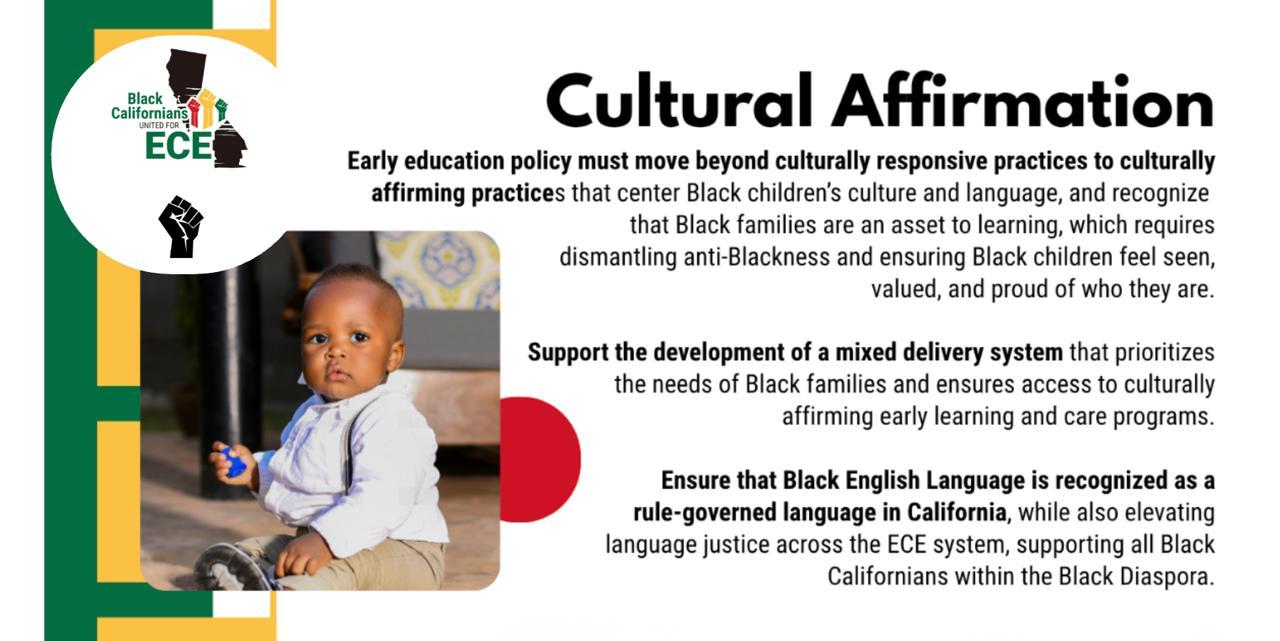
Activists in California are pushing for "black English," also known as African American Vernacular English (AAVE), to be recognized in preschool classrooms as a legitimate language variety rather than being treated as incorrect English.
The effort is being led by Black Californians United for Early Care Education (BlackECE), which argues that affirming children's home language can strengthen literacy, improve self-confidence, and reduce bias in early education. This is called "language justice."
Over the past year and a half, the organization has provided training for preschool educators, encouraging them to support children who speak black English in a similar way that schools support bilingual students. Advocates of this method insist the approach would not replace standard English instruction but instead help children transition to it while recognizing the language they use at home.
Ashley Williams, co-founder of BlackECE, said the initiative is rooted in her own childhood experiences of being corrected and embarrassed for the way she spoke. She said she wants future generations to feel that their voices are valued rather than dismissed because of their speech patterns.
"I don’t want my son to walk into any room and feel like his voice is not valued or his perspective can’t be heard because he’s not saying it in one way or the other," she told PBS. "But with that comes a lot of shame and embarrassment because you’re being constantly corrected when you’re still in a moment when you’re just learning language."
The website features some examples of black English inlcuding "She be working," "They happy" and "bes' friend."
The proposal builds on California's 2020 early learning plan, which encourages educators to affirm children's home languages while teaching standard English. BlackECE contends that children who speak black English should also be included in those policies and receive the same educational support as dual-language learners.
Libby’s Desk
Commentary and must-reads from Libby’s desk, straight to your inbox.
TPM Newsletter
The Post Millennial’s top stories, delivered to your inbox.