Heritage groups push to restore statues torn down amid George Floyd riots
Lawsuits, heritage groups, and political leaders are pushing to return statues removed during the 2020 protests as the nation approaches its 250th anniversary.
Lawsuits, heritage groups, and political leaders are pushing to return statues removed during the 2020 protests as the nation approaches its 250th anniversary.
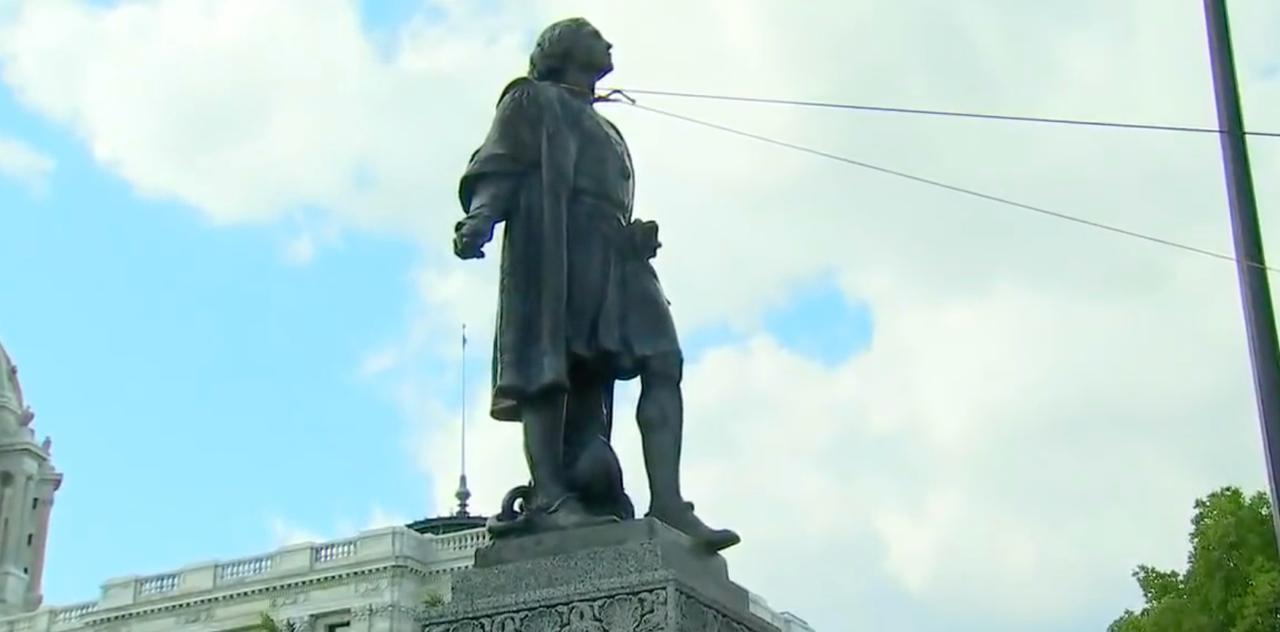
Monuments taken down during the 2020 protests over alleged racism and police violence are the subject of efforts to restore them as lawsuits and political organizations seek to return them to public spaces. Heritage groups are pressing local governments and filing court challenges to reinstall Confederate statues that were removed following the civil unrest after George Floyd's death.
In Columbus, Ohio, a 22-foot-tall statue of Christopher Columbus was removed from in front of City Hall in 2020. City officials at the time described the gift from Italy as representing what they called "patriarchy, oppression and divisiveness." The statue currently lies in a storage facility. But it was a group of Italian Americans that filed a federal lawsuit in April seeking the statue's return, arguing that its removal was not appreciated, according to NBC 4 Sixty-seven-year-old Jack Conte is the organizer of the Friends of Christopher Columbus Foundation.
https://twitter.com/nbc4i/status/2041689986744139967
He said these actions reflect a growing distaste for woke policies. “The silent majority is becoming vocal,” Conte said to the Wall Street Journal. “You reach a point where this stuff is shoved down your throat, and you can only take so much of it.”
While the push for restorations has local support, it has also started growing wings federally as well. In March, President Trump placed a replica of the now-stored Columbus statue near the White House, replacing the one that had been thrown into Baltimore's harbor in 2020. Trump called Columbus “the original American hero,” according to the Wall Street Journal
South Carolina lawmakers also pushed back on the 2020-era policies that allowed a Robert E. Lee monument to be placed in Marion Square on private property following a legal agreement according to WCDB News 2.
With legal battles continuing and public opinion still divided, the future of many removed monuments remains uncertain. As the nation prepares to celebrate its 250th anniversary next year, debates over history, heritage, and public memory are likely to remain at the center of local and national political discussions.
Libby’s Desk
Commentary and must-reads from Libby’s desk, straight to your inbox.
TPM Newsletter
The Post Millennial’s top stories, delivered to your inbox.