
“Any election officer, including the chief election officer of the state, who knowingly retains noncitizens on the state’s SVRL or facilitates noncitizens in receiving and casting ballots could be subject to criminal liability.”

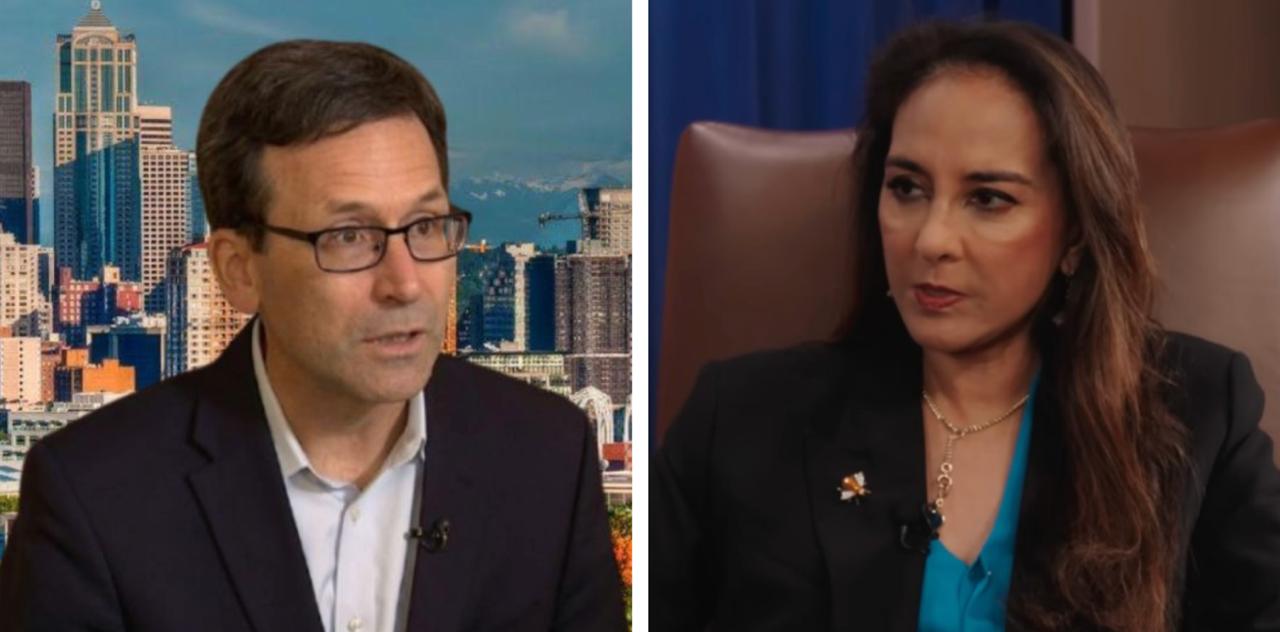
The July 7 letter from Assistant Attorney General Harmeet K. Dhillon, who leads the DOJ’s Civil Rights Division, was addressed to Hobbs as Washington’s chief election officer and titled, “The State of Washington’s Compliance with Federal Law Governing Voter Eligibility.”
https://www.scribd.com/document/1059920442/7-7-2026-Washington-Letter-and-Memo
The DOJ told Hobbs that federal law requires election officials to maintain election records and take action “to ensure that only eligible US citizens cast votes in elections for federal office.” The department cited the Civil Rights Act of 1960, the Voting Rights Act of 1965, the National Voter Registration Act, and the Help America Vote Act as the basis for its warning.
The letter specifically warned that “knowingly retaining noncitizens” on Washington’s statewide voter registration list, sending them ballots, and counting those ballots could constitute the “procurement, casting, or tabulation” of fraudulent ballots under federal law.
The DOJ also warned that state election officers, including the chief election officer of a state, could face criminal prosecution for aiding and abetting violations of federal law if they knowingly facilitate noncitizens receiving and casting ballots. The letter cited federal statutes making it a felony for an alien to claim US citizenship in order to register or vote, falsely represent himself as a citizen, or unlawfully vote in a federal election.
“In conclusion, any election officer, including the chief election officer of the state, who knowingly retains noncitizens on the state’s SVRL or facilitates noncitizens in receiving and casting ballots could be subject to criminal liability,” Dhillon wrote.
The DOJ gave Washington five days to respond with how the state intends to comply with federal voter eligibility laws at both the state and local level. The letter was also copied to Washington Attorney General Nick Brown.
Hobbs’ office fired back in a statement, accusing the DOJ of sending “another needless letter.”
“Our office received another needless letter from the Department of Justice on July 7,” the Secretary of State’s Office said. “We once again find ourselves reviewing a letter from the DOJ to determine whether their request is legal and will share more information when we have it.”
“The DOJ is accelerating down a slippery slope of threatening personal legal action against election administrators,” the statement continued. “Attempts to revive disproven claims of rigged elections will not deter election professionals from doing their job of overseeing accessible, accurate, auditable elections.”
Oregon also received a similar DOJ letter, expanding the pressure campaign across the Pacific Northwest as the department warns state election officials that federal law requires accurate voter-roll maintenance and cooperation with federal oversight.
The new warning comes as Washington is already caught up in the DOJ’s nationwide legal campaign to force states to provide full voter registration lists. The Justice Department has said it has sued 23 states and the District of Columbia for failing to produce voter roll data, arguing that accurate voter lists are essential to election integrity.
Washington was previously sued after Hobbs refused to provide the state’s voter data without what he described as an explanation of the DOJ’s intended use. In an interview on The Ari Hoffman Show on Talk Radio 570 KVI, Dhillon rejected that argument, saying, “The secretary of state is mistaken. He does not get to second guess the federal government fulfilling federal law.”
Dhillon said the DOJ’s goal is to review voter rolls to identify ineligible registrations, including noncitizens, deceased voters, and people no longer eligible to vote in a given jurisdiction. “The attorney general has the absolute right to this data,” Dhillon said in the KVI interview. She added that states cooperating with the DOJ “want to show their homework that they are doing their jobs,” while warning, “I am gonna sue everybody else who doesn’t give me their data.”
The DOJ’s memo attached to the July 7 letter argues that the Civil Rights Act requires election officers to preserve election records for 22 months after a federal election and make those records available for “inspection, reproduction, and copying” upon demand by the Attorney General. The memo says failure to retain and preserve records can be punishable by fine or imprisonment.
The memo also cites the NVRA’s requirement that states conduct a general program to make a reasonable effort to remove ineligible voters because of death or change in residence, while also maintaining public inspection records regarding list-maintenance programs.
Under HAVA, the DOJ memo says states must maintain a single, official, centralized, computerized statewide voter registration list containing every legally registered voter in the state, assign a unique identifier to each voter, and conduct regular voter list maintenance, including removing ineligible registrants.
The memo further states that voter-registration applications for federal elections must include a valid driver’s license number, the last four digits of a Social Security number, or a state-assigned identifying number, and that mail-in registration forms must ask whether the applicant is a US citizen and warn those who answer no not to complete the form.
The DOJ also warned that violations involving noncitizen voting, false citizenship claims, or election officials knowingly assisting such conduct can carry criminal penalties, including fines and imprisonment. The memo says violations may carry penalties of up to a $10,000 fine or up to five years in prison.
The clash comes as Washington Democrats continue pushing election-access legislation, including Senate Bill 6035, which would authorize an electronic ballot portal for military, overseas, disabled, and certain tribal voters. Supporters say the measure expands voting access for underserved communities, while critics argue Washington should first address concerns over voter roll integrity and expressed concerns over e-voting being rolled out to a broader swath of the electorate while problems persist with mail-in balloting.
Powered by The Post Millennial CMS™ Comments
Join and support independent free thinkers!
We’re independent and can’t be cancelled. The establishment media is increasingly dedicated to divisive cancel culture, corporate wokeism, and political correctness, all while covering up corruption from the corridors of power. The need for fact-based journalism and thoughtful analysis has never been greater. When you support The Post Millennial, you support freedom of the press at a time when it's under direct attack. Join the ranks of independent, free thinkers by supporting us today for as little as $1.
Remind me next month
To find out what personal data we collect and how we use it, please visit our Privacy Policy



Comments