They claim "Using fake Muslim identities, accents and religious stereotypes as part of a political stunt is not a harmless prank or political stunt" and don't seem to be concerned with 1A protections.

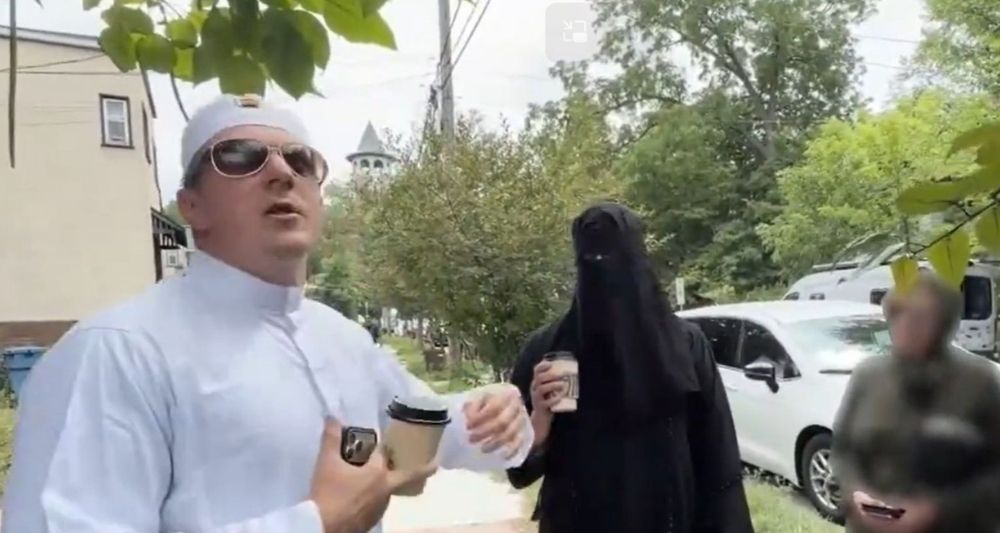
CAIR-Minnesota called on authorities to investigate after O’Keefe and members of his team entered Minneapolis polling locations during the Aug. 11 primary wearing traditional Muslim clothing and using obviously fake accents to test how election workers would handle attempts to register voters through Minnesota’s vouching process. The demand comes after Minnesota Secretary of State Steve Simon similarly said law enforcement was reviewing the conduct and warned that the participants may have placed themselves in “legal jeopardy.” O'Keefe and his team are undercover journlists with a long history of exposing fraud and corruption.
“Using fake Muslim identities, accents and religious stereotypes as part of a political stunt is not a harmless prank or political stunt,” CAIR-Minnesota Executive Director Jaylani Hussein said in a statement, without noting First Amendment press protections. “When individuals allegedly impersonate real voters and potentially violate Minnesota election law while portraying Muslims as deceptive or fraudulent, the public deserves accountability and a serious investigation.”
“If someone believes Minnesota’s voting laws are vulnerable, there are lawful ways to raise those concerns,” Hussein continued. “Falsely impersonating a real voter, and using anti-Muslim stereotypes to do it, is not an acceptable substitute for legitimate civic oversight.”
“We call for a prompt criminal investigation into the conduct depicted in the videos and appropriate prosecution if investigators determine that Minnesota law was violated,” Hussein added.
CAIR bills itself as the nation’s largest Muslim civil-rights and advocacy organization, but was named an unindicted co-conspirator by federal prosecutors in the landmark Holy Land Foundation terrorism-financing case. Evidence presented in the case examined a network known as the Palestine Committee, which prosecutors alleged had been established by the Muslim Brotherhood to advance Hamas’ agenda in the United States and connected individuals involved in CAIR’s founding to that network.
In 2008, a federal jury convicted the Holy Land Foundation and five of its leaders on charges involving material support for Hamas, a US-designated foreign terrorist organization. Federal prosecutors said HLF provided approximately $12.4 million in support to Hamas through ostensibly charitable activities. HLF leaders Shukri Abu Baker and Ghassan Elashi were each sentenced to 65 years in federal prison.
The fallout from the case extended to the federal government’s relationship with CAIR. The FBI curtailed formal outreach with CAIR in 2008 over concerns arising from evidence presented during the HLF case.
National CAIR leadership also came under renewed scrutiny following the Oct. 7, 2023 Hamas terrorist attack on Israel after CAIR co-founder and executive director Nihad Awad said at a November 2023 event that he was “happy to see” the Oct. 7, 2023 massacre. The remarks prompted the Biden White House to distance itself from CAIR, removing the organization from participation in its national strategy to combat antisemitism.
The undercover operation was conducted by O’Keefe, Anthony Rubin of Real Muckraker, Cam Higby and the Citizen Justice League, who visited several Minneapolis polling locations and presented workers with deliberately extreme scenarios involving multiple people who were supposedly unregistered.
At one polling location, an election worker explained that a registered voter could vouch for as many as eight people living in the same precinct. “If you’re all in the same precinct and you are already registered, you can vouch for them as ID. Eight people,” the worker said. When O’Keefe pressed the worker about what identification the other individuals would need, she responded, “You’re the ID.”
Another worker confirmed that the people being vouched for did not need to already be registered. “I can vouch for them. They are not registered,” O’Keefe said.
“That’s okay. That’s fine. Yeah!” the worker responded.
Minnesota law allows a registered voter to sign an oath affirming that another individual resides in the same precinct. A registered voter can vouch for up to eight people on Election Day, while employees of qualifying residential facilities can vouch for residents without being subject to the same eight-person limit.
At White Park Recreation Center, an election worker told the undercover team that a voucher must personally know the people being vouched for and know that they live in the precinct. When O’Keefe asked whether their eligibility would be verified, the worker responded, “After the fact, yeah.”
Simon subsequently blasted the operation, accusing the group of impersonating Minnesota voters while wearing what they called “Muslim” costumes and imitating foreign accents. “During Minnesota’s Primary on August 11, 2026, members of a widely discredited Florida-based political group visited several polling places in Minneapolis impersonating Minnesota voters,” Simon said.
Simon accused the group of releasing a “heavily edited video” intended to undermine election laws that have existed for more than 50 years, adding that the activists instead placed themselves in “legal jeopardy.”
Simon said poll workers immediately reported the visits and that law enforcement was reviewing the situation.
Higby responded by accusing Minnesota’s top election official of targeting the people who exposed vulnerabilities in the system. “Minnesota’s Secretary of State has threatened legal action against me while interviewing with KSTP,” Higby wrote. “He says law enforcement are ‘reviewing Higby’s action’ after I exposed MAJOR vulnerabilities in the state’s election system.”
“I think a ‘Thank you Habibi’ is in order,” he added.
O’Keefe similarly questioned why the state was scrutinizing his team when election workers had told them the voucher could serve as proof of residence for other voters.
The controversy escalated further after it emerged that O’Keefe allegedly identified himself to election officials as William Pomeranz, a real Minnesota voter. Pomeranz told CBS Minnesota that he learned his identity had allegedly been used after a student contacted him about the video. “I actually had a student contact me that had showed me what was online about my identity being misrepresented. So, that was pretty much a shock,” Pomeranz said.
Pomeranz said he was nevertheless able to vote normally that evening and praised poll workers for reporting what happened.
The undercover participants did not cast illegal ballots.
Minnesota officials say impersonating another voter at a polling place is a felony punishable by up to seven years in prison and a $20,000 fine. Separately, falsely signing an election oath can constitute perjury, which carries a potential five-year sentence.
The controversy also comes after the Department of Justice raised concerns about Minnesota’s voter-vouching system months before O’Keefe’s investigation.
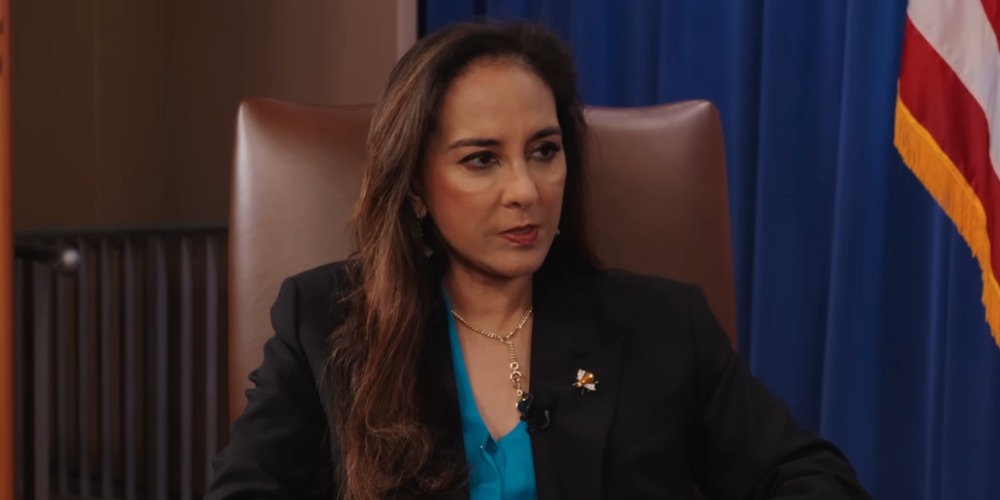
In January, Assistant Attorney General for Civil Rights Harmeet Dhillon demanded voter-registration records from Simon, telling Minnesota officials that the DOJ was “particularly concerned” about registrations and votes accepted through vouching and questioning whether Minnesota’s procedures complied with the federal Help America Vote Act of 2002.
Powered by The Post Millennial CMS™ Comments
Join and support independent free thinkers!
We’re independent and can’t be cancelled. The establishment media is increasingly dedicated to divisive cancel culture, corporate wokeism, and political correctness, all while covering up corruption from the corridors of power. The need for fact-based journalism and thoughtful analysis has never been greater. When you support The Post Millennial, you support freedom of the press at a time when it's under direct attack. Join the ranks of independent, free thinkers by supporting us today for as little as $1.
Remind me next month
To find out what personal data we collect and how we use it, please visit our Privacy Policy

Comments