
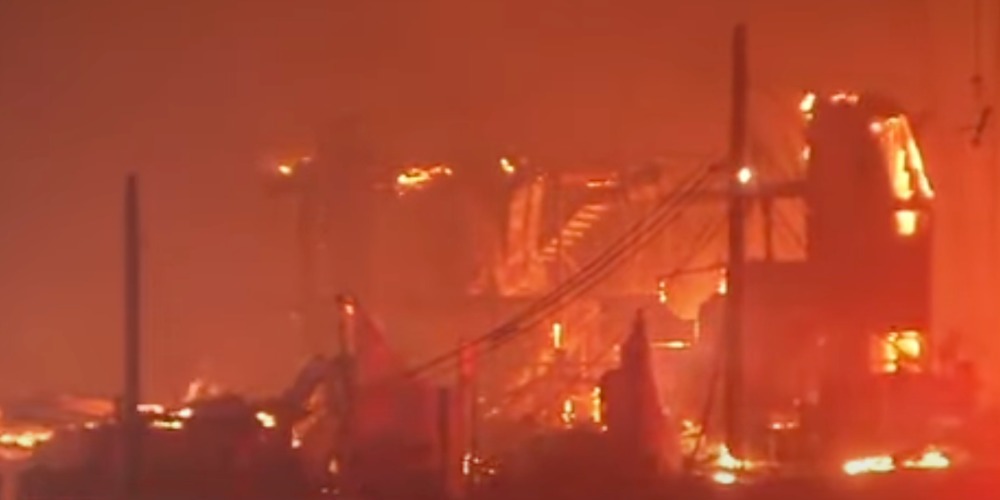
"Heck no that area is full of endangered plants. I would be a real idiot to ever put a dozer in that area."

According to the Los Angeles Times, as of December. 14, about 13 percent of homes destroyed have permits to rebuild overall. The Times found that the Los Angeles County Department of Public Works had issued rebuilding permits for around 16 percent of homes that were destroyed in Altadena, while the Los Angeles City Department of Building and Safety had issued under 14 percent of permits. The county has around 3,000 pending applications for homes, or around 52 percent of homes destroyed. With the city, over 1,400 applications are on file, or around 32 percent of homes are destroyed.
A number of circumstances factor into why some people take more time than others to apply for a rebuilding permit, including being underinsured and low on cash to rebuild, deciding whether to rebuild or sell, and making remodeling choices to their homes that extend design and permitting phases.
This comes as evidence included in a lawsuit filed on behalf of the victims has revealed that California state policies may have led to the New Year’s Eve fire in Topanga State Park re-igniting as the massive Palisades fire, per the City Journal.
In the weeks before the Palisades fire, a draft Wildlife Management Plan for Topanga State Park, obtained by the fire victims’ attorneys, was completed by California State Parks. Included are policies and maps that are designed to restrict firefighting on state park lands to protect "sensitive cultural and natural resources."
Large portions of the park were designated as "avoidance areas" where normal firefighting tactics are restricted. Restrictions include "no heavy equipment, vehicles, and retardant are allowed," and the document states that "fire suppression activities may not occur within these areas without consultation of an Agency Representative, or a Resource Advisor assigned to the incident." Firefighters are also restricted from conducting "mop-up" operations to extinguish hot spots in these areas "without the presence of an archeologist READ [resource advisor]."
The Palisade fire victims’ attorneys say that the Lachman Fire burn scar, the fire that was allowed to smolder and reignite into the Palisades Fire days later, lies almost entirely within an avoidance area. State Park employees were directed to provide the maps to fire incident commanders, but "measures should be taken to keep the information confidential."
These avoidance areas are designed to protect "sensitive resources," including endangered plant species as well as Native American village and urial sites and stone tool quarries. Among the endangered plants in the park cited by the draft plan are Braunton’s milkvetch, a purple-flowered legume found along the Temescal Ridge where the Lachman fire started.
In a statement, California State Parks said, "The Lachman Fire was not in an area marked as an avoidance area, or even close to those areas State Parks considered sensitive due to the presence of archeological resources or endangered species."
Text messages obtained through discovery in the lawsuit suggested that the policies guided real-time response to the fire. One January 1 text message between State Parks employees, as the Lachman fire burned, stated, "Imagine they are cutting at least some astragalys [sic] with those hand crews." Astragalus is the genus Braunton’s milkvetch. "Probably trying to improve the fire road. It’s badly overgrown just south of the fire." The employee texted other colleagues, "There is an endangered plant population and a cultural site in the immediate area." Another employee later replied, "Can you make sure no suppression impacts at skull rock please." This was located near the fire’s origin.
In other messages, one official wrote, "There is federally endangered astragalus along Temescal fire road. Would be nice to avoid cutting it if possible. Do you have avoidance maps?" The State Parks official added, "I have a couple of READs on standby. I’ll wait to deploy them until you get on scene and assess the situation. ... Definitely will want to send them down if heavy equipment arrives."
A State Parks employee texted the heavy equipment supervisor to ask if his crew was responding to the Lachman Fire with bulldozers, with the supervisor responding, "Heck no that area is full of endangered plants. I would be a real idiot to ever put a dozer in that area. I’m so trained."
California State Parks said in a statement, "No one from State Parks interfered with any firefighting activity (suppression or mop-up) nor influenced LAFD’s decision to not use bulldozers as part of the firefighting response to the Lachman Fire. State Parks’ avoidance maps were never seen by anyone with LAFD during the firefighting response to the Lachman Fire or during the mop-up phase."
Powered by The Post Millennial CMS™ Comments
Join and support independent free thinkers!
We’re independent and can’t be cancelled. The establishment media is increasingly dedicated to divisive cancel culture, corporate wokeism, and political correctness, all while covering up corruption from the corridors of power. The need for fact-based journalism and thoughtful analysis has never been greater. When you support The Post Millennial, you support freedom of the press at a time when it's under direct attack. Join the ranks of independent, free thinkers by supporting us today for as little as $1.
Remind me next month
To find out what personal data we collect and how we use it, please visit our Privacy Policy



Comments