BREAKING: SCOTUS rules cops’ use of ‘geofence’ data requires search warrant
“An individual has a reasonable expectation of privacy in records about his cell phone’s location.”
“An individual has a reasonable expectation of privacy in records about his cell phone’s location.”
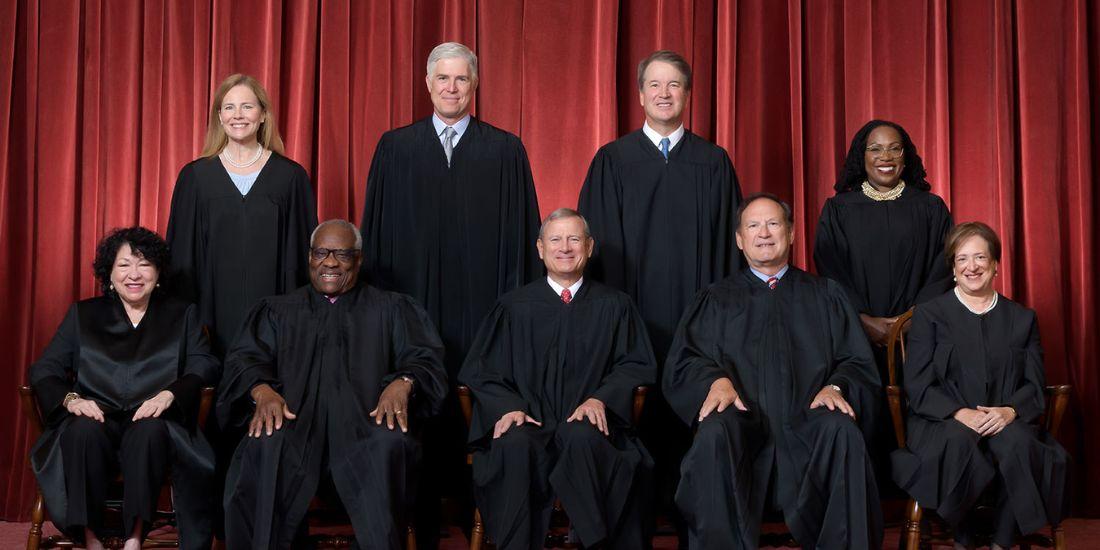
The Supreme Court of the United States has restricted the use of geofencing warrants, the process in which authorities use location data from phones to see if people have been near the scene of a crime. Such warrants use information provided by large tech companies to pinpoint the location of individuals using their phones. The underlying case was also sent back to lower courts to be reconsidered.
In a 6 to 3 decision on the case Chatrie v. United States, the ruling extended Fourth Amendment protections to location data of persons, held by tech companies. This means that police will need a warrant to obtain such data. Justices Samuel Alito, Amy Coney Barrett, and Clarence Thomas dissented in the case. The Trump administration had argued that data which is voluntarily handed over to tech companies should not be subject to the same protections as other information.
"An individual has a reasonable expectation of privacy in records about his cell phone’s location, and police intrude on that constitutionally protected interest when they demand the information — even though for only a limited time, and from a third-party tech company," Justice Elena Kagan wrote for the majority in the case.
The majority held that the warrant used to identify Chatrie was a search under the Fourth Amendment. However, the underlying case was sent back to the lower courts.
“Because this is a ‘court of review, not a first view,’ the Court leaves it up to the Court of Appeals to decide whether, at each step of the search process, the warrant satisfied the Fourth Amendment’s requirements of particularity and probable cause,” Kagan added in the ruling, sending the underlying case back to the Court of Appeals.
The case stems from a bank robbery that took place in 2019 in Virginia, where police took Okello Chatrie into custody after they obtained a geofencing warrant to locate his device's location, which placed him near the scene of the bank robbery. Because of modern digital advances, police have more frequently relied on such searches to obtain information when concerning criminal activity.
Detectives served Google a warrant in the case to get information about which cellphone users had been near the bank during the time of the robbery. After Google handed over information regarding three people who were in the vicinity of the bank when the robbery occurred, they arrested Chatrie who later confessed to the crime. His attorneys had argued that the geofence warrant had violated his Fourth Amendment rights, claiming that the search allows authorities "to search first and develop suspicions later." A warrant was not sought for Chatrie's data, but for any data Google had.
Chatrie is currently serving nearly 12 years in prison for the robbery.
Libby’s Desk
Commentary and must-reads from Libby’s desk, straight to your inbox.
TPM Newsletter
The Post Millennial’s top stories, delivered to your inbox.


