Judge Graf to rule on probable cause to try Tyler Robinson for Charlie Kirk’s killing Sept 1
The parties will be back in court on September 1.
The parties will be back in court on September 1.
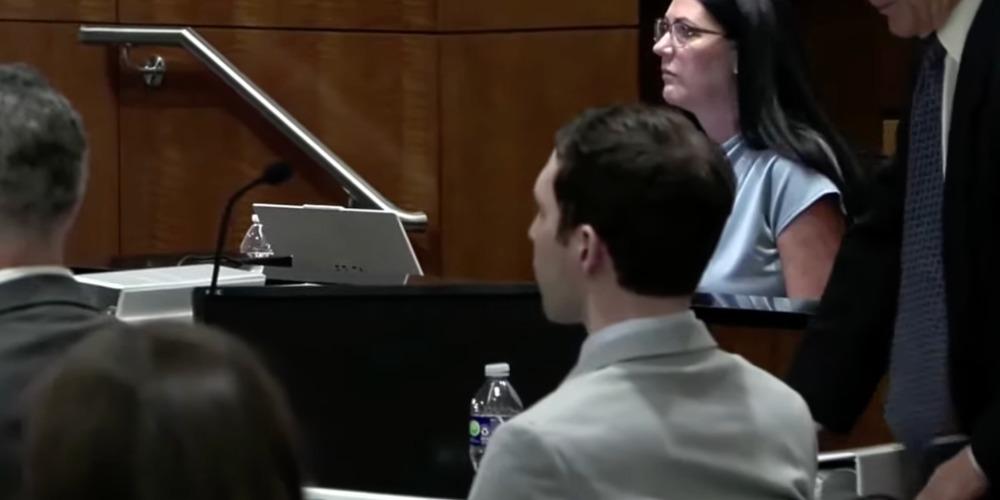
The week-long preliminary hearing of Tyler Robinson, the man charged with killing Turning Point USA founder Charlie Kirk, wrapped up on Friday, with the defense calling its last witness. The case will be back before the judge on September 1, when he’s expected to make his decision as to whether the state has established probable cause to try Robinson for the crime.
Filming of Tyler Robinson letter
Friday’s hearing began with parties addressing the accidental showing of a handwritten letter left by Tyler Robinson for Lance Twiggs during the prior day’s proceedings. The photo was briefly shown by cameras streaming the proceedings before the camera panned away.
The defense criticized the showing of the letter, saying that the defense was concerned about Robinson’s rights being violated. The state and the media both stressed that while the mistake was made, it was quickly mitigated.
https://twitter.com/tpostmillennial/status/2075622954524934482
The defense sought for Judge Graf to reconsider their request for cameras to be banned from the courtroom for all proceedings, or at least not be allowed in Friday’s proceedings, while the state suggested a 30-second delay on the livestream feed. The media said that no alteration was necessary. Judge Graf ultimately ordered that no exhibits be filmed by cameras during Friday’s hearing.
Forensic biologist Caitlin Oliver
The final witness of the hearing was Caitlin Oliver, a DNA Section Chief at the Bureau of Alcohol, Tobacco, and Firearms (ATF), who was serving as a forensic biologist at the time of the shooting. She was called as a witness for the defense, and had conducted DNA testing for the state of Utah in relation to the Charlie Kirk case.
Defense attorney Michael Burt questioned Oliver about the reliability of DNA testing. He cited DOJ policies regarding testimony and reporting on such matters, saying that examiners cannot say that a test does has a zero error rate, and that the likelihood ratio of testing provides an absolute identification of a source person.
Oliver said that "with forensic evidence, it’s impossible to state with 100 percent certainty anything. That’s why we report a likelihood ratio to speak uncertainty with a statistic.
She spoke on how the DNA samples that were taken from evidence were mixtures of a number of source persons, with Burt saying that it was sometimes upwards of five people.
Burt also brought up how DNA testing can’t determine how the DNA got deposited on an item. Oliver said, "DNA can’t speak to the activity that led to the deposition of the DNA."
Burt asked for Oliver to explain how a person’s DNA could be deposited on an item even if they "never touched the item or area that was swabbed," with Oliver explaining that DNA can be deposited on something like a pen, and when handed off to someone else, their DNA would also be deposited on the pen. The testing, she said, "doesn’t speak to who handled it last."
Burt raised the hypothetical of someone shaking hands with someone else, getting their DNA on their hands, and then going to touch the trigger of a gun, resulting in both persons’ DNA being deposited there. He asked if this could happen, with Oliver saying it was possible.
During questioning from the state, Oliver read out the results of testing done on a portion of the rifle and cartridge casings. "DNA profiles are at least 1 trillion times more likely if they originated from Tyler Robinson as the major contributor and an unknown unrelated individual than if they originated from two unknown unrelated individuals."
https://twitter.com/tpostmillennial/status/2075636693303193786
She also read out her probability conclusion regarding those pieces of evidence: "The probability of an unrelated individual in the population who has not contributed DNA to these samples, yielding this level of support, so meaning yielding this likelihood ratio, is less than one in a trillion."
https://twitter.com/tpostmillennial/status/2075650380034429099
Surveillance Video
At the urging of Charlie Kirk’s family, a reportedly high-quality video was played for the courtroom’s eyes only, which was said to have shown the suspect identified as Robinson on a rooftop at Utah Valley University moments before Kirk was shot. The media was not allowed to stream the video. Some of those present in the court said that the video included a person identified as Robinson taking a shot.
https://twitter.com/TPostMillennial/status/2075665166126158240?s=20
The video played on Friday afternoon was one that the state had sought to introduce earlier in the week, which was a compilation of surveillance footage from the day of Kirk’s killing. That exhibit, 12.1, had been zoomed in on and highlighted. The state came back the following day with an unaltered version of the video that was played for all to see.
What’s Next
The court has been adjourned until September 1, when a 10 am hearing will take place. The parties opted to conduct paper briefings to argue for or against a bind over, meaning a finding of probable cause.
The state said that they could have their motion in on July 28, while the defense said they would have theirs in on August 11. The state is filing its reply to the defense on August 18.
Libby’s Desk
Commentary and must-reads from Libby’s desk, straight to your inbox.
TPM Newsletter
The Post Millennial’s top stories, delivered to your inbox.



The hearing on September 1 will include up to four hours of oral arguments, where the attorneys will make their final case about whether the case should go to trial or not. Graf is expected to rule following the hearing if the prosecution has established probable cause to send the case to trial.