SCOTUS unanimously rules courts MUST defer to immigration judges in asylum cases
The court was unanimous in its ruling.
The court was unanimous in its ruling.
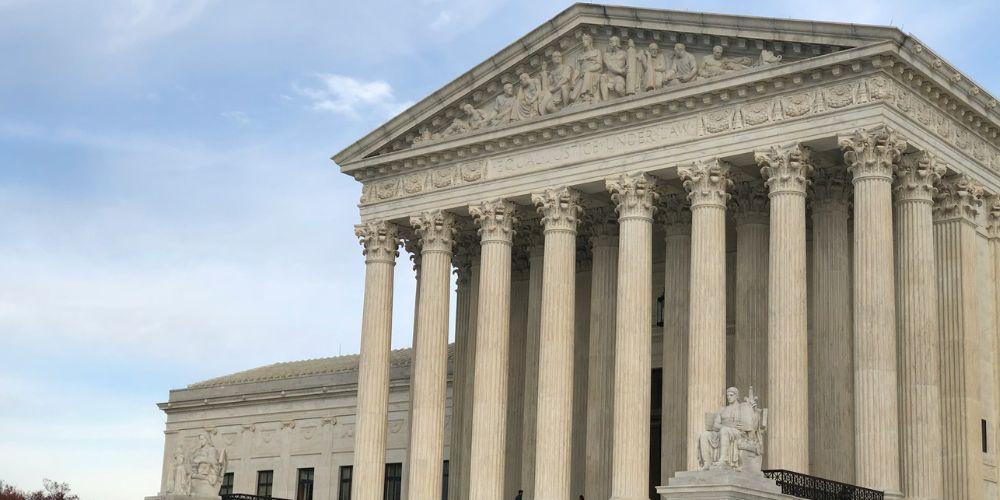
The Supreme Court ruled unanimously on Wednesday that federal appeals courts must defer to immigration judges when reviewing asylum decisions. The case centered around asylum claims made by Salvadoran national Douglas Humberto Urias-Orellana and his family, with Urias-Orellana arguing that a hitman had been targeting him in his home country.
The court’s ruling, written by Biden-appointed Justice Ketanji Brown Jackson, stated that immigration laws require federal courts to use a "substantial-evidence standard" when reviewing immigration judges’ decisions regarding whether an asylum seeker would face "persecution" if deported from the country.
Jackson noted that courts must meet a high bar before overturning an immigration judge’s findings. "the agency’s determination whether a given set of undisputed facts rises to the level of persecution under §1101(a)(42)(A) is generally ‘conclusive unless any reasonable adjudicator would be compelled to conclude to the contrary.’"
Urias-Orellana entered the country illegally in 2021 with his family and applied for asylum. An immigration judge denied their application and ordered their removal. Under the Immigration and Nationality Act, migrants can appeal the decision to the Board of Immigration Appeals. that board, as well as a federal appeals court and a circuit court, upheld the judge’s decision.
Urias-Orellana had argued that a hitman, or "sicario," had been targeting him since 2016, when his two half-brothers had been shot. The judge said that the threats described did not establish a valid fear of future persecution.
Jackson wrote that the immigration judge "explained that, under First Circuit precedent, death threats may establish past persecution only when they are '"so menacing as to cause significant actual suffering or harm."' The IJ concluded that Urias-Orellana’s past-persecution claim failed under that standard, as he had not submitted any medical, psychiatric, or psychological evaluations indicating that he had experienced such suffering or harm."
"The IJ further found the evidence regarding Urias-Orellana’s alleged fear of future persecution to be lacking. He observed that Urias-Orellana had successfully escaped danger after many of his relocations and that any risk resurfaced only when Urias-Orellana returned to his hometown or nearby areas," Jackson wrote. "Given the dearth of evidence establishing past or future persecution, the IJ determined that Urias-Orellana did not qualify as a refugee eligible for asylum."
The court was tasked with determining whether the appeals court had applied the appropriate standard of review, which the justices unanimously determined it had.
Libby’s Desk
Commentary and must-reads from Libby’s desk, straight to your inbox.
TPM Newsletter
The Post Millennial’s top stories, delivered to your inbox.


