Seattle schools superintendent to slash admin costs: ‘This is not a jobs program’
“We’re here for the kids. This is not a jobs program.”
“We’re here for the kids. This is not a jobs program.”
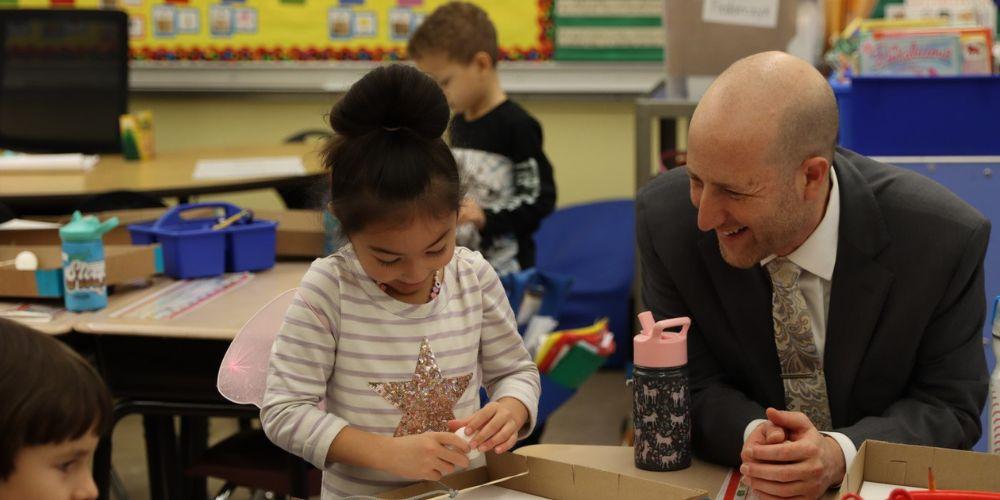
Facing a massive budget shortfall and ongoing enrollment declines, Seattle Public Schools’ new superintendent is taking aim at the district’s central bureaucracy and looking to slice millions out of the administrative office.
Superintendent Ben Shuldiner, who took the position in February, has made clear that trimming administrative excess will be central to his plan to stabilize the district’s finances and refocus priorities on students.
Shuldiner described Seattle Public Schools as “the richest, whitest” district he has worked in, during an interview with the Seattle Times editorial board, while calling out widespread inefficiency and waste. He has characterized the central office, where roughly 800 employees work, as a “Wild West” marked by redundancy and cronyism. “We’re here for the kids. This is not a jobs program,” Shuldiner said.
Shuldiner said the district’s central office has become too large and is diverting resources away from classrooms. Rather than announcing sweeping layoffs, he is proposing a gradual strategy, phasing out positions through attrition as staff retire or leave.
The district is currently grappling with a $100 million budget deficit. Shuldiner says he can cut that gap in half before the next school year, with a significant portion of savings coming from administrative restructuring. His proposals include: reducing duplicative roles within the central office, consolidating departments, and shifting funding toward classroom instruction and student support.
Estimates suggest central office cuts alone could save between $8 million and $15 million, with additional staffing adjustments projected to save nearly $10 million more. Critics of the current system have long argued that Seattle Public Schools spends too much on administration while teachers and students face shortages in resources. Shuldiner appears to agree and is now moving to act.
Shuldiner also plans to address what he sees as cultural problems within the district. In a March 29 message to staff, he described some internal processes as a “byzantine and Kafkaesque nightmare,” and warned of a “soft bigotry of low expectations” affecting outcomes for BIPOC and multilingual students. He criticized what he called a pattern of “accepting and excusing low performance rather than owning it,” signaling a push for greater accountability across the system.
Shuldiner has also announced that all central office staff will be required to return to in-person work five days a week starting July 1. Currently, about 330 employees work in hybrid or fully remote roles, including staff involved in curriculum, labor relations, and communications. “Nothing will ever replace being together,” Shuldiner wrote in his weekly newsletter. “For us to be a team, we all need to present.” He acknowledged the change will create challenges, commutes, childcare adjustments, and lifestyle disruptions, but insisted it is necessary to improve collaboration and accountability.
Unlike many administrators, Shuldiner has spent his first months on the job inside schools rather than behind a desk. District officials told KOMO News he has already visited more than 60 of Seattle’s 106 schools, more than half, within his first 50 days, putting him on track to meet his goal of visiting every school within 100 days. “This is about learning quickly, acting thoughtfully, and putting students front and center,” he said.
Despite the aggressive reform agenda, Seattle Public Schools faces deeper structural issues, including declining enrollment. Thousands of students have left the district for private, charter, and home schools since the pandemic. Roughly 1,700 students leave the district each day for neighboring districts, taking an estimated $34 million in state funding with them.
Libby’s Desk
Commentary and must-reads from Libby’s desk, straight to your inbox.
TPM Newsletter
The Post Millennial’s top stories, delivered to your inbox.


