
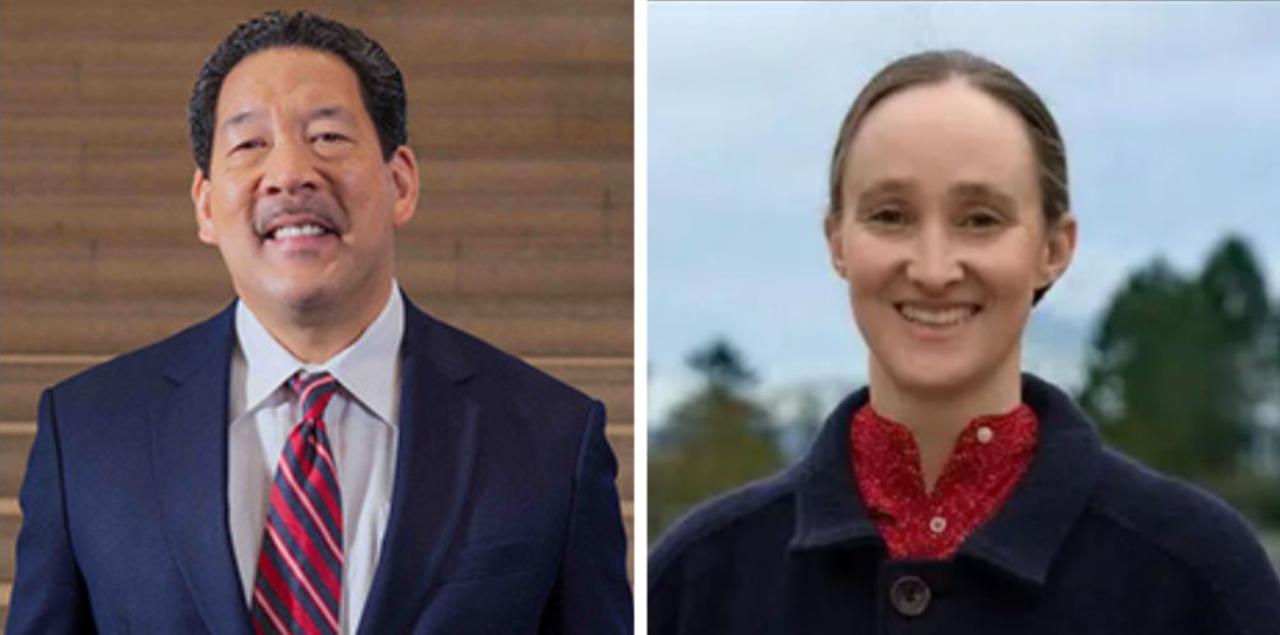
Wilson holds 50.08 percent of the vote to Harrell’s 49.59 percent, with a margin of 1,346 votes.

According to King County Elections, as of Tuesday afternoon, Wilson holds 50.08 percent of the vote (137,217 ballots) to Harrell’s 49.59 percent (135,871), a margin of 1,346 votes.
Harrell once led by more than 10,000 votes and about eight points after the first ballot drop on Oct. 8. But as Election Day and late-arriving ballot box returns were processed, that lead steadily evaporated. Wilson cut the gap to 4,300 votes by Nov. 7 and has since overtaken him, powered by late-count ballots that, in Washington state, typically skew more progressive.
Political analysts note this pattern is no accident. In Washington’s vote-by-mail system, ballots returned on or just before Election Day often skew more progressive, as younger and farther-left voters tend to push their envelopes to the deadline. That dynamic appears to be powering Wilson’s late surge; the same electorate that put her 10 points ahead of Harrell in the August primary is now consolidating behind her again in the late count.
Still, this contest isn’t over. Under state law, a recount is triggered if the difference between the candidates is less than one-half of one percent and also less than 2,000 votes. A manual recount occurs if the margin drops below one-quarter of one percent and under 1,000 votes. With Wilson’s edge currently at 0.49 percentage points and 1,346 votes, the race is hovering just outside the automatic recount zone for now.
Wilson, founder of the far-left activist group the Transit Riders Union, has been heralded as part of a new generation of socialist candidates. At 43, she ran as a populist outsider promising systemic transformation of Seattle’s police and housing systems. But her campaign also faced growing scrutiny over past statements supporting police abolition and reports of undisclosed family financial support that undercut her working-class image.
Wilson receives regular checks from her professor parents in New York to cover childcare and living expenses, despite campaigning as a struggling renter, revelations that damaged her credibility among middle-class voters skeptical of her authenticity.
During debates, Wilson tried to distance herself from her earlier anti-police rhetoric just as crime concerns were rising. Instead of exploiting that vulnerability, Harrell squandered his advantages. He entered the race with incumbency, name recognition, and a city desperate for basic competence on crime, homelessness, and downtown recovery, but governed like someone who liked the idea of being mayor more than the work.
On the trail, he tried to out-progressive a progressive, blurring contrasts with Wilson’s hard-left record. Voters who wanted a real progressive already had one; voters who wanted a centrist no longer trusted he was on their side. In debates, Harrell further alienated moderates by saying he wouldn’t arrest prolific offenders and wanted to “get to know them instead,” bleeding exactly the voters he needed most.
Powered by The Post Millennial CMS™ Comments
Join and support independent free thinkers!
We’re independent and can’t be cancelled. The establishment media is increasingly dedicated to divisive cancel culture, corporate wokeism, and political correctness, all while covering up corruption from the corridors of power. The need for fact-based journalism and thoughtful analysis has never been greater. When you support The Post Millennial, you support freedom of the press at a time when it's under direct attack. Join the ranks of independent, free thinkers by supporting us today for as little as $1.
Remind me next month
To find out what personal data we collect and how we use it, please visit our Privacy Policy





Comments