
"The judge in the Tyler Robinson case brought up a really important question: How do I know what edits were made to the video that's being presented as evidence?"

In the early July preliminary hearing of Tyler Robinson, the prosecution was forced to come back to the courtroom another day with unaltered surveillance footage to be displayed in the courtroom. The move has raised broader questions about the authenticity of digital evidence in an age where content can be altered.
Vice president and field CTO for DigiCert, Mike Nelson, told Techbuzz that the issues raised in the hearing highlighted challenges that go beyond the Utah courtroom. DigiCert focuses on strengthening "digital trust."
“The judge in the Tyler Robinson case brought up a really important question: How do I know what edits were made to the video that's being presented as evidence? How do I know the extent of the modifications that have been made?"
Nelson said Judge Tony Graf’s request for the original video to be provided to establish confidence was reasonable. "The judge said, 'Can you provide the original video so that I can see it? Because I feel like that is going to give me the confidence that I can trust the video.’”
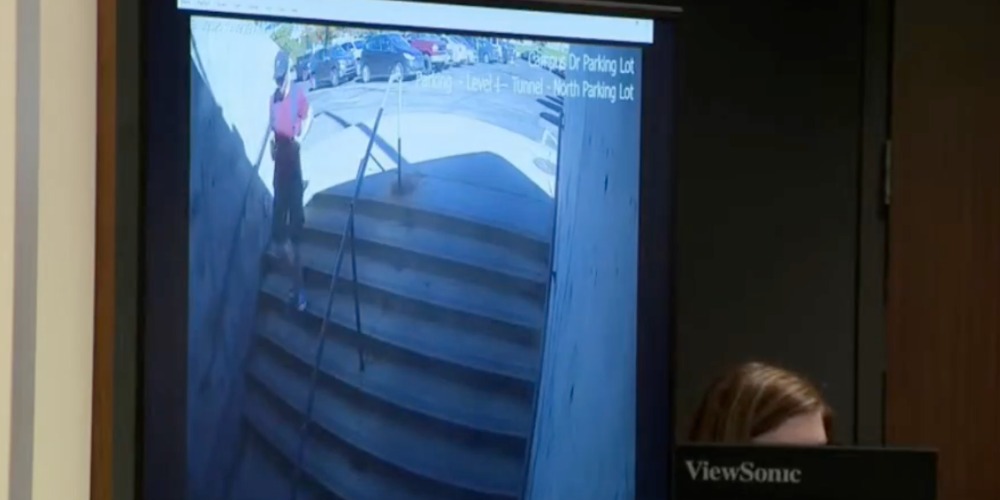
The prosecution attempted to show a compilation of surveillance camera footage on the first day of the preliminary hearing of Tyler Robinson, the man accused of killing Turning Point USA founder Charlie Kirk. Some alterations had been made to the footage, including highlights and zooms, and the defense objected to the altered footage being shown. Judge Graf said that the compilation could not be shown because of the alterations, and because there were not corresponding statements substantiating the alterations.
The prosecution returned on day 2 with an unaltered version of the compilation, which showed the movements of the shooting suspect through campus leading up to and following the shooting.
The edited compilation was not alleged to have been AI-generated, and Nelson noted that AI has been blamed for issues that have existed prior to the widespread adoption of AI. “It's not an AI problem, in my opinion. It's a trust problem. And trust problems can be solved,” he said.
“The message isn't that you can't edit video," Nelson said. "The message has to be there needs to be a chain of trust of those edits” He said that chain should answer questions such as what edits were made, who made the edits, when the edits were made, and what additional changes may have been made afterwards.
"Videos and photos are always going to be edited," Nelson said. "But consumers and now judges, doctors, insurance providers—there are so many situations where people are going to want verification that images have authenticity."
While metadata such as timestamps, GPS information, and camera settings can provide some context, they don’t show the whole picture. “If I go edit the photo on my iPhone, it still will say that image was captured at that time and in that location. And it does not track the changes,” Nelson said.
One solution that is emerging is called C2PA (Coalition for Content Provenance and Authenticity). Nelson said of the standard, “When an image is captured, it is digitally signed with a digital certificate and a digital signature. If it is modified, it would be signed again and it would say it was modified by this person at this date, and these are the changes that were made.”
In a courtroom scenario like that which played out in early July, a judge would be able to see the original footage, as well as a record of modifications. "The judge would be able to go in and say, 'The state of Utah made a modification on this date. They added a green circle here. They added a red circle here. They zoomed the video in,'" Nelson said.
Nelson said that the industry tends to spend money “where there's either significant pain or where there's significant opportunity.” He said that while there has not been “a ton of pain yet,” that is changing. “We're now starting to hit a pain threshold where it matters," Nelson said. “If there's a photo of your child floating around, how do you know that it has integrity? If there's a video of you doing something, how can you prove that it wasn't you doing it?"
Powered by The Post Millennial CMS™ Comments
Join and support independent free thinkers!
We’re independent and can’t be cancelled. The establishment media is increasingly dedicated to divisive cancel culture, corporate wokeism, and political correctness, all while covering up corruption from the corridors of power. The need for fact-based journalism and thoughtful analysis has never been greater. When you support The Post Millennial, you support freedom of the press at a time when it's under direct attack. Join the ranks of independent, free thinkers by supporting us today for as little as $1.
Remind me next month
To find out what personal data we collect and how we use it, please visit our Privacy Policy

Comments