
"The Court expects the amendments to take effect on January 1, 2026."

The order released on Friday stated, "On April 4, 2025, the Court invited comments on the law school accreditation component of the Rules Governing Admission to the Bar of Texas. Specifically, the Court requested feedback on ... whether to reduce or end the Rules’ reliance on the American Bar Association and alternatives the Court should consider."
"After further consideration of the matter, including review of the many helpful comments received, the Court is of the tentative opinion that the ABA should no longer have the final say on whether a law school’s graduates are eligible to sit for the Texas bar exam and become licensed to practice law in Texas," the order added.
An amendment has also been proposed to Rule 1 for the Rules Governing Admission ot the Bar of Texas. The change in the rule would state that an "approved law school" would be defined as being "approved by the Supreme Court" instead of the American Bar Association (ABA).
The court has asked for public comment on the matter and will "issue an order finalizing the amendments after the close of the comment period. The Court expects the amendments to take effect on January 1, 2026."
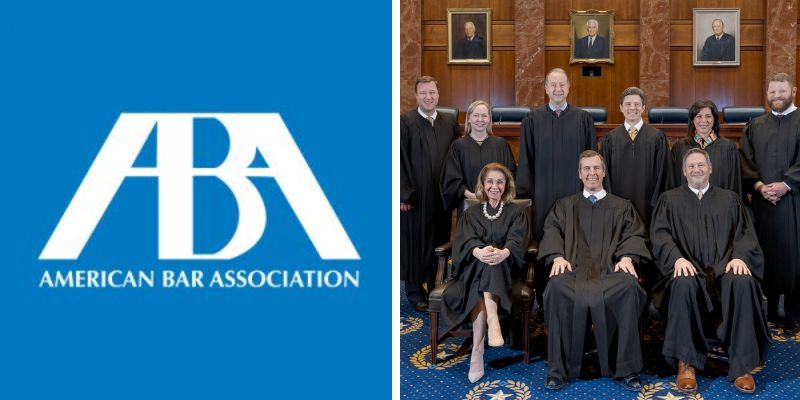
Texas would be the first state to end the arrangement with the ABA, which has long been the federally recognized body for law school accreditation. ABA managing director of accreditation and legal education Jenn Rosato Perea said in a statement that the ABA is "reviewing the implications" of the order from the Texas Supreme Court, per Reuters.
“We look forward to continuing to work with Texas and other states to ensure that a national accreditation system exists that promotes quality, efficiency and flexibility while maintaining law degree portability across state lines, to the benefit of students, employers, law schools and the states themselves," Perea added.
Powered by The Post Millennial CMS™ Comments
Join and support independent free thinkers!
We’re independent and can’t be cancelled. The establishment media is increasingly dedicated to divisive cancel culture, corporate wokeism, and political correctness, all while covering up corruption from the corridors of power. The need for fact-based journalism and thoughtful analysis has never been greater. When you support The Post Millennial, you support freedom of the press at a time when it's under direct attack. Join the ranks of independent, free thinkers by supporting us today for as little as $1.
Remind me next month
To find out what personal data we collect and how we use it, please visit our Privacy Policy







Comments