
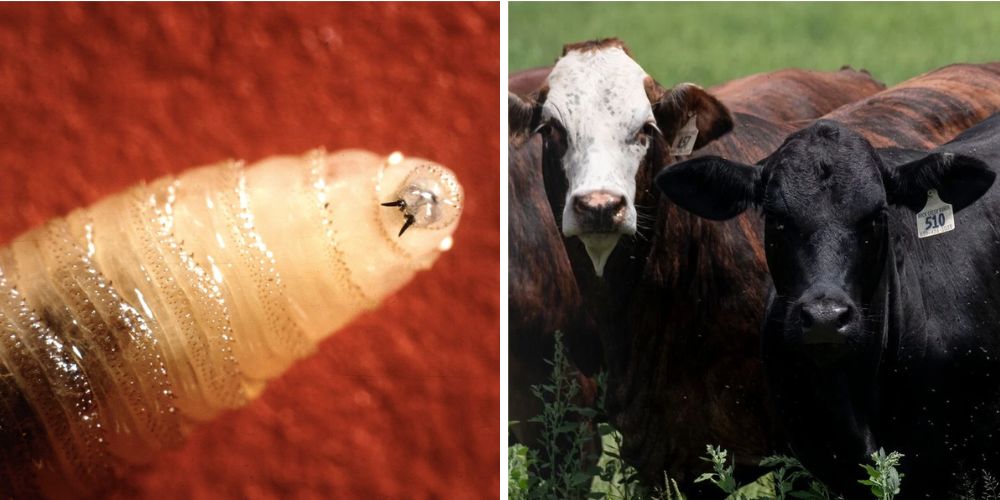
As the outbreak continues to spread, entomologist Phillip Kaufman warns, "What we lack are sufficient flies in order to start pushing the population [of screwworm] back south."

The US Department of Agriculture has released nearly 400 million sterile flies over Texas and northern Mexico this year as officials race to stop the spread of the New World screwworm, a flesh-eating parasite capable of devastating livestock and wildlife.
The unprecedented aerial campaign comes as the USDA works to prevent the parasite from becoming reestablished in the United States after The Post Millennial reported that confirmed cases had been detected in livestock in Texas and New Mexico last month. The sterile insect technique, which helped eliminate screwworm from the U.S. in 1966, involves releasing millions of sterilized male flies that mate with wild females, preventing reproduction and causing populations to collapse over time. According to USDA Rear Admiral Michael Schmoyer, the overwhelming majority of the flies have been released along the Texas-Mexico border and in counties where confirmed screwworm cases have been detected.
While some residents have reported noticing more flies this year, Schmoyer said most Americans are unlikely to encounter New World screwworm flies in their homes. "In your house, you are very unlikely to see an NWS fly," Schmoyer said. "The important thing to remember is that these particular flies are relatively solitary. They like to be in wet, and hiding, moist or humid environment. And when they come to feed, they come to feed where the animal has an injury."
The New World screwworm is far more dangerous than a typical housefly. Female flies lay eggs in open wounds, where the larvae burrow into living flesh, causing severe infections that can kill livestock, wildlife, pets and, in rare cases, humans if left untreated. The Guardian reported this week that researchers believe approximately 500 million sterile flies will ultimately be needed to begin pushing the parasite back toward Central America. Entomologist Phillip Kaufman told the newspaper, "What we lack are sufficient flies in order to start pushing the population back south."
Wildlife researchers have documented screwworm infestations in jaguars, pumas, tapirs, deer and other wild animals in Central America, raising concerns that the parasite has become established beyond cattle populations, making eradication more difficult. Federal officials are now expanding production capacity, with a new sterile-fly facility recently opening in Mexico and another planned for Texas in 2027.
The USDA is urging ranchers and pet owners to inspect animals for unusual wounds and immediately contact veterinarians or agricultural authorities if they suspect a screwworm infestation.
Powered by The Post Millennial CMS™ Comments
Join and support independent free thinkers!
We’re independent and can’t be cancelled. The establishment media is increasingly dedicated to divisive cancel culture, corporate wokeism, and political correctness, all while covering up corruption from the corridors of power. The need for fact-based journalism and thoughtful analysis has never been greater. When you support The Post Millennial, you support freedom of the press at a time when it's under direct attack. Join the ranks of independent, free thinkers by supporting us today for as little as $1.
Remind me next month
To find out what personal data we collect and how we use it, please visit our Privacy Policy







Comments