
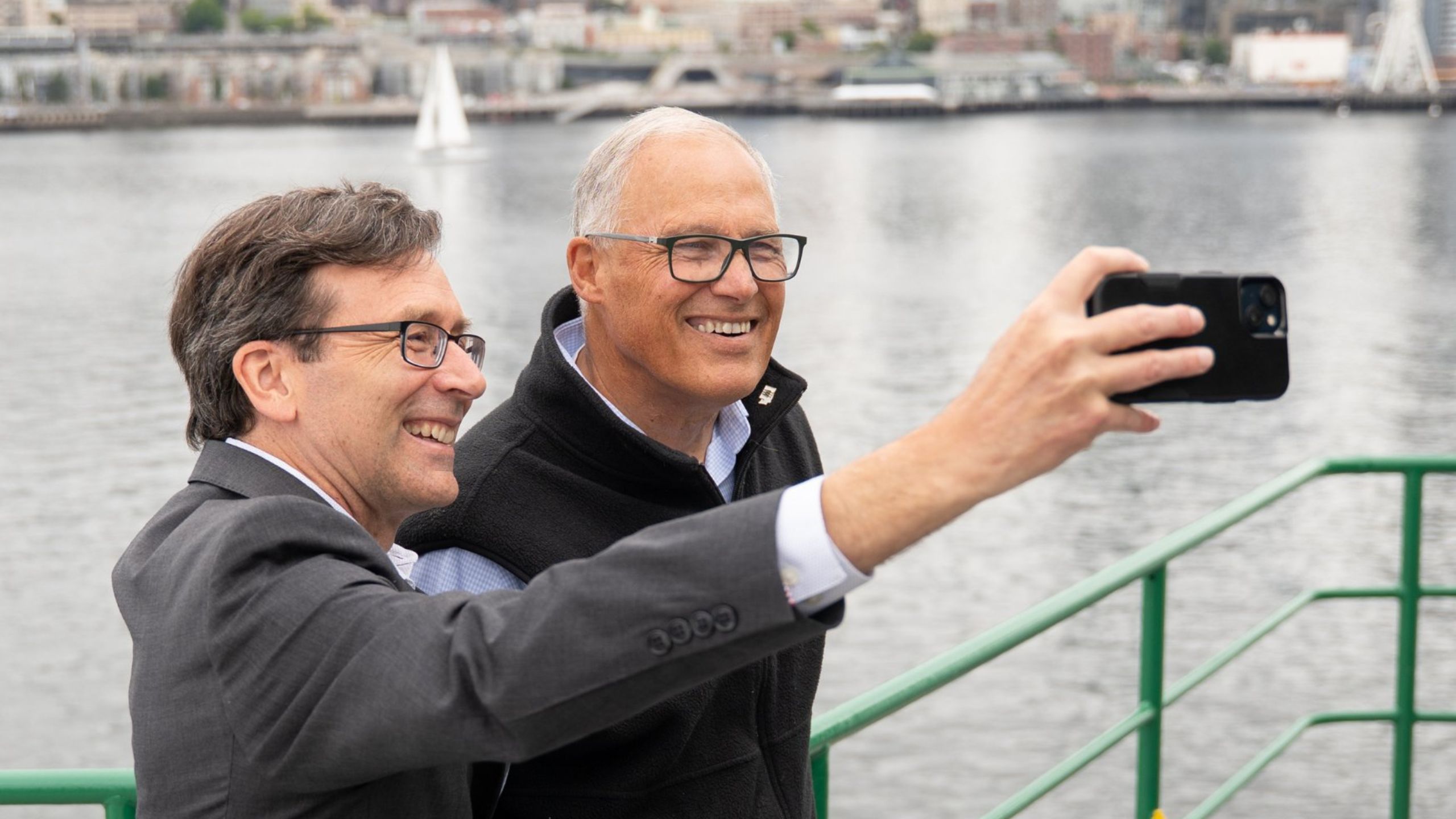
The state initially estimated that converting three ferries would cost $120 million total. Instead, the Wenatchee alone cost $133 million and was nearly a year behind schedule.

The Wenatchee, which underwent a 22-month, $133 million conversion from diesel to hybrid-electric power, had been running the busy Seattle-to-Bainbridge Island route since July 24. But on Friday morning, two of its four drive motors suddenly went offline as the vessel pulled into Seattle’s Colman Dock, briefly leaving the boat without power.
Although the motors restarted within minutes and the vessel was able to move to the Eagle Harbor maintenance facility, crews have been working since then to determine the cause of the malfunction.
Dana Warr, a WSF spokesperson, told The Seattle Times that technicians found instability in the control system’s communication wires, which caused the motors to shut down. “The issue may only happen at certain speeds or in certain operating conditions,” Warr explained, noting that isolating the problem has proven difficult.
He emphasized that such problems are considered “a normal part of a vessel commissioning” and are expected to be resolved soon. Until then, the Walla Walla and Tacoma are covering the Seattle-Bainbridge route, with the Walla Walla kept on standby as part of WSF’s post-conversion monitoring phase.
The Wenatchee has already faced multiple setbacks since rejoining the fleet. In early August, it was briefly pulled to address follow-up items identified by the US Coast Guard during certification, including cable replacements, battery module swaps, and fixing a ground fault alarm. After sea trials, the ferry was cleared to resume service.
The Wenatchee was the first vessel to undergo hybrid-electric conversion, but the project ran into major cost overruns and delays. The state initially estimated that converting three ferries would cost $120 million total. Instead, the Wenatchee alone cost $133 million, and was nearly a year behind schedule, largely due to mismatched blueprints and unexpected engineering challenges.
These issues prompted Governor Bob Ferguson to delay additional conversions for over a year. Meanwhile, the state has turned to out-of-state shipbuilders for future ferry construction.
Earlier this month, Washington awarded Florida-based Eastern Shipbuilding Group a $714.5 million contract to build two 160-vehicle hybrid-electric ferries for WSF, with an option for a third, according to Lynnwood Times. The contract, WSF’s first competitive ferry bid in more than 25 years, came in 6 percent below state engineers’ estimates and significantly underbid Nichols Brothers of Whidbey Island.
The decision sparked backlash from Washington’s shipbuilding industry and lawmakers.
Port of Everett CEO Lisa Lefeber called it “a missed opportunity to invest in a skilled workforce as well as create over 1,300 jobs for the state.”
Rep. Andrew Barkis (R-Olympia), ranking Republican on the House Transportation Committee, criticized the lack of transparency and said Washington’s high taxes and regulations were to blame for Nichols Brothers’ inability to compete. “If building ferries in Washington is no longer financially viable, we’ve done something terribly wrong,” Barkis said.
Former Governor Jay Inslee had set a goal for the WSF, the largest ferry system in the United States with more than 19 million annual passengers, of operating an emission-free fleet by 2050. Plans include converting six existing vessels, building 16 new hybrid-electric ferries, and installing charging infrastructure at 16 terminals.
The Ferry System Electrification Program is projected to cost approximately $4 billion, funded in part by the state’s controversial Climate Commitment Act and the Move Ahead Washington transportation package.
Powered by The Post Millennial CMS™ Comments
Join and support independent free thinkers!
We’re independent and can’t be cancelled. The establishment media is increasingly dedicated to divisive cancel culture, corporate wokeism, and political correctness, all while covering up corruption from the corridors of power. The need for fact-based journalism and thoughtful analysis has never been greater. When you support The Post Millennial, you support freedom of the press at a time when it's under direct attack. Join the ranks of independent, free thinkers by supporting us today for as little as $1.
Remind me next month
To find out what personal data we collect and how we use it, please visit our Privacy Policy






Comments
2025-08-21T05:08-0400 | Comment by: Dean
Cost over-runs? No big deal. It's only taxpayers' money. There's more of that where that came from. And another thought: Batteries and salt in both the air and water. What could possibly go wrong?