
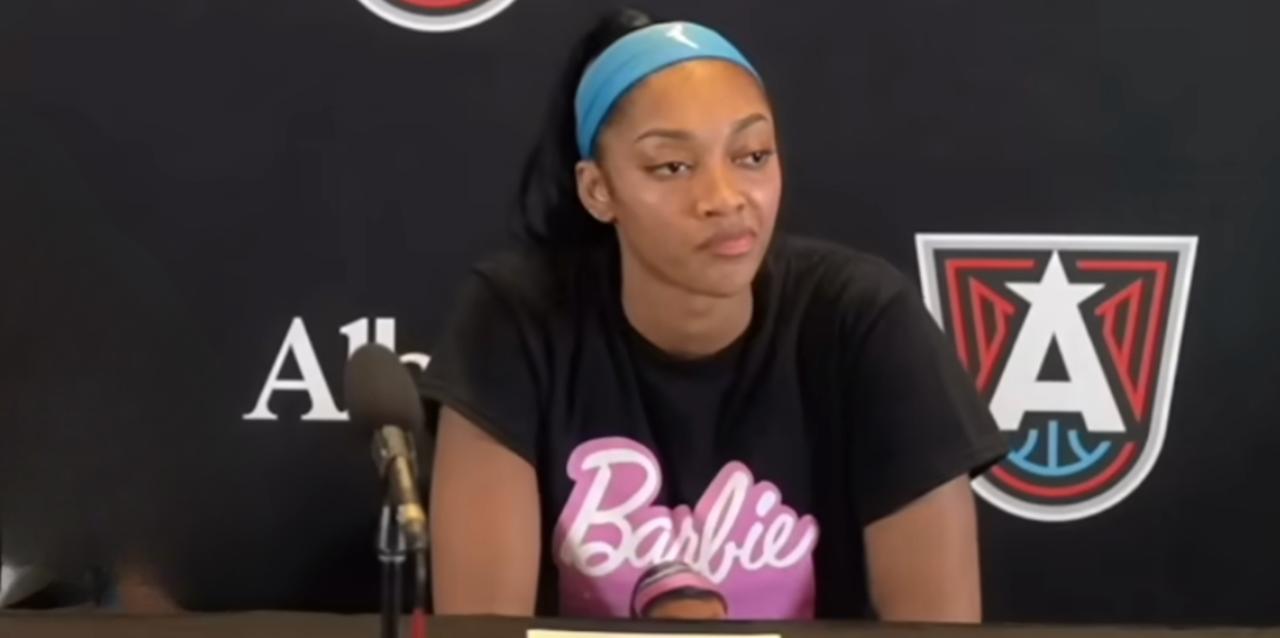
"I didn't have a lot of dolls because I didn't have dolls that really looked like me much."

WNBA star Angel Reese was asked in a pre-game presser about the toys she played with as a little girl. Reese wore her Barbie shirt and brought out her signature doll. She answered questions about Barbie night, the doll, and her own fame.
"What were some of the dolls you played with when you were little?" A reporter asked.
"Honestly," Reese said, "I didn't have a lot of dolls because I didn't have dolls that really looked like me much, and that's why I kind of really wanted to make sure this was super intentional because, um, now that they have a doll that looks like you, and nails and hair, but also you can be a killer on the court as well so that was something that was important for me when getting the doll."
The only thing is that Reese was born in 2002 and the first black Barbie came out in 1980. I should know, I was obsessed with Barbies. That's all I wanted to play with. I set them up in stories in a yellow and orange Barbie beach house–that was back when pink wasn't the only color permitted for little girls' playthings.
My mom insisted I have a black Barbie (also Transformers, but I digress), because she believed, as did Mattel as far back as 1980, that dolls should be for everyone, should engage girls' imaginations as who they are, and that, dare I say it, representation mattered. I had a black Barbie mom doll who came with a little baby. I still have them around here somewhere. I was also super into the Barbie and the Rockers series of dolls, and the make-believe band included Dee Dee, a black rock star Barbie complete with a microphone and a neon print outfit.
And it wasn't just Mattel, either. There was a black American Girl doll, Addy Walker, which premiered in 1993. The insanely trendy Cabbage Patch dolls launched black dolls in 1983, just one year after they began to be mass produced. There were even riots that year around Christmas time as parents clamored to get their hands on these dolls. There were Bratz dolls, too, which came out in 2001.
Black dolls were a mainstay of the toy market for decades before Reese was even born, 22 years before, in fact. She grew up in the new millennium, when toy makers fell all over themselves to make sure they had a doll to represent every conceivable iteration of kid who might like to play with them. We live, and have been living, in an incredibly progressive culture. It's common for kids of all races to have black dolls in their toy boxes and the Angel Reese dolls are sold out.
Reese grew up in Randallstown, Maryland, a Baltimore suburb, and attended a private Catholic school, where she became a ball player. "I was lucky to get out of there," she later said. She was raised by her parents, who were both athletic. Her mom even played pro women's ball in Luxembourg.
Reese may have her own doll, and that's pretty cool and everything, but there's nothing fresh or new about the representation of this doll. There have been black dolls with style now for nearly 50 years. Reese said she hoped the doll would inspire little girls to be like her. I hope that girls coming up in America today check the facts before making absurd proclamations.
This article first appeared in Libby Emmons' newsletter. You can subscribe here.
Powered by The Post Millennial CMS™ Comments
Join and support independent free thinkers!
We’re independent and can’t be cancelled. The establishment media is increasingly dedicated to divisive cancel culture, corporate wokeism, and political correctness, all while covering up corruption from the corridors of power. The need for fact-based journalism and thoughtful analysis has never been greater. When you support The Post Millennial, you support freedom of the press at a time when it's under direct attack. Join the ranks of independent, free thinkers by supporting us today for as little as $1.
Remind me next month
To find out what personal data we collect and how we use it, please visit our Privacy Policy





Comments
2026-08-04T15:08-0400 | Comment by: Jeanne
Gee, I guess FACTS MATTER, except to the Left.