
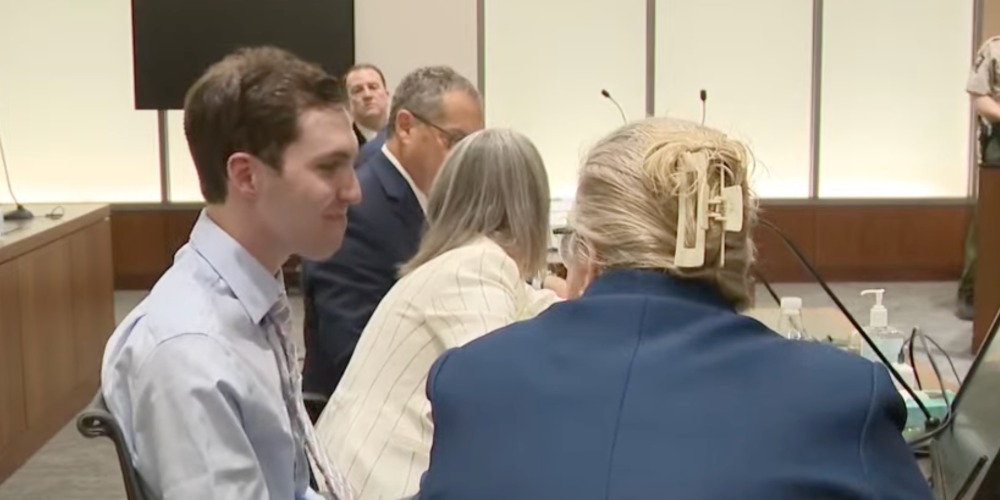
The defense filed their January 9 motion to object to further testing without the meeting of certain conditions.

Exhibits include: One Mauser, model 98, 30-06 Springfield caliber rifle bearing serial number 8863 with an optical accessory; One 30-06 Springfield caliber cartridge case; One 30-06 Springfield caliber cartridge; One 30-06 Springfield caliber cartridge; One 30-06 Springfield caliber cartridge; One bullet jacket fragment and four lead fragments.
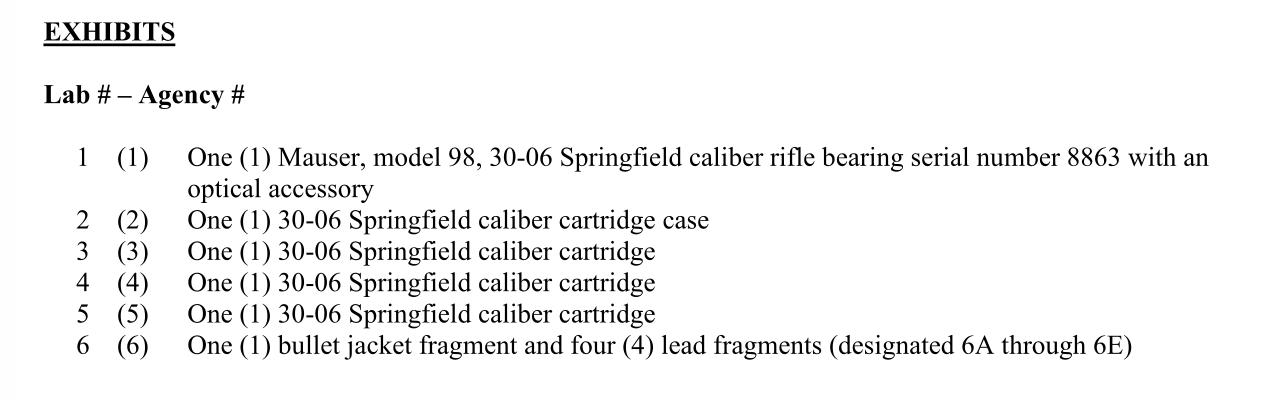
The report states that the "Exhibit 1 rifle was test fired and found to be in operable condition." It also states that that "One 30-06 Springfield caliber cartridge case," identified as Exhibit 2, bears a "Remington headstamp," as did the other cartridges.
Some of these cartridges were found to have "toolmarks" which are "consistent with being produced by engraving and/or rotary cutting tips commonly found installed in handheld rotary tools (such as a Dremel tool). These toolmarks contain marks of value for comparison if a suspect tool is located."
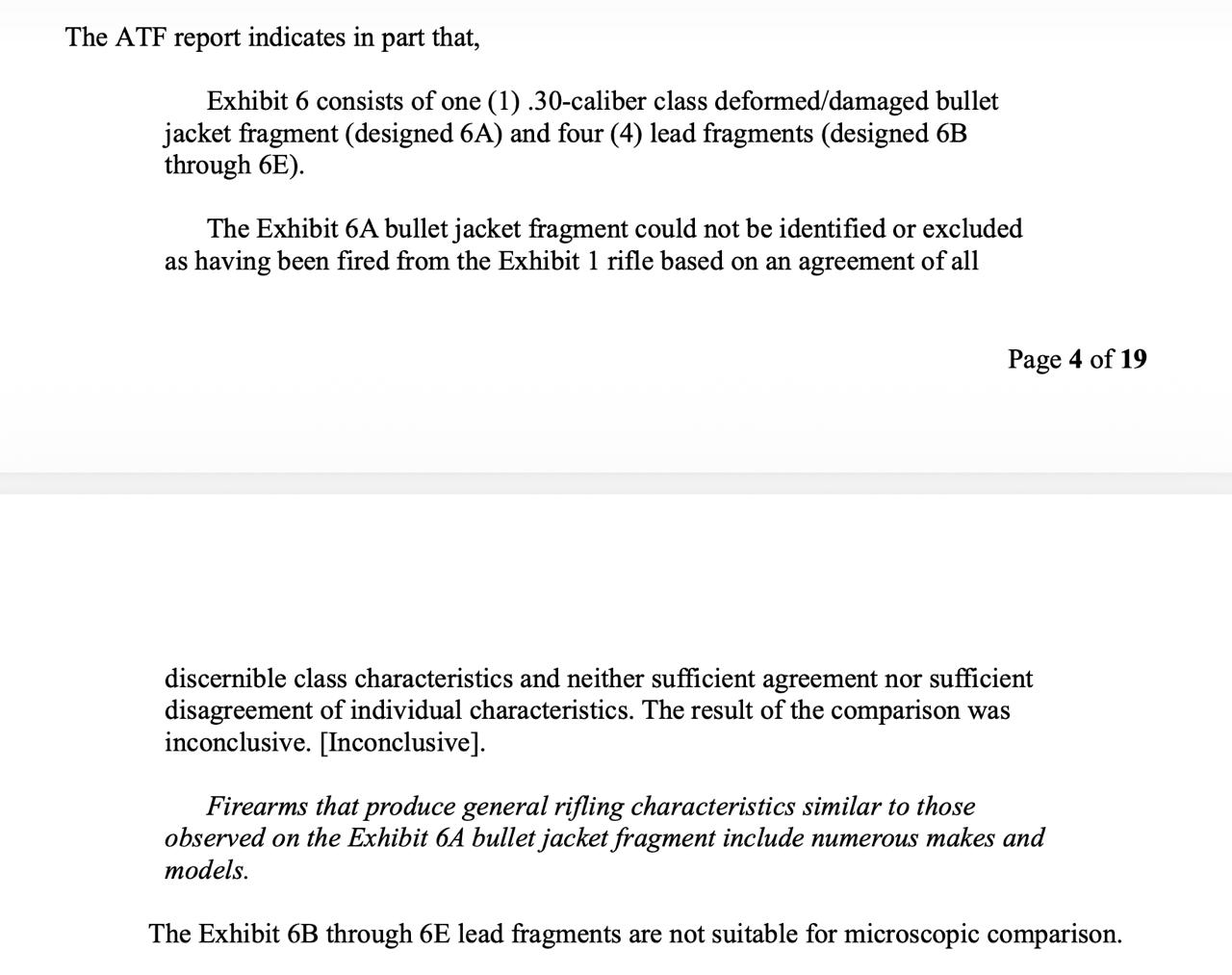
As for Exhibit 6, it consists of "(1) .30-caliber class deformed/damaged bullet jacket fragment and four lead fragments."
The report states that the "bullet jacket fragment could not be identified or excluded as having been fired from the Exhibit 1 rifle based on an agreement of all discernible class characteristics and neither sufficient agreement nor sufficient disagreement of individual characteristics. The result of the comparison was inconclusive." The lead fragments, the report states, "are not suitable for microscopic comparison."
The Exhibits were intended to be tested again and the prosecutors gave advance notice to the defense team that a second round of testing would be undertaken. That second round of testing would have changed the composition of the bullet jacket fragment as the testers would have used a tool to open it up. Prosecutors notified the defense of their intent to perform further testing on Dec. 22, 2025.
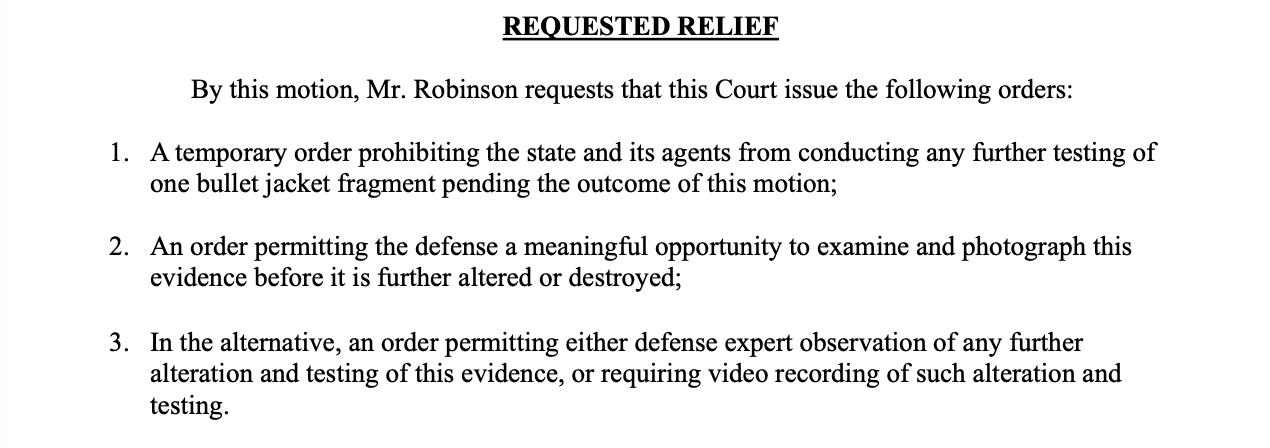
The defense filed their January 9 motion to object to further testing without the meeting of certain conditions. Robinson asked for: "a temporary order prohibiting the state and its agents from conducting any further testing of one bullet jacket fragment pending the outcome of this motion;
"An order permitting the defense a meaningful opportunity to examine and photograph this evidence before it is further altered or destroyed; In the alternative, an order permitting either defense expert observation of any further alteration and testing of this evidence, or requiring video recording of such alteration and testing."
The manner of the second round of testing, per the prosecutors' notice, stated that the FBI concluded that "to obtain a useful scan of the bullet jacket fragment, it may be necessary to fold back portions of the jacket fragment to allow the optical head to capture the surface of the jacket that contacted the firearm."
That would have been achieved through the use of "pliers or similar gripping tools." The FBI told the prosecutors, per this motion, that "this process could leave marks on the surfaces of the fragment" and that the "examiner will document those marks and, if possible ensure that the marks do not interfere with the areas to be examined..."
The defense noted their concern that if the evidence were altered during testing the defense would not be able to employ experts to test that evidence to review it. "Because there is only one bullet fragment recovered in this case," they write, "if this evidence is altered to the point where it cannot be subject to independent testing, then by definition the defense cannot obtain comparable evidence by other reasonably available means.
"Once altered, the defense's ability to challenge the conclusions of the State's expert is irreparably harmed and the reliability of the evidence will remain untested," they state in the Jan. 9 motion.
Robinson's attorneys state that they "inquired of the state via email whether the FBI laboratory was open to having a defense expert present during the FBI's preparation and examination of the bullet fragment, and, if not, whether the laboratory was willing to video that process." In response, the FBI said the agency has "policies, which will not change for this case, do not allow a defense examiner to be present or video taping of the examination."
Robinson filed a motion to delay the coming May preliminary hearing and as part of that motion claimed that the delay was necessary because the aforementioned exhibits had not yet undergone a second round of testing. The state prosecutors noted in their motion rebutting the defense motion that it was the defense that was holding up the process of the second round of testing.
Tyler Robinson January 9 motion to prevent further testing of bullet fragment, casings. by The Post Millennial
Powered by The Post Millennial CMS™ Comments
Join and support independent free thinkers!
We’re independent and can’t be cancelled. The establishment media is increasingly dedicated to divisive cancel culture, corporate wokeism, and political correctness, all while covering up corruption from the corridors of power. The need for fact-based journalism and thoughtful analysis has never been greater. When you support The Post Millennial, you support freedom of the press at a time when it's under direct attack. Join the ranks of independent, free thinkers by supporting us today for as little as $1.
Remind me next month
To find out what personal data we collect and how we use it, please visit our Privacy Policy

Comments
2026-04-16T08:08-0400 | Comment by: Thomas
Libby, much love and I may be having a slow day, but I don't realize the significance toward guilty or not w/o deeply reading.