
"In the opinion of the Court, Congress only contemplated biological sex when it enacted Title IX in 1972."

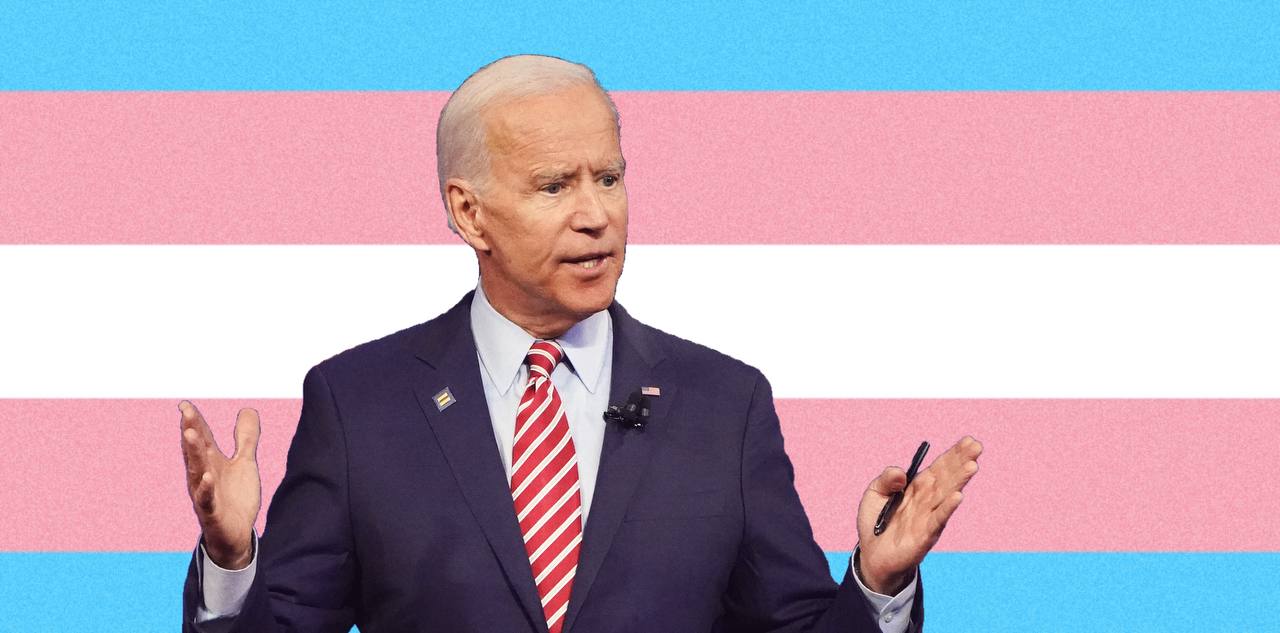
A federal judge has vacated the Biden-era Department of Health and Human Sevices’ redefinition of Title IX of sex to include "gender identity." The Wednesday order Judge Louis Guirola Jr stated, "HHS exceeded its statutory authority when (1) it interpreted Title IX, as incorporated into Section 1557, to prohibit discrimination on the basis of gender identity, and (2) when it implemented Section 1557 regulations concerning gender identity and 'gender affirming care.'"
Section 1557 of the Affordable Care Act, titled "Protecting Individuals Against Sex Discrimination," which prohibits "discrimination on the grounds of race, color, national origin, sex, age, or disability in certain health programs and activities." This applies to any health program that receives funding from the HHS, including hospitals and doctors that receive Medicaid or Medicare payments. The Biden administration attempted to add gender identity to this list. However, adding gender identity means that any man who claims to be a woman gains protections designated for women.
The case had been brought against Biden-era HHS officials by the states of Tennessee, Mississippi, Alabama, Georgia, Indiana, Kansas, Kentucky, Louisiana, Nebraska, Ohio, Oklahoma, South Carolina, South Dakota, Virginia, and West Virginia in 2024.
Judge Guirola wrote, "In the opinion of the Court, Congress only contemplated biological sex when it enacted Title IX in 1972. Therefore, the Court finds that HHS exceeded its authority by implementing regulations redefining sex discrimination and prohibiting gender-identity discrimination."
HHS’ May 2024 Final Rule, in addition to preventing discrimination on the basis of gender identity, "prohibits state-created health benefit exchanges, recipients of Medicaid and Medicare, and others from denying or limiting 'health services sought for purpose of gender transition or other genderaffirming care that the covered entity would provide to an individual for other purposes if the denial or limitation is based on an individual’s sex assigned at birth, gender identity, or gender otherwise recorded,'" the order stated.
The plaintiff states argued that the HHS’s rule exceeded the department’s statutory authority because it "provides that sex discrimination includes gender-identity discrimination," and "it unlawfully regulates the practice of medicine."
Judge Guirola wrote that the word "sex" was not defined in Title IX, "so the Court must interpret the term according to its meaning in or around 1972, when the statute was enacted." Black’s Law Dictionary, which provides definitions of legal terms and phrases, defined the word "sex" in the 1960s and 70s as "the sum of the peculiarities of structure and function that distinguish a male from a female organism; the character of being male or female." Webster’s Dictionary similarly defined sex as being the "the sum of the structural, functional, and behavioral characteristics of living beings that subserve reproduction by two interacting parents and that distinguish males and females" shortly after Title IX was published.
The judge also wrote that the HHS "declined to define 'gender identity' or 'transgender status' because 'individuals use various terminology to describe their gender identity'" in its Rule. Guirola noted that the Biden-era HHS "relied on the Supreme Court’s reasoning in Bostock v Clayton County when it authored and proposed the rule."
In Bostock, the Supreme Court determined that an employer violates Title VII "when it intentionally fires an individual employee based in part on sex." Justice Neil Gorsuch wrote for the court at the time, "If the employer fires the male employee for no reason other than the fact he is attracted to men, the employer discriminates against him for traits or actions it tolerates in his female colleague…If the employer retains an otherwise identical employee who was identified as female at birth, the employer intentionally penalizes a person identified as male at birth for traits or actions that it tolerates in an employee identified as female at birth."
The Supreme Court wrote that its ruling in the case centered around only the question of "whether an employer who fires someone simply for being homosexual or transgender has discharged or otherwise discriminated against that individual ‘because of such individual’s sex." Gorsuch noted in the opinion that the ruling was for employment only and was not meant to be applied to questions of sex-segregated bathrooms, etc.
Guirola also noted that the Bostock ruling was discussed during the Supreme Court’s consideration of the US v Skrmetti case, the decision of which "is instructive here because the Rule requires healthcare providers to provide 'gender-affirming care that the covered entity would provide to an individual for other purposes if the denial or limitation is based on an individual’s sex assigned at birth, gender identity, or gender otherwise recorded.’"
He wrote that like in Skrmetti, "the medical diagnosis is the but-for cause of the denial of healthcare," noting a hypothetical example of a medical provider who performs mastectomies for those diagnosed with breast cancer not being allowed under the rule to refuse giving mastectomies for "gender dysphoria."
"The provider’s refusal in this circumstance is not based on sex; it is based on the patient’s cancer-related diagnosis, or lack thereof."
He wrote that while Title VII, which was under consideration in Bostock, states that "an individual employee’s sex is not relevant to the selection, evaluation, or compensation of employees," Title IX allows education programs to separate students based on sex. "Furthermore, the Bostock Court’s Title VII analysis does not support a finding that denial of healthcare based on gender identity necessarily constitutes sex discrimination. Plaintiffs are therefore entitled to summary judgment."
Powered by The Post Millennial CMS™ Comments
Join and support independent free thinkers!
We’re independent and can’t be cancelled. The establishment media is increasingly dedicated to divisive cancel culture, corporate wokeism, and political correctness, all while covering up corruption from the corridors of power. The need for fact-based journalism and thoughtful analysis has never been greater. When you support The Post Millennial, you support freedom of the press at a time when it's under direct attack. Join the ranks of independent, free thinkers by supporting us today for as little as $1.
Remind me next month
To find out what personal data we collect and how we use it, please visit our Privacy Policy







Comments