Here are the key cases on SCOTUS’ docket this term
The Supreme Court’s justices are going to be weighing issues such as AR-15 bans, Washington state’s trans sanctuary laws, and proof of citizenship to vote.
The Supreme Court’s justices are going to be weighing issues such as AR-15 bans, Washington state’s trans sanctuary laws, and proof of citizenship to vote.
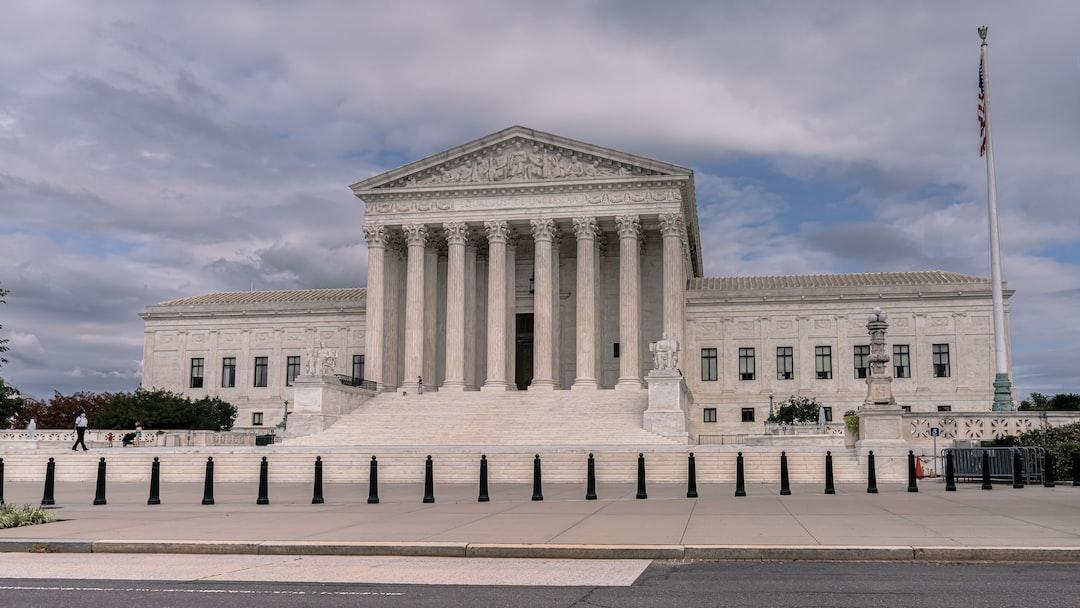
The Supreme Court’s 2026 term began on Monday, with the court hearing a number of high-profile cases on its docket for the term. Of the cases granted so far, the Supreme Court’s justices are going to be weighing issues such as AR-15 bans, Washington state’s trans sanctuary laws, proof of citizenship to vote, and more. Here are the key cases on the high court’s docket this term.
Suncor Energy Inc v County Commissioners of Boulder County
In the Suncor Energy Inc case, justices will weigh whether a Colorado lawsuit seeking to hold energy companies responsible for their alleged roles in climate change can move forward, or if federal law bars such claims. In the suit, Boulder is seeking millions of dollars. The eventual ruling in the case could affect dozens of pending lawsuits across the country.
The case was the first argued of the term, with arguments taking place on Monday. Notably, Justice Samuel Alito is recused from the case, and if a 4-4 ruling is deliberated, the Colorado Supreme Court’s ruling on the matter would remain in place, allowing the case to move forward. It was not clear from Monday’s arguments whether a majority of the justices agreed with the energy companies.
During oral arguments, Kannon Shanmugam, arguing on behalf of the energy companies, said that Boulder’s claims were an “unprecedented effort to use state law to regulate global conduct,” and that the Constitution bars the application of state law to “certain inherently federal areas.” He said that the Supreme Court has held that federal law governs claims of interstate pollution.
Sarah Harris, the principal deputy US Solicitor General arguing on behalf of the Trump administration in support of the energy companies, claimed during arguments that Colorado’s case would ban the production of fossil fuels anywhere in the country, unlike other similar cases in which suits were filed for conduct that occurred outside the state but had broad effects within the state.
Kevin Russell, who represented Boulder, argued that states have long had the ability to award court remedies for injuries that occur within its borders despite the conduct taking place elsewhere, and that applying state law has never been interpreted as applying the law statewide.
St. Mary Catholic Parish v Roy
The case out of Colorado involves the state’s universal preschool program, which pays families to send their children to public or private preschools. The state has barred funding for Catholic preschools if they exclude families who disagreed with the church’s teachings on gender and sexuality.
The preschools refused to sign a nondiscrimination agreement that the state requires, claiming it violated their First Amendment rights. The agreement requires that all eligible children receive “an equal opportunity to enroll and receive preschool services regardless of race, ethnicity, religious affiliation, sexual orientation, gender identity, lack of housing, income level, or disability, as such characteristics and circumstances apply to the child or the child’s family.”
The parish’s petition to the court stated that there are “numerous exemptions” in which schools are allowed “to admit only 'children of color,' 'gender-nonconforming children,' 'the LGBTQ community,' low-income families, and children with disabilities." The petition added, "But Colorado excludes Catholic preschools because they admit only families who support Catholic beliefs, including on sex and gender.”
Preschool staff are required to sign a statement "by which they affirm that they will support the teachings of the Catholic Church and refrain from conduct that would 'discredit, disgrace, or bring scandal to' the school.'" Parents sign a similar statement in which they state they understand and display a positive and supportive attitude toward the Catholic Church, her teachings, her work, and the mission of the Catholic school."
"If a family actively opposes the teachings of the Catholic Church and lives as 'a counter-witness to Catholic doctrine or morals,' their participation in the school community would directly impair the ability of the school to form its students in the faith," the petition stated.
The school had applied to be matched with families that agree with the Catholic Church’s teachings under an exemption program, however, the Colorado Department of Early Childhood "responded that no religious accommodations would be provided, and that 'no provider may discriminate against children or families in violation of state statute."
Arguments for the case are set to take place on November 3.
Wassily v Blanche
Tamer Wassily left his home country of Egypt and entered the US in 1993. He was granted asylum in 2000 over his claims of persecution in his home country for being a Coptic Christian. He was later convicted of stalking and child endangerment, and his asylum status was terminated. An immigration judge who terminated the status found that he was eligible to adjust his status to green card because the pertaining immigration statute did not contain “an explicit requirement” of current asylum status.
The case involves unclear language in the Refugee Act of 1980. It states that for asylees within the US to “adjust” to a permanent resident status, an immigration official “may” grant the status for “any alien granted asylum” who had met admissibility requirements. The statute does not mention termination, or whether “granted asylum” means anyone who previously had been granted asylum or if the phrase was limited to those with current status.
In the case, an appeals court agreed with lower courts that only noncitizens with a current asylum status were eligible for the status adjustment. The 2nd Circuit had concluded that the phrase “granted asylum” was best understood to require a current asylum status. The petitioners, in their filing with the high court, took the phrase as meaning granted at any time, including in the past.
Arguments in the case are set for November 30.
Viramontes v Cook County
The case out of Illinois was brought forth by Cuberto Viramontes, who argued in a federal court in 2021 that Cook County’s ban on semiautomatic rifles violates his Second Amendment rights. The case will be argued together with a similar one out of Connecticut.
The Cook County case asks the court to weigh “whether the Second and Fourteenth Amendments guarantee the right to possess AR-15 platform and similar semiautomatic rifles.”
The petition to the court stated, “The AR-15 platform rifle is the modern descendant of the rifles that were borne by the militiamen of the Revolution and the pioneers who struck out West in search of a better life. The question can be fairly asked, if the Second Amendment does not protect it, what could it possibly protect?”
Libby’s Desk
Commentary and must-reads from Libby’s desk, straight to your inbox.
TPM Newsletter
The Post Millennial’s top stories, delivered to your inbox.

The petition stated that Cook County’s “‘assault weapons’ laws restrict many perfectly ordinary and common firearms, like the AR-15 rifle. These firearms are not distinct from other rifles in their design or their function. Indeed, the very term ‘assault weapon’ is a political slogan masquerading as a meaningful designation, designed to exploit ‘the public’s confusion over fully automatic machine guns versus semi-automatic’ firearms.”
The case will be argued before the court on December 2.
International Partners for Ethical Care, Inc. v Ferguson
The case out of Washington state was brought forth by a group of parents against state laws that permit runaway minors seeking transgender-related treatment to be sheltered without their parents being told their location. The case argues that Washington's system undermines parents' constitutional rights to direct the upbringing and medical care of their children.
Prior to the 2023 law change, shelters generally had to notify parents within 72 hours, preferably within 24, when they received a runaway minor and provide the child's whereabouts and condition. An exception was made when notifying a parent could subject the minor to abuse or neglect.
Under the 2023 law change, the definition of a “compelling reason” not to notify parents was expanded to include circumstances in which a minor is seeking or receiving "protected health care services," which under Washington law include transgender-related treatment.
The case asks the Supreme Court to weigh whether “parents have standing to challenge a law or policy that deliberately displaces their decisionmaking role as to ‘gender transitions’ of their children, and in so doing creates present and likely future impediments to their ability to parent their children as they deem best for them.”
The case will be argued on December 7.
Republican National Committee v Mi Familia Vota
The case out of Arizona relates to a pair of election integrity laws in the state. The first law relates to asking for proof of citizenship in a state voter registration form, while the second relates to the state cleaning its voter rolls of noncitizens within 90 days of a federal election. The case asks the justices to weigh whether the National Voter Registration Act allows the state to do so or not.
The RNC brought the case to the Supreme Court, asking the justices to reverse an appeals court hearing that it claimed “thwarted both mechanisms for enforcing Arizona’s citizenship qualification.”
“For years, Arizona has taken common-sense steps to enforce its citizenship qualification and secure its elections,” the petition from the RNC said. “Each time, it has had to defend those steps from federal lawsuits. ‘This case,’ like those before it, ‘concerns Arizona’s efforts to enforce that qualification.’ Specifically, it concerns two policies adopted by Arizona’s legislature following the 2020 election: a requirement for applicants using a state voter-registration form to provide proof of citizenship and a requirement for state election officials to review voter rolls and remove noncitizens.”
The case will be argued on December 8.
Rhoney v Barbosa da Cunha
The case centers around the Trump administration’s policy of detaining noncitizens who have been apprehended by immigration authorities within the US without the opportunity for a bond hearing while deportation proceedings against them move forward.
The case, which was brought to the court by the Trump administration, asks the justices to weigh “Whether 8 U.S.C. 1225(b)(2)(A) mandates the detention pending removal proceedings of aliens who, like respondent, are present in the United States without having been admitted.”
At the center of the case is Ricardo Aparecido Barbosa da Cunha, a Brazilian illegal immigrant who entered the US in 2004 or 2005 and has remained in the country ever since. In a September 2025 traffic stop in Massachusetts, ICE officers determined that he was in the country illegally and took him into custody. DHS initiated removal proceedings and determined that he must be detained for the duration of his removal proceedings under law. Barbosa da Cunha requested a bond hearing, and an immigration judge denied it on the grounds that he was subject to mandatory detention without the possibility of bond under the law.
The law cited is Section 1225(b)(2)(A) of Title 8 of the US Code, which states that noncitizens “shall be detained” for a removal proceeding “if the examining immigration officer determines that” they are “not clearly and beyond a reasonable doubt entitled to be admitted” into the country.
Arguments have not yet been scheduled.
Loading this lets Rumble set cookies and collect data.
View on Rumble