
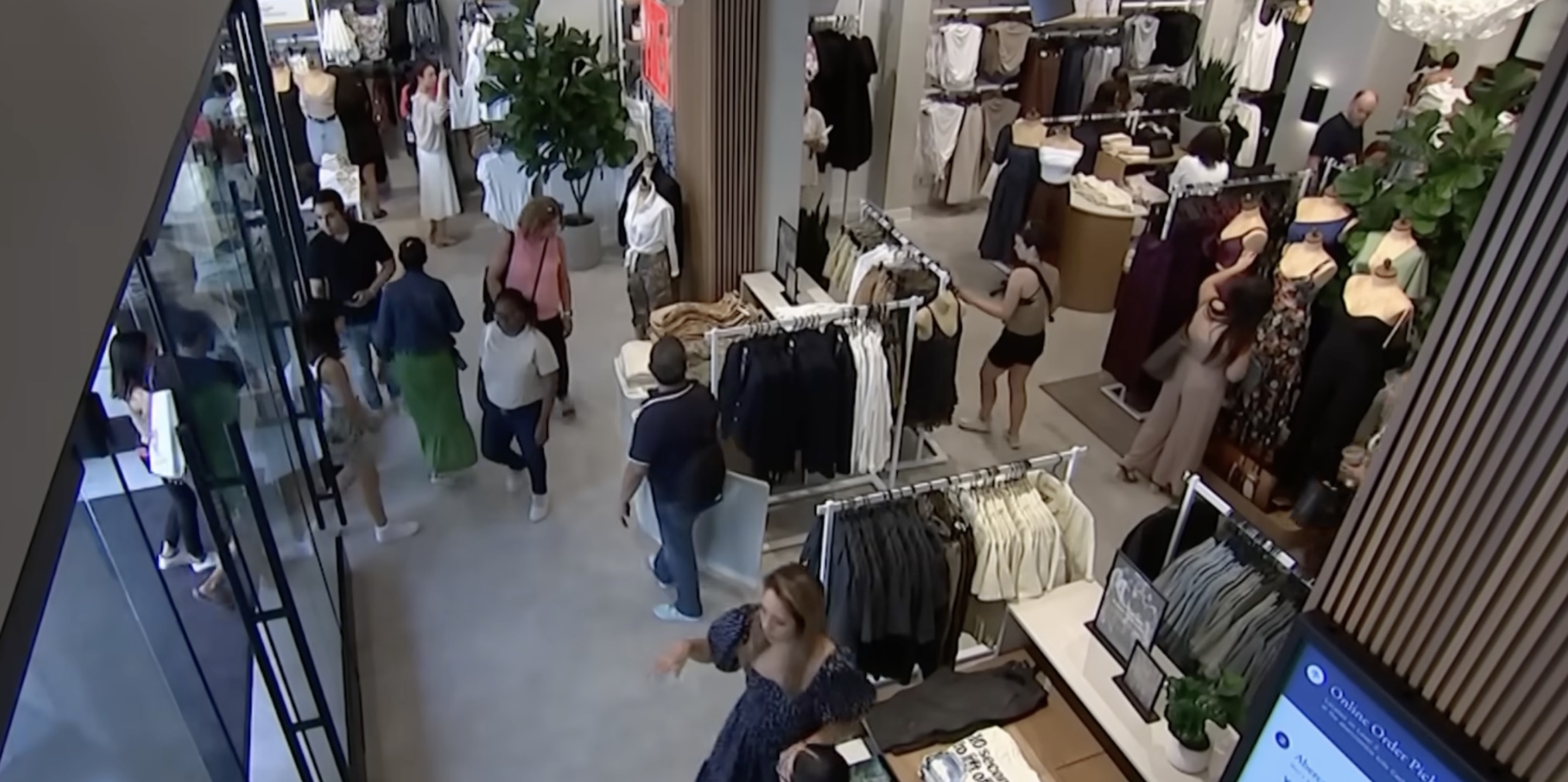
"In terms of how we think about the malls today fundamentally, this is probably the best it’s felt post-Covid."

Per the Wall Street Journal, citing data from real estate analytics firm Green Street, mall values are up 13 percent over the past year, topping all 10 commercial property sectors. That amount is also more than double the increase in overall commercial real estate prices.
Malls have seen their strongest footing since the pandemic, with many successful mall owners drawing crowds by renovating properties and expanding their types of tenants to businesses with less online competition, such as luxury retailers, restaurants, and entertainment venues.
Shares for the US’ largest mall owner, Simon Property Group, passed their previous record high in July for the first time since 2016, and the stock has outperformed the S&P 500 over the past 12 months.
The rebound comes after the pandemic proved difficult for malls, with foot traffic tanking, extended closures, and the rise of online shopping taking a chunk out of mall business. Green Street said that around 200 malls have closed since 2008, leaving the total number still operating in the US at 900.
Ronald Kamdem, head of US real-estate investment trust and commercial real-estate research at Morgan Stanley, told the outlet, “In terms of how we think about the malls today fundamentally, this is probably the best it’s felt post-Covid.”
Another mall owner seeing an upshift is the Paris-based Unibail-Rodamco-Westfield, which four years ago had planned to ditch the US market, but has now committed to spending around $1 billion to buy out its partners for Westfield UTC in San Diego and Westfield Southcenter.
URW Chief Executive Vincent Rouget said, “We see the type of rent growth that we haven’t seen since the beginning of the 2010s.”
Smaller mall companies are also seeing growth. CBL Properties, based in Chattanooga, Tennessee, had spent a year in bankruptcy protection following the pandemic. The company had sold off or walked away from over two dozen malls since 2013. Now, foot traffic and sales are up, as well as its stock price, and the company has bought five new properties since July of 2025.
CEO Stephen Lebovitz said, “It’s really been, I think, even better than we had hoped.”
It’s not just older Americans coming back to malls, younger generations are getting in on the action as well. Heather Eilers-Bowser was shopping at Tysons Corner Center in Virginia earlier in 2026 alongside her 13-year-old daughter. She said she was shocked at how much younger Americans spend at the mall. “She has more expensive makeup than I do,” she said of her daughter. “And a lot more.”
Some remain skeptical of how well malls have been performing as of late. Bob Neighoff, a portfolio manager at alternative asset manager Mariner Investment Group, said he wasn’t convinced the recent surge will last. He noted that the entertainment venues and restaurants that replaced vacant department stores will be hard to replace if they close.
Powered by The Post Millennial CMS™ Comments
Join and support independent free thinkers!
We’re independent and can’t be cancelled. The establishment media is increasingly dedicated to divisive cancel culture, corporate wokeism, and political correctness, all while covering up corruption from the corridors of power. The need for fact-based journalism and thoughtful analysis has never been greater. When you support The Post Millennial, you support freedom of the press at a time when it's under direct attack. Join the ranks of independent, free thinkers by supporting us today for as little as $1.
Remind me next month
To find out what personal data we collect and how we use it, please visit our Privacy Policy







Comments