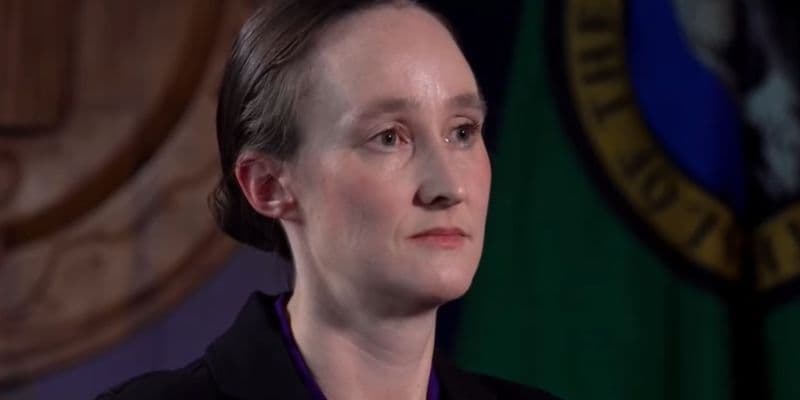
Biden’s defense sec released from Walter Reed after two weeks in hospital
Austin was placed in the ICU on Jan. 2 with complications from a prostate cancer surgery he had done in December.
Austin was placed in the ICU on Jan. 2 with complications from a prostate cancer surgery he had done in December.

Biden Defense Secretary Lloyd Austin was released from the hospital on Monday, over two weeks after his initially hidden hospitalization after complications from a prostate cancer surgery he had done in December.
He was brought to Walter Reed National Military Medical Center via ambulance on Jan. 1 after dealing with nausea as well as severe pain in his legs and abdominal area. This took place about a week after he had an operation to treat prostate cancer, which spurred concerns that Austin's lack of attendance at work could weaken the Biden admin's ability to react to global threats.
Loading this lets X set cookies and collect data.
View on X“I’m grateful for the excellent care I received at Walter Reed National Military Medical Center and want to thank the outstanding doctors and nursing staff for their professionalism and superb support. I also am thankful and appreciative for all the well wishes I received for a speedy recovery,” Austin said in an emailed statement from the Pentagon on Monday, the Daily Caller reports.
“Now, as I continue to recuperate and perform my duties from home, I’m eager to fully recover and return as quickly as possible to the Pentagon.”
Austin was placed in the Intensive Care Unit (ICU) on Jan. 2 so doctors could work on a urinary tract infection, where he stayed until going back to work on Friday, when he authorized airstrikes against Houthi rebels in the Red Sea, according to the outlet.
“The Secretary continues to recover well and, on the advice of doctors, will recuperate and perform his duties remotely for a period of time before returning full-time to the Pentagon. He has full access to required secure communications capabilities,” reported the Pentagon.
Doctors who treated Austin said in a statement that his “prostate cancer was treated early and effectively, and his prognosis is excellent.”
They added that he “has no planned further treatment for his cancer other than regular post-prostatectomy surveillance.”
Pentagon Press Secretary Maj. Gen. Pat Ryder told CNN earlier in January that Austin granted “certain operational responsibilities that require constant secure communications capabilities” to Deputy Secretary of Defense Kathleen Hicks on Jan. 2, one day after his stay at Walter Reed commenced.
Loading this lets X set cookies and collect data.
View on XThis was days before Biden was informed about Austin's hospitalization; reports indicate that he learned of Austin's condition almost a week after it occurred.
Libby’s Desk
Commentary and must-reads from Libby’s desk, straight to your inbox.
TPM Newsletter
The Post Millennial’s top stories, delivered to your inbox.