
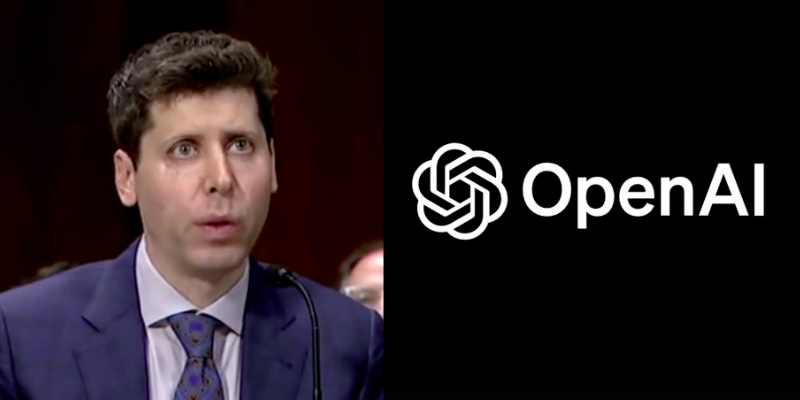
According to the complaints, four plaintiffs died by suicide while three others survived severe psychological episodes that were worsened through prolonged conversations with ChatGPT.

Futurism has reported than over 20 deaths have been linked to ChatGPT interactions through lawsuits and news reports. One is the case of Christian Faith Madison, a 29-year-old woman whose family has alleged in a lawsuit that ChatGPT reinforced and encouraged her suicidal ideations before she died after walking into traffic.
The public has been infuriated with the company, with one user on X saying, "the moment ChatGPT persuaded that first poor boy to kill himself, Sam Altman should have pulled the product from the market for emergency refinement. but he didn’t, & his glorified Magic 8 Ball has pushed child after child into the grave. hard to see him as anything but a monster."
Another user reacted to Madison's death, and said, "Unbelievable that we allow this company to exist."
The lawsuit is one of a growing number of complaints alleging that the chatbot either validated or intensified existing mental illness, rather than steering its users toward emergency support. Several lawsuits against OpenAI were launched November 6, 2025, when the Social Media Victims Law Center and Tech Justice Law Project filed seven complaints in California state courts against OpenAI, Inc. and, individually, CEO Sam Altman.
According to the complaints, four plaintiffs died by suicide while three others survived severe psychological episodes that they allege were worsened through prolonged conversations with ChatGPT. The deceased named in the litigation are:
- Zane Shamblin, 23, Texas
- Amaurie Lacey, 17, Georgia
- Joshua Enneking, 26, Florida
- Joe Ceccanti, 48, Oregon
- Jacob Irwin, 30, Wisconsin
- Hannah Madden, 32, North Carolina
- Allan Brooks, 48, Ontario
The complaint says that rather than consistently directing him toward emergency intervention, the chatbot repeatedly romanticized or reinforced his thinking during the conversation. Another lawsuit alleges 17-year-old Amaurie Lacey asked ChatGPT about suicide methods and that the chatbot responded with detailed information about a proposed method and how long it would take. In August 2025, Matthew and Maria Raine sued the company following the death of their 16-year-old son Adam Raine, who died by suicide after months of conversations with the chatbot about suicidal thoughts. OpenAI has since announced additional measures intended to improve how the chatbot responds to users expressing emotional distress.
Not every case has involved suicide. Irwin, one of the surviving plaintiffs, alleges lengthy interactions with ChatGPT reinforced increasingly elaborate scientific theories rather than recognizing signs of a developing mental-health crisis. He says the conversations contributed to a manic episode that ultimately resulted in hospitalization.
OpenAI is also facing lawsuits connected to recent deadly school shootings. On February 10, 2026, trans 18-year-old Jesse Van Rootselaar killed members of his family before entering Tumbler Ridge Secondary School in British Columbia, where six more people were killed before he died from a self-inflicted gunshot wound. Subsequent lawsuits filed on behalf of victims allege Van Rootselaar had spent months using ChatGPT before the attack. According to the complaints, OpenAI's automated systems flagged discussions involving gun violence months before the shooting. The lawsuits further allege a safety team recommended notifying law enforcement after reviewing the conversations, but that company leadership instead deactivated the account. After Van Rootselaar created another account and resumed similar conversations, no further intervention occurred before the attack.
Following the litigation, OpenAI said it was "deeply sorry" it had not alerted police said it has since changed company policy. The company also said it contacted the Royal Canadian Mounted Police following the February attack. It is also facing legal action regarding its alleged role in the FSU school shooting, when it allegedly told the perpetrator to “target children to draw more attention.” According to figures released by OpenAI, approximately 0.07% of weekly active users display possible signs associated with psychosis or mania, while around 0.15% explicitly discuss planning suicide. ChatGPT reportedly serves roughly 800 million weekly active users.
Powered by The Post Millennial CMS™ Comments
Join and support independent free thinkers!
We’re independent and can’t be cancelled. The establishment media is increasingly dedicated to divisive cancel culture, corporate wokeism, and political correctness, all while covering up corruption from the corridors of power. The need for fact-based journalism and thoughtful analysis has never been greater. When you support The Post Millennial, you support freedom of the press at a time when it's under direct attack. Join the ranks of independent, free thinkers by supporting us today for as little as $1.
Remind me next month
To find out what personal data we collect and how we use it, please visit our Privacy Policy





Comments