
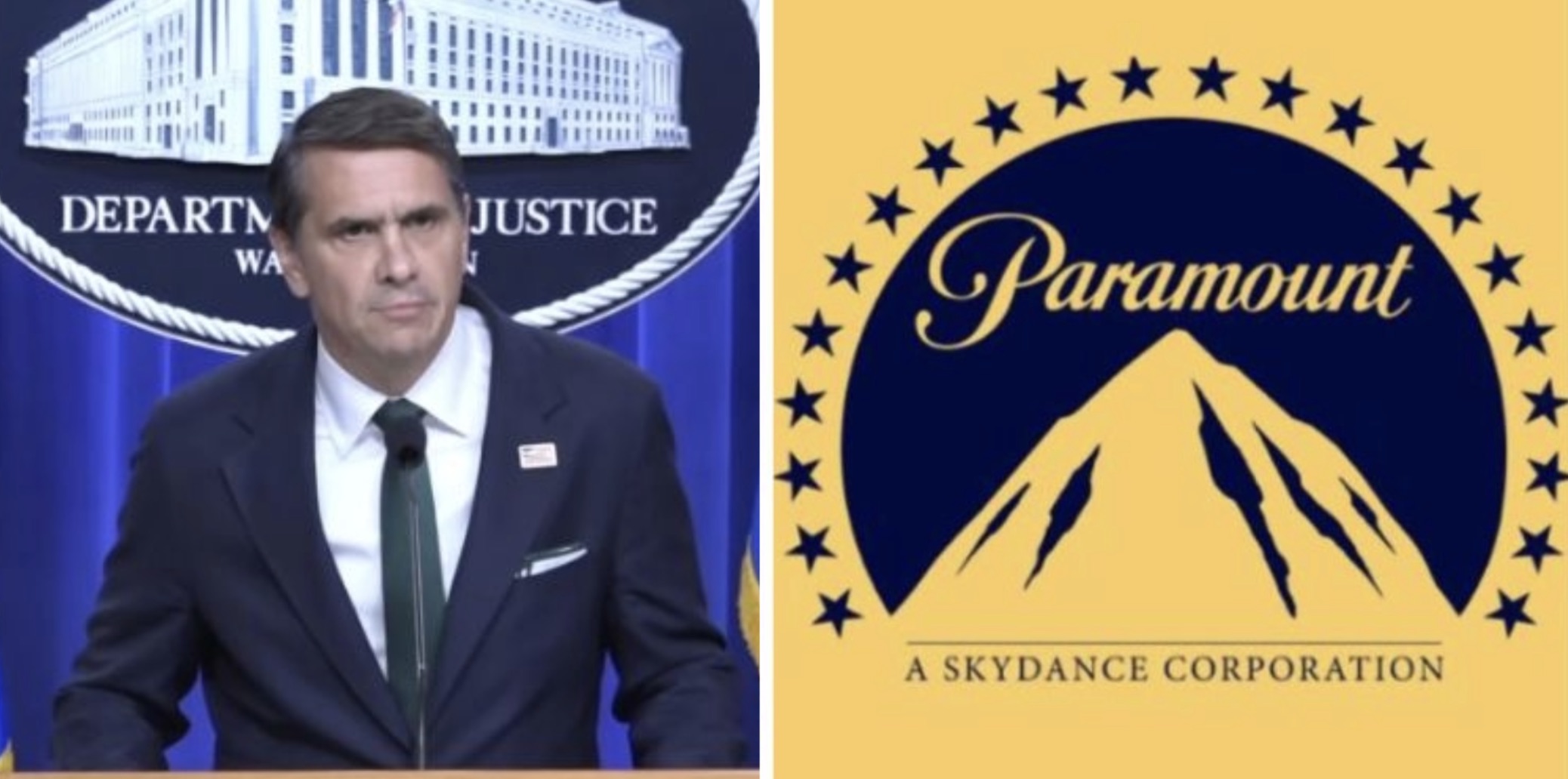
“The bond requirement forces parties ‘to have skin in the game,’” the motion states.

The Department of Justice has sided with Paramount in the ongoing legal battle against state attorneys general, demanding that the states behind the holdup of the Paramount-Warner Bros. Discovery merger bear the costs caused by their lawsuits.
Paramount has argued that it could lose at least $1.88 billion due to the holdup in the merger, and has requested that Judge Araceli Martinez-Olguin to require the states to post a bond in that amount. That amount would compensate the company if it prevails at trial, which is scheduled to begin in March of 2027.
Sources told TMZ on Wednesday that the Los Angeles Mayor’s Office and the California Attorney General’s Office have been told that Paramount will be announcing that it is leaving the state. The announcement was reportedly supposed to come on Tuesday, with TMZ reporting, “We do not know if circumstances changed or if there was just a delay.”
The statement of interest, filed in the US District Court for the Northern District of California on Tuesday, the DOJ argued that the states must post a “proper bond” because they are acting in the role of “private persons” to “seek injunctive relief for a violation of the antitrust laws.”
“The bond requirement forces parties ‘to have skin in the game,’” the motion states, “and also provides a measure of protection to defendants who were ultimately found to be wrongly enjoined.”
The DOJ said that “this type of protective measure is common.” It added, “Since a preliminary injunction may be granted before a plaintiff has made a full showing on the merits, ‘generally the moving party must demonstrate confidence in his legal position by posting bond in an amount sufficient to protect his adversary from loss in the event that future proceedings prove that the injunction issued wrongfully.’”
In a filing earlier in September, Paramount urged the judge to enforce the bond. The filing stated, “Paramount provided unrebutted evidence that, but-for the Order, it may suffer $1.88 billion in damages. Critically, the states never dispute that evidence or otherwise contest that Paramount will suffer financial injury as a result of the Order, both from the ticking fee and the incremental financing costs—a financial harm that the states outright ignore.”
A Paramount spokesperson said in a statement, “If plaintiffs insist that this transaction is paused during the pendency of their lawsuit, they must accept the financial consequences if their challenge ultimately fails. Paramount agreed to delay closing to facilitate a prompt resolution of the case, while expressly preserving its legal rights and we continue to honor that agreement. We are not asking the district court to lift the no-close order, but to require enforcement of the bond that protects our financial interests while the litigation remains pending.”
“But for these lawsuits, the transaction is now otherwise ready to close, and the resulting costs of delay are substantial and quantifiable. The Clayton Act and Rule 65 provide for a bond precisely to protect against exactly those types of losses if a court determines an injunction ultimately is unwarranted. We are confident that the evidence will show that these lawsuits are meritless and look forward to closing the transaction and delivering its benefits in California, across the United States, and around the world.”
Powered by The Post Millennial CMS™ Comments
Join and support independent free thinkers!
We’re independent and can’t be cancelled. The establishment media is increasingly dedicated to divisive cancel culture, corporate wokeism, and political correctness, all while covering up corruption from the corridors of power. The need for fact-based journalism and thoughtful analysis has never been greater. When you support The Post Millennial, you support freedom of the press at a time when it's under direct attack. Join the ranks of independent, free thinkers by supporting us today for as little as $1.
Remind me next month
To find out what personal data we collect and how we use it, please visit our Privacy Policy






Comments