
If convicted, Alfozan faces up to five years in prison, a $250,000 fine, and three years of supervised release.

Abdulrahman Alfozan, 35, was arrested on October 9 and made his initial appearance in federal court on October 13, according to the Department of Justice. He is charged with using or attempting to use a device to intercept oral communications.
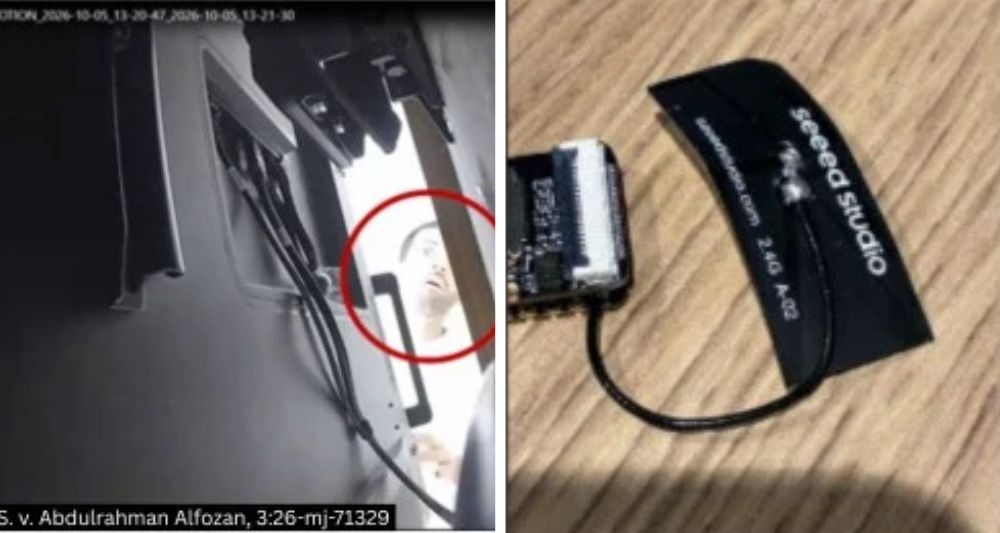
The criminal complaint alleges that OpenAI employees discovered the recorder on September 30, plugged into a USB port on the back of a television at one of the company’s San Francisco buildings. The device was concealed in toilet paper, and its contents were encrypted. The company determined it had been installed around September 28.
Alfozan had worked for OpenAI since July 2025. Investigators allege that office surveillance footage placed him near the conference room on multiple dates before employees found the recorder, despite his having no authorization to access the room or participate in meetings there.
The room was frequently used for discussions involving proprietary research, product plans, potential business deals, and nonpublic information about the company’s technical capabilities. Meetings also covered strategic decisions, government engagements and commercial relationships, according to the complaint.
Prosecutors also described a series of digital inquiries preceding the discovery. Alfozan allegedly used a productivity tool to look up company building addresses, meeting rooms, room capacities and calendars, executive locations and meetings with outside partners.
Separately, a chatbot account associated with his spouse submitted prompts between September 24 and September 30 about assembling and concealing an audio recording device, improving its audio capabilities, enabling remote access and encrypting its storage.
According to the complaint, that account shared multiple identifiers and attributes with Alfozan’s own account. On September 27 and September 28, it also submitted inquiries containing details specific to the device found in the conference room, including its custom header and unique MAC address.
The complaint further alleges that Alfozan returned to the conference room on October 5 and appeared on surveillance footage to look behind the television where the recorder had been installed. Around the same day, OpenAI security personnel found a bag he had left unattended in another room. Inside, they allegedly discovered his wallet and identification, along with a second recording device similar to the first.
If convicted, Alfozan faces up to five years in prison, a $250,000 fine, and three years of supervised release.
FBI Director Kash Patel said, “According to the complaint unsealed today, Abdulrahman Alfozan allegedly concealed a covert recording device inside his employer’s executive conference room to secretly capture sensitive communications about the company’s super intelligence technology. Protecting American SI innovation is essential to safeguarding our nation’s economic strength and national security, and the FBI views that mission as one of our highest counterintelligence priorities. Thank you to Director of National Intelligence Jay Clayton and our law enforcement partners for their support — and we will continue working closely with our partners across the U.S. government and private sector to keep American businesses and citizens safe and to ensure our country maintains its competitive edge.”
Powered by The Post Millennial CMS™ Comments
Join and support independent free thinkers!
We’re independent and can’t be cancelled. The establishment media is increasingly dedicated to divisive cancel culture, corporate wokeism, and political correctness, all while covering up corruption from the corridors of power. The need for fact-based journalism and thoughtful analysis has never been greater. When you support The Post Millennial, you support freedom of the press at a time when it's under direct attack. Join the ranks of independent, free thinkers by supporting us today for as little as $1.
Remind me next month
To find out what personal data we collect and how we use it, please visit our Privacy Policy





Comments