
Rodriguez confessed that she had “sacrificed” her son with a knife as he sat in the bathtub, claiming she believed she needed to kill him “to protect her family.”

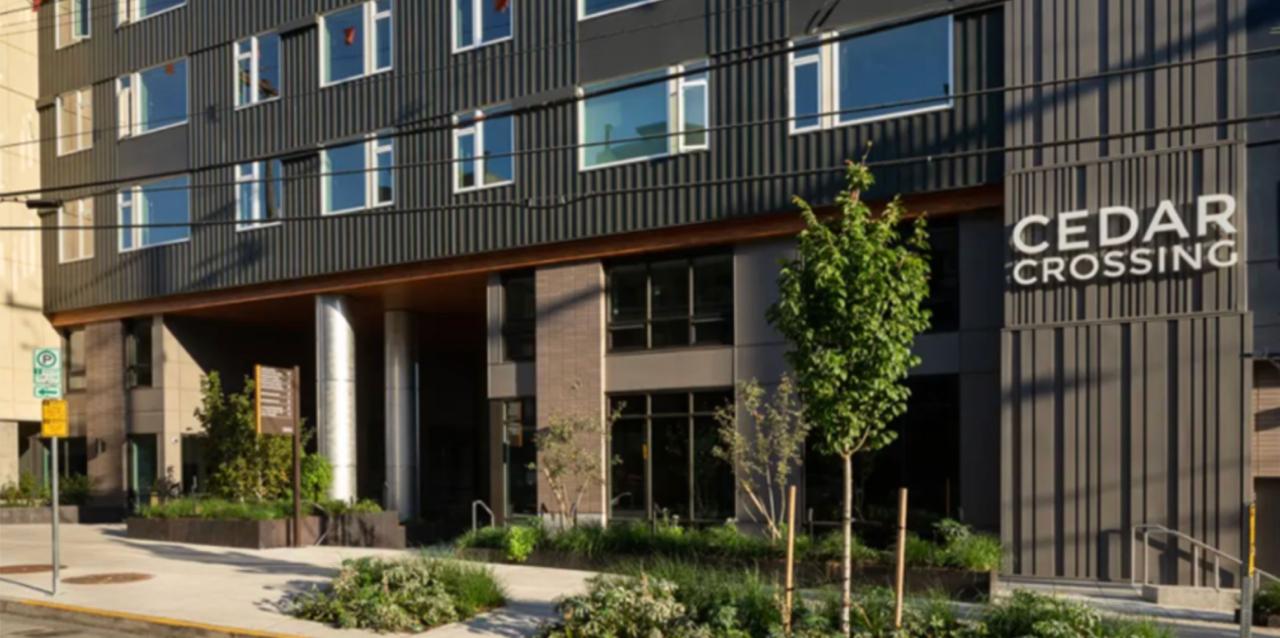
Seattle Police say that on October 16, 2025, around 4:13 pm, officers responded to reports of a possible suicide attempt at 6620 Roosevelt Way NE, Apartment #710, inside the Cedar Crossing Apartments.
When police arrived, they found Jay Rantala outside the building, screaming that his son had been killed. Inside the seventh-floor unit, officers discovered 4-year-old JJR lying face down in a bathtub partially filled with bloody water. A large kitchen knife was nearby.
The boy’s mother, Joelene Louise Rodriguez, 45, answered the door with dried blood on her wrists and reportedly told officers, “They made me do it… He’s gone.”
According to the police probable cause statement obtained by The Ari Hoffman Show on Talk Radio 570 KVI, Rodriguez later confessed that she had “sacrificed” her son with a knife as he sat in the bathtub, claiming she believed she needed to kill him “to protect her family.” She told investigators she left water in the tub because it would be “comforting” for the boy, who had been diagnosed with level-3 autism.
JJR was pronounced dead at the scene. Rodriguez was arrested and booked into King County Jail on suspicion of homicide. She appeared in court on Friday, where prosecutors requested and a judge set $5 million bail.
Cedar Crossing is a $105 million publicly funded housing complex located adjacent to the Roosevelt light rail station. The property was developed and is operated by Bellwether Housing and Mercy Housing Northwest, two of Seattle’s largest nonprofit housing providers.
The project was financed through a patchwork of local, county, state, and federal funding sources, including: $15 million from the City of Seattle Office of Housing, contributions from King County and the Washington State Department of Commerce, discounted land provided by Sound Transit, and Federal Low-Income Housing Tax Credits (LIHTC).
Promoted as a “transit-oriented affordable living” development, Cedar Crossing houses families with low incomes, formerly homeless individuals, and tenants with behavioral or developmental disabilities.
Critics argue the project exemplifies Seattle’s entrenched “homeless industrial complex,” a network of publicly funded nonprofits and contractors that, despite record spending, have failed to make measurable progress in reducing homelessness or ensuring safety in subsidized buildings.
The tragedy at Cedar Crossing came just as Mayor Bruce Harrell made a stunning admission during a mayoral debate with challenger Katie Wilson: “More than 70 percent of the people experiencing homelessness in Seattle are not originally from the city,” Harrell said, defending his administration’s record and emphasizing that he and his wife have “been working on the issue for a long time.”
But despite years of citywide emergency declarations and hundreds of millions in new taxes and bond-funded housing projects, Seattle’s homeless population continues to climb.
Data released earlier this year showed that at least half of Seattle’s homeless population first became homeless outside the Puget Sound region, with no prior ties to the city or county.
A Discovery Institute Center on Wealth and Poverty report, A New Approach to Homelessness in Seattle, ranked Seattle’s crisis as the third worst in the nation. The report found that unsheltered homelessness in King County is at an all-time high and could double in less than three years if current trends persist.
Despite record spending, King County’s latest point-in-time count recorded the highest number of homeless individuals ever documented in the region, a grim reflection of a system that appears to be expanding rather than solving the problem.
The Cedar Crossing case underscores the intersection of public funding, mental illness, and failed oversight in Seattle’s housing bureaucracy. The building, lauded as a model of “compassionate urban planning,” has seen frequent emergency calls since opening in 2023, from overdoses to domestic disturbances, with limited transparency about outcomes for residents.
As the city pours more money into subsidized housing and service contracts, critics say tragedies like this expose how nonprofits and developers grow richer while vulnerable tenants remain unprotected.
Mayor Harrell’s acknowledgment that most of Seattle’s homeless are from outside the city may only amplify public frustration over policies that critics say import dysfunction while exporting accountability.
Rodriguez remains in custody at King County Jail on a $5 million bond. Prosecutors are expected to charge her with first-degree murder in the coming days. The next court appearance in the case is scheduled for Monday, October 21.
Powered by The Post Millennial CMS™ Comments
Join and support independent free thinkers!
We’re independent and can’t be cancelled. The establishment media is increasingly dedicated to divisive cancel culture, corporate wokeism, and political correctness, all while covering up corruption from the corridors of power. The need for fact-based journalism and thoughtful analysis has never been greater. When you support The Post Millennial, you support freedom of the press at a time when it's under direct attack. Join the ranks of independent, free thinkers by supporting us today for as little as $1.
Remind me next month
To find out what personal data we collect and how we use it, please visit our Privacy Policy






Comments
2025-10-20T11:11-0400 | Comment by: Jeanne
They’d have been better off spending that money to house the MENTALLY ILL, who are now rampant on the streets.