
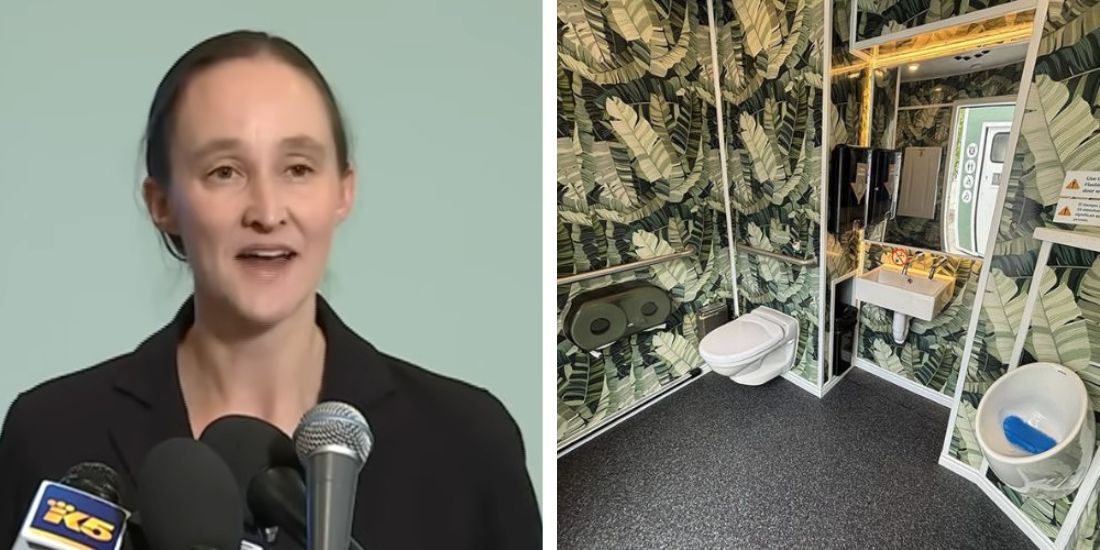
20 years ago, Seattle spent millions on high-tech public toilets, but the bathrooms became magnets for crime and drug use, and the city ended up selling the toilets on eBay for pennies on the dollar.

The City of Seattle announced it is partnering with Throne Labs to install four solar-powered public restroom units in Pioneer Square as part of a one-year pilot program tied to downtown revitalization and World Cup preparations. According to city materials, the total pilot cost amounts to roughly $464,000, about $116,000 per restroom unit. City leaders insist the high-tech toilets are necessary to modernize Seattle’s struggling public infrastructure while addressing chronic sanitation problems downtown.
“Today is a first step to delivering on Seattle’s number 1 and number 2 priority: creating clean, accessible, and safe public bathrooms,” said Seattle Mayor Katie B. Wilson. “This is a simple solution to address one of our most basic human needs, and a step towards creating a more livable and welcoming city for everyone.”
The restrooms are being installed near Lumen Field and along heavily trafficked Pioneer Square corridors which are expected to see massive pedestrian activity during the FIFA tournament. City officials say Pioneer Square will become a walkable pedestrian zone during the six World Cup match days, supplemented by more than 100 portable toilets.
Unlike traditional public bathrooms, the Throne Labs units rely heavily on technology. Users gain access by scanning a QR code, texting a number, or using an app. Sensors monitor water levels and waste tanks, while users can rate cleanliness after each visit. The units are solar-powered and designed to function without permanent plumbing hookups.
The city argues the approach reduces installation costs and deployment time compared to conventional restroom construction. Officials also say the system allows operators to ban vandals or repeat offenders from future use. “Seattle residents shouldn’t have to struggle to find a public bathroom,” the city said in its announcement. “We are designing public spaces to serve everyone and account for their basic needs.”
But longtime Seattle residents may feel a sense of déjà vu. 20 years ago, the Emerald City spent millions on high-tech public toilets that promised automated cleaning systems and multilingual instructions. The bathrooms were quickly vandalized and became magnets for crime and drug use. The city ended up shutting down the program and sold the toilets on eBay for pennies on the dollar.
Critics are already questioning whether the latest six-figure restroom installations will avoid the same fate in a city already struggling with homelessness, open-air drug use, vandalism, and persistent public safety concerns downtown.
The bathrooms come equipped with ADA accessibility features, touchless sinks and toilets, baby-changing stations, grab bars, and NaviLens technology to assist blind or low-vision users. The units will operate daily from 7 am to 10 pm with a 10-minute usage limit.
Throne Labs says the restrooms will be cleaned multiple times each day and monitored continuously using remote technology. If users report unsanitary conditions, maintenance crews can be dispatched immediately. “Clean, accessible restrooms are a basic part of what makes a city feel welcoming and safe for everyone,” said Angela Brady, Acting Director of the Seattle Department of Transportation. “Partnering with Throne gives us an innovative, fast-to-deploy solution that fits into our mission to build a livable and accessible city.”
The company behind the project already operates similar restroom systems in the San Francisco Bay Area, Los Angeles County, Washington, DC, and Ann Arbor. Seattle officials say the pilot program will determine whether the “smart” toilets become a permanent feature across the city after the World Cup concludes.
Powered by The Post Millennial CMS™ Comments
Join and support independent free thinkers!
We’re independent and can’t be cancelled. The establishment media is increasingly dedicated to divisive cancel culture, corporate wokeism, and political correctness, all while covering up corruption from the corridors of power. The need for fact-based journalism and thoughtful analysis has never been greater. When you support The Post Millennial, you support freedom of the press at a time when it's under direct attack. Join the ranks of independent, free thinkers by supporting us today for as little as $1.
Remind me next month
To find out what personal data we collect and how we use it, please visit our Privacy Policy






Comments