
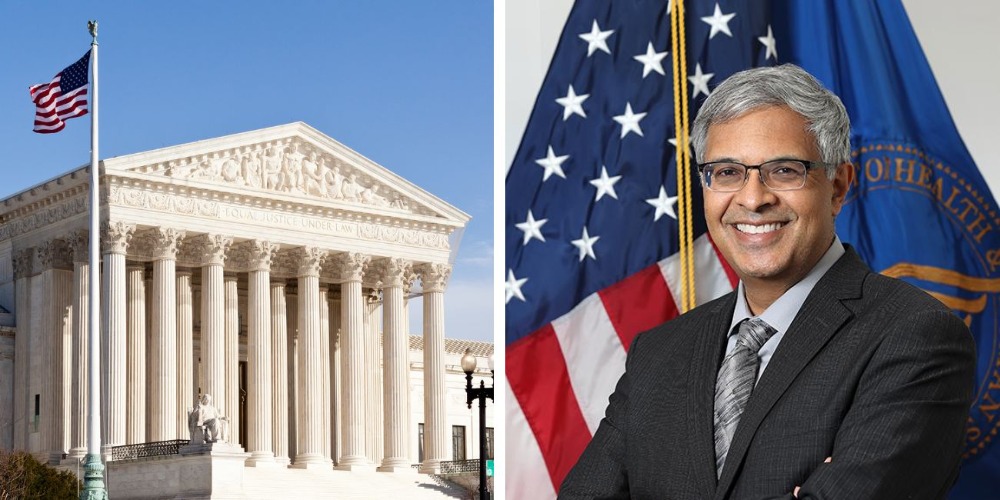
The Supreme Court allowed the National Institutes of Health to terminate $783 million in grants linked to DEI initiatives

The order from the court stated, in relation to the grants, "The Administrative Procedure Act’s 'limited waiver of [sovereign] immunity' does not provide the District Court with jurisdiction to adjudicate claims 'based on' the research-related grants or to order relief designed to enforce any 'obligation to pay money' pursuant to those grants."
It added, "And while the loss of money is not typically considered irreparable harm, that changes if the funds 'cannot be recouped' and are thus 'irrevocably expended.’ The Government faces such harm here. The plaintiffs do not state that they will repay grant money if the Government ultimately prevails. Moreover, the plaintiffs’ contention that they lack the resources to continue their research projects without federal funding is inconsistent with the proposition that they have the resources to make the Government whole for money already spent."
In the administration’s appeal to the Supreme Court, US Solicitor General D John Sauer suggested that the case was governed by an order in Department of Education v California, which granted the department’s request to pause payments to teacher training grants that included DEI initiatives, per SCOTUS Blog.
In her dissenting opinion, Justice Ketanji Brown Jackson wrote, "The First Circuit’s stay opinion also evaluated the relative harms and compared the balance of the equities to those in California. It concluded that these plaintiffs stood to lose more and the Government less: Unlike in California, these researchers lack the financial wherewithal to keep their programs running on their own—meaning a stay would euthanize animal subjects, terminate life-saving trials, and close community health clinics. And unlike in California, there is no fast-expiring temporary restraining order incentivizing a rushed drawdown of granted funds. Accordingly, the First Circuit declined to stay the District Court’s partial judgment pending appeal."
In May, it was revealed that the NIH had canceled 669 grants either in full or in part, with at least 323 of those relating to LGBTQ health issues. Termination letters explained that LGBTQ-related research "no longer effectuates agency priorities," and said that the studies were based “primarily on artificial and nonscientific categories, including amorphous equity objectives.”
Powered by The Post Millennial CMS™ Comments
Join and support independent free thinkers!
We’re independent and can’t be cancelled. The establishment media is increasingly dedicated to divisive cancel culture, corporate wokeism, and political correctness, all while covering up corruption from the corridors of power. The need for fact-based journalism and thoughtful analysis has never been greater. When you support The Post Millennial, you support freedom of the press at a time when it's under direct attack. Join the ranks of independent, free thinkers by supporting us today for as little as $1.
Remind me next month
To find out what personal data we collect and how we use it, please visit our Privacy Policy






Comments