
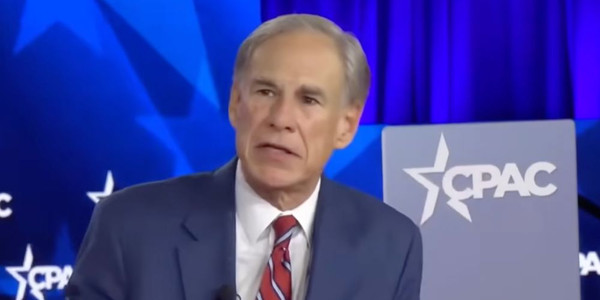
“Benefits, licenses, and taxpayer-funded services should not be used to incentivize unlawful presence at the expense of hardworking Texans."

Republican lawmakers in Texas have spent the past year implementing regulatory changes to limit access to services for the estimated 1.7 million illegal immigrants residing in the state, prompting both support from state officials and criticism from activist groups.
A report by the Texas Tribune detailed the steps taken, which include tightening eligibility requirements for occupational licenses, restricting access to commercial driver’s licenses, and limiting who can qualify for in-state tuition at public universities. According to the report, more than 6,400 refugees and DACA recipients have lost their commercial driver’s licenses. Additional restrictions are expected to affect noncitizens working in licensed industries such as construction and medicine.
State officials are also examining the 1982 Supreme Court ruling Plyler v. Doe, which requires public schools to educate noncitizens.
“Benefits, licenses, and taxpayer-funded services should not be used to incentivize unlawful presence at the expense of hardworking Texans,” a spokesperson for Governor Greg Abbott said in a statement. “These steps ensure compliance with federal law, protect the integrity of our systems, and prioritize jobs and resources for legal residents and citizens.”
The efforts, however, have been met with backlash by activists.
“These all represent a broader and more coordinated shift … to create a pipeline of exclusion that stretches from limiting access to K-12 education, all the way into participation in the workforce and basic mobility through the state,” Corinne Kentor, with the Presidents’ Alliance on Higher Education and Immigration, told the outlet.
Some of the changes have occurred outside the legislative process, drawing additional scrutiny. After a bill to end in-state tuition for noncitizen students stalled, Texas AG Ken Paxton worked with the Department of Justice to challenge the existing policy in court. As a result, students must now demonstrate they are lawfully present in the United States to qualify for in-state tuition, affecting up to 18,500 students.
In September, Abbott directed the Texas Department of Public Safety to enforce a federal English proficiency requirement for truck drivers, instructing officials to stop issuing commercial driver’s licenses to non-English speakers following several crashes involving drivers with limited English proficiency.
Other measures include requiring proof of legal presence to purchase a vehicle in Texas. Additionally, the Texas Department of Licensing and Regulation has recently voted to limit what type of noncitizens can receive certain occupational licenses.
Powered by The Post Millennial CMS™ Comments
Join and support independent free thinkers!
We’re independent and can’t be cancelled. The establishment media is increasingly dedicated to divisive cancel culture, corporate wokeism, and political correctness, all while covering up corruption from the corridors of power. The need for fact-based journalism and thoughtful analysis has never been greater. When you support The Post Millennial, you support freedom of the press at a time when it's under direct attack. Join the ranks of independent, free thinkers by supporting us today for as little as $1.
Remind me next month
To find out what personal data we collect and how we use it, please visit our Privacy Policy



Comments