
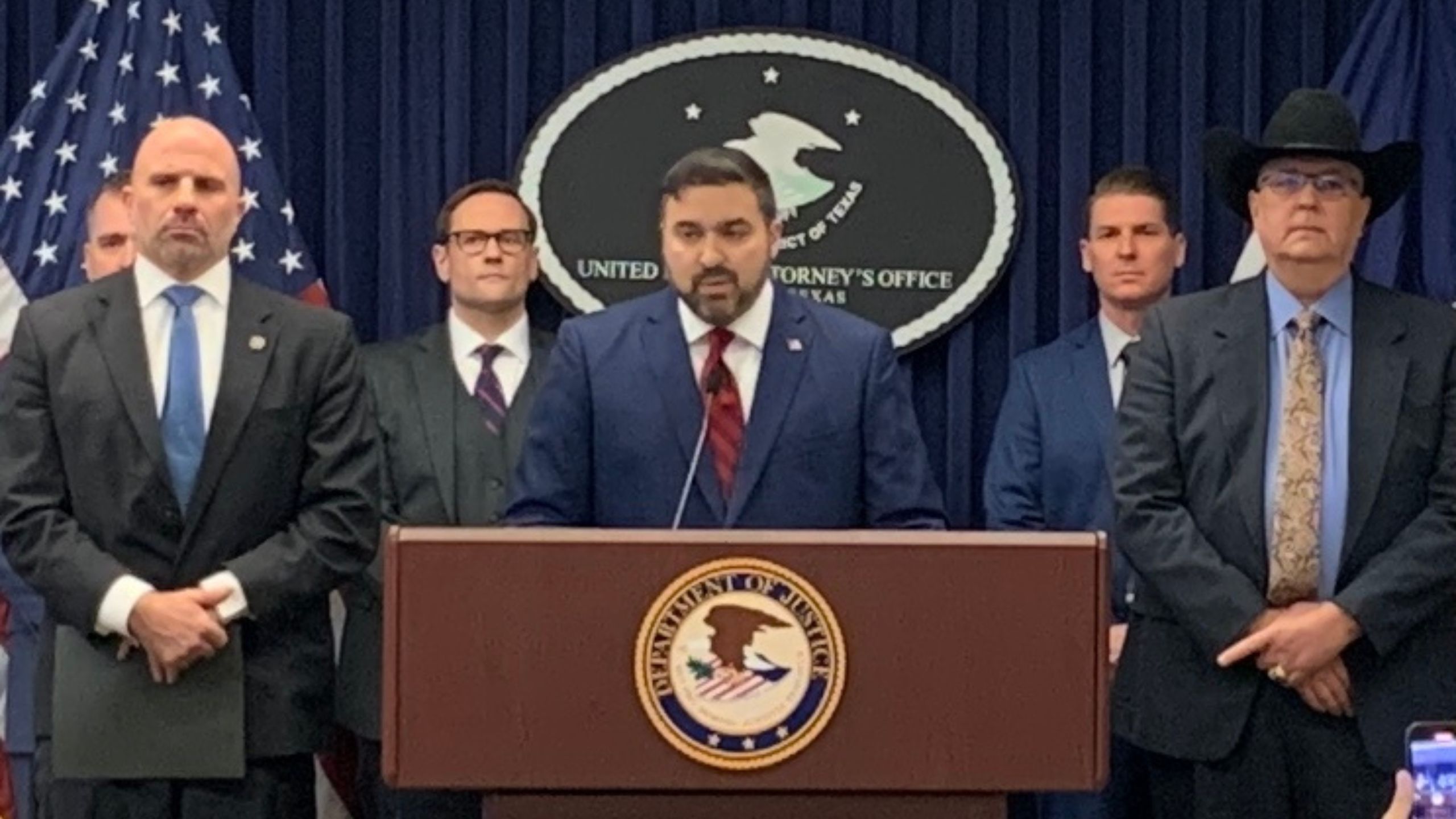
US Attorney Nicholas J. Ganjei for the Southern District of Texas characterized advanced chips as the building blocks of AI superiority.

Officials described the probe called Operation Gatekeeper as a response to a sophisticated effort to funnel high-performance AI chips to overseas destinations in violation of US law. US Attorney Nicholas J. Ganjei for the Southern District of Texas characterized advanced chips as the building blocks of AI superiority.
According to court documents, Alan Hao Hsu, also known as Haochun Hsu, 43, of Missouri City, Texas, and his company, Hao Global LLC, pleaded guilty on Oct. 10, 2025, to smuggling and unlawful export activities. Prosecutors allege that between October 2024 and May 2025, Hsu and others knowingly exported and attempted to export at least $160 million in export-controlled Nvidia H100 and H200 Tensor Core graphics processing units. The H100 and H200 are high-speed GPUs used for AI applications and high-performance computing, designed to process massive amounts of data and help power generative AI, large language models, and advanced scientific computing. Authorities note the chips can be used for both civilian and military applications.
Investigators allege Hsu and others falsified shipping paperwork and misclassified the goods and recipients to conceal the ultimate destinations. Prosecutors say Hsu and Hao Global received more than $50 million in wire transfers originating from the People’s Republic of China to fund the scheme and that the GPUs were ultimately shipped to the PRC, Hong Kong, and other destinations in violation of US export laws. Hsu faces up to 10 years in prison at sentencing scheduled for Feb. 18, and Hao Global LLC faces a maximum penalty of twice the gross gain from the offense and a term of probation.
Two additional defendants have been charged in connection with the alleged scheme. Benlin Yuan, 58, identified as the chief executive officer of an IT services company in Sterling, Virginia, described by prosecutors as the US subsidiary of a large PRC IT company based in Beijing, was arrested in Sterling on Nov. 28 and charged with conspiring to violate the Export Control Reform Act of 2018. Authorities say Yuan is a Canadian citizen who lives in Mississauga, Ontario. Fanyue Gong, also known as Tom Gong, 43, a PRC citizen who lives in Brooklyn and owns a New York technology company, was arrested in New York on Dec. 3 and charged with conspiring to smuggle goods out of the United States.
Charging documents allege Gong and Yuan separately conspired with employees of a Hong Kong-based logistics company and a China-based AI technology company to circumvent US export controls. The criminal complaint against Gong alleges that co-conspirators obtained Nvidia GPUs through straw purchasers and intermediaries, falsely claiming the goods were destined for US customers or customers in third countries that do not require export licenses. Prosecutors say the chips were sent to US warehouses, where individuals working for Gong allegedly removed Nvidia labels and relabeled the units with the name “SANDKYAN,” described as a fake company, before preparing the goods for export. Authorities allege the shipping and export paperwork misclassified the GPUs as generic computer parts and that co-conspirators shipped or attempted to ship the goods to the PRC and Hong Kong.
The complaint also alleges Yuan helped recruit and organize individuals to inspect mislabeled GPUs on behalf of the Hong Kong logistics company and agreed to direct inspectors not to say the goods were destined for the PRC. Prosecutors further allege that Yuan took part in discussions about crafting a story his company could use to secure the release of equipment detained by federal authorities and engaged in conversations about providing false information to U.S. officials about the ultimate customer. If convicted, Yuan faces up to 20 years in prison and up to a $1 million fine, while Gong faces up to 10 years in prison.
Hsu was permitted to remain on bond pending sentencing. Yuan and Gong are currently in custody pending further criminal proceedings.
Powered by The Post Millennial CMS™ Comments
Join and support independent free thinkers!
We’re independent and can’t be cancelled. The establishment media is increasingly dedicated to divisive cancel culture, corporate wokeism, and political correctness, all while covering up corruption from the corridors of power. The need for fact-based journalism and thoughtful analysis has never been greater. When you support The Post Millennial, you support freedom of the press at a time when it's under direct attack. Join the ranks of independent, free thinkers by supporting us today for as little as $1.
Remind me next month
To find out what personal data we collect and how we use it, please visit our Privacy Policy




Comments