
"The phrase 'media circus,' often overused, is most typically identified with Judge Lance Ito’s mishandling of the OJ Simpson case. But in this case, that phrase is particularly apt..."

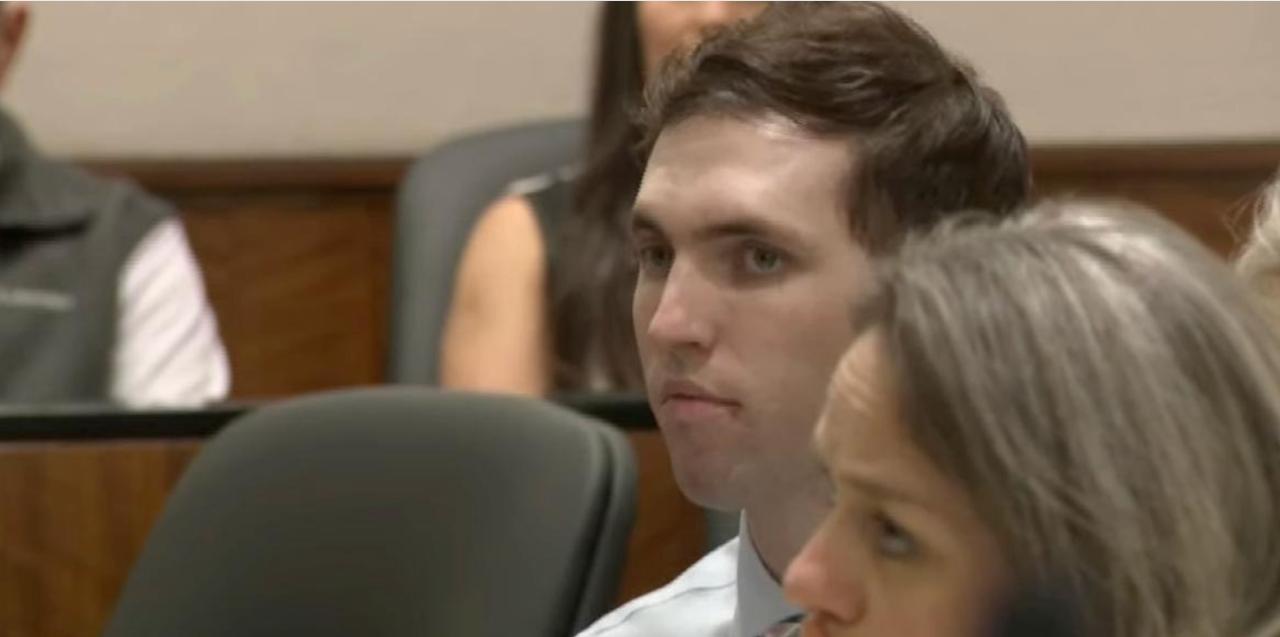
Tyler Robinson will be back in court on Friday for a hearing that is set to cover a motion from his defense team to ban cameras and other forms of electronic media coverage from the courtroom during his trial. Robinson has been charged with the killing of Turning Point USA founder Charlie Kirk at a Utah Valley University event in September.
Robinson’s attorneys filed a motion in January under seal seeking to ban cameras from the courtroom during the proceedings. Judge Tony Graf ordered in March that the motion be refiled with redactions and made public.
The defense wrote that the exclusion of devices such as cameras, microphones, and still photographers "is necessary to ensure Mr. Robinson’s rights to due process, to a fair and impartial jury, to counsel, to be free from unreasonable searches and seizures, and to be free from cruel and unusual punishment, as required by the Fourth, Sixth, Eighth and Fourteenth Amendments to the United States Constitution and article I, sections 7, 9, 10, 12, and 14 of the Utah Constitution."
The filing notes dozens of news stories from outlets across the country covering comments made by officials, commentators, and lawmakers in the case in the days leading up to and following the arrest of Robinson. Robinson’s attorneys have argued that the attention to the case has made the murder case into a “content tornado." It is this array of articles from the American free press that the defense is seeking to stifle.
The filing noted an October 27 order from Judge Graf, which stated "[t]his case has generated an immense amount of pre-trial publicity," and that "[a]s with many high-profile cases, public interest may both wax and wane, but it is likely to persist." The defense said that the court’s finding "has certainly been borne out."
Robinson’s team wrote that "the futility of attempting to contain the 'content tornado' in this case and to curb electronic media abuses through warnings and repositioning of cameras is nowhere better illustrated than the electronic media’s handling of the violation of the Court’s decorum order on December 11, 2025."
At the December 11 hearing, the defense said that Robinson was filmed in shackles and that he was zoomed in on while speaking with attorneys. The defense moved to have cameras banned from the hearing, however, Judge Graf said, "I find that excluding the cameras from the courtroom would be disproportionate for this hearing," and ordered the cameras be moved. The cameras were moved and were then not trained on Robinson, who has been permitted to attend court in civilian clothes. Graf previously ruled that he was not be filmed in shackles, which he is required to wear while in court.
In the defense’s filing, they pushed back on the media’s representation in court who said that the filming of Robinson was "inadvertent." The defense claimed it was "anything but." They took issue with a live stream featuring these decorum order violations still up in full online at the time the filing was issued.
They also took issue with a separate video that had been edited with a caption that read it had been edited to remove conversations between Robinson and his attorneys and displays of his shackles. "The effect of this editing, like the argument on the sanction motion itself, was to constantly remind the public, including prospective jurors, that Mr. Robinson is appearing in court in shackles."
They argued that broadcasting the case would "cause irreparable bias and prejudice to Mr. Robinson," and "threatens to undermine Mr. Robinson’s fundamental right to a fair and reliable trial and sentencing hearing by an impartial jury."
The defense also cited the case of Bryan Kohberger, the man convicted of killing four University of Idaho students, saying that despite the order cameras not zoom in on Kohberger’s demeanor, it "failed to work because the media could not control itself" and the judge in that case ruled that photos and videos inside the courtroom would not continue.
Robinson’s team is set to bring Dr. Bryan Edelman into court to give expert testimony at Friday’s hearing. Edelman played a key role in Kohberger obtaining a change of venue in his case. A motion from the defense stated that Edelman believes "the modern internet and social media ecosystem—especially algorithmic curation and personalization—has fundamentally altered how news is consumed and makes local, high-profile publicity substantially harder to avoid for residents of the locality where the events giving rise to the case occurred and the case is being tried."
Additionally, the defense said that the continued allowance of cameras in the courtroom could bring further litigation in the case outside of the main issue of the case itself. "Given the number of lawyers who have appeared in this case on behalf of the media, the constant need to be on the lookout for decorum order violations, and the reality that there will be future developments that will no doubt necessitate revisiting any order allowing electronic media coverage, there is no end in sight as to the need to pursue what is essentially collateral litigation far removed from what should be the focus of the Court and both teams in their representation of their clients in this death penalty case." In short, they're saying it's too complicated.
"The phrase 'media circus,' often overused, is most typically identified with Judge Lance Ito’s mishandling of the OJ Simpson case," Robinson's defense stated. "But in this case, that phrase is particularly apt, at least in relation to the extent and content of the sensationalistic and prejudicial pretrial publicity that has thus far been produced in this case, and that will no doubt continue unrestrained unless this motion is granted."
The defense has repeatedly attempted to remove or curtail electronic media coverage in the courtroom. They first attempted to have cameras barred in October, in a filing that requested he appear in civilian clothing and not be shackled in the courtroom. Judge Graf allowed for civilian clothing, but said he must remain shackled. Cameras were ordered not to film his entrances and exits from the courtroom.
The issue came up again in the December 11 hearing, where Graf ordered the cameras to be relocated. He further ruled in a January hearing that cameras were no longer allowed to film Robinson at all.
Erika Kirk, widow of Charlie Kirk, has called for "maximum transparency" in the case. She is the designated victim representative for Kirk. A filing from her lawyer stated, "The public assassination of Mr. Kirk has profoundly affected many. Without meaningful access to these proceedings, the public will be unable to directly observe and evaluate the evidence presented, leaving a critical gap in understanding the circumstances surrounding his death. In the absence of transparency, speculation, misinformation, and conspiracy theories are likely to proliferate, eroding public confidence in the judicial process. Such an outcome serves neither the interests of justice nor those of Ms. Kirk."
The filing added, "There is no adequate substitute for open proceedings. Accordingly, Ms. Kirk respectfully urges the Court to deny any unnecessary requests to limit public or media access and to ensure that courtroom proceedings remain open to the fullest extent consistent with the defendant’s right to a fair trial."
Powered by The Post Millennial CMS™ Comments
Join and support independent free thinkers!
We’re independent and can’t be cancelled. The establishment media is increasingly dedicated to divisive cancel culture, corporate wokeism, and political correctness, all while covering up corruption from the corridors of power. The need for fact-based journalism and thoughtful analysis has never been greater. When you support The Post Millennial, you support freedom of the press at a time when it's under direct attack. Join the ranks of independent, free thinkers by supporting us today for as little as $1.
Remind me next month
To find out what personal data we collect and how we use it, please visit our Privacy Policy



Comments