
"If global warming contributes to big fires, we should be seeing increases… We are not."

The story, published with a dramatic photo of a smoke-covered Interstate 90 Floating Bridge over Lake Washington, claimed the famously rainy state is facing longer, hotter, drier fire seasons that could produce a catastrophic blaze “nearly impossible to fight.” The article quoted Washington State Department of Natural Resources forest health scientist Derek Churchill, who said fire fuels are drying out in western Washington by July instead of mid-August.
The Times cited the currently burning 5,100-acre Bear Gulch fire in Olympic National Forest, started by human activity, as an example of the growing danger.
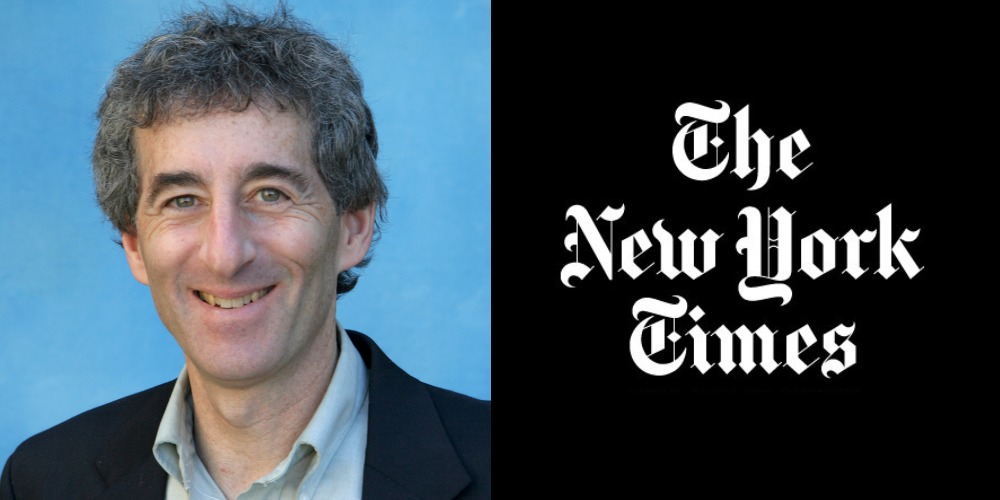
But Cliff Mass, professor of atmospheric sciences at the University of Washington, blasted the report Thursday as “blatantly false,” accusing the paper of failing to check historical records or relevant meteorology.
Mass noted that in more than a century of records, western Washington has had exactly one megafire, the 1902 Yacolt Burn at 238,000 acres, and that no upward trend in large fire frequency has occurred over the past 50 years, despite a warming climate.
“If global warming contributes to big fires, we should be seeing increases… We are not,” Mass wrote in his blog.
The key factor in westside megafires, he said, is not temperature or seasonal dryness but strong, sustained easterly winds. Without them, the region’s moist forests simply won’t support massive burns.
Mass’s research, recently published in peer-reviewed literature, examined every large western Washington and Oregon fire over the past 150 years. Every one, he said, coincided with powerful east winds, a phenomenon climate models project will become less common under global warming because inland areas warm faster than the coast, weakening the pressure gradients that drive such winds.
In short, Mass argued, the Times got it backwards: “Global warming will reduce the potential for western Washington megafires because the necessary easterly winds are weakened.”
He called the reporting “sloppy and poorly researched journalism” that misinforms the public and misguides policy decisions.
Powered by The Post Millennial CMS™ Comments
Join and support independent free thinkers!
We’re independent and can’t be cancelled. The establishment media is increasingly dedicated to divisive cancel culture, corporate wokeism, and political correctness, all while covering up corruption from the corridors of power. The need for fact-based journalism and thoughtful analysis has never been greater. When you support The Post Millennial, you support freedom of the press at a time when it's under direct attack. Join the ranks of independent, free thinkers by supporting us today for as little as $1.
Remind me next month
To find out what personal data we collect and how we use it, please visit our Privacy Policy





Comments