
“Investigators have experienced online doxxing and attempts to publicize their names.”

House Bill 2096 and Senate Bill 5829 were requested by the Washington State Office of the Attorney General (AGO). The bills would allow the Department of Licensing (DOL) to issue confidential driver’s licenses and plates to AGO investigators, shielding their identities while they conduct certain undercover operations.
On the other side is a separate Democratic bill that would bar most law enforcement officers from wearing face coverings outside of undercover work and let people sue officers who detain them in violation of that rule. Another proposal, backed by Attorney General Nick Brown and Sen. Rebecca Saldaña (D-Seattle), would require employers to notify workers ahead of potential US Immigration and Customs Enforcement (ICE) activity when the federal government requests certain records.
Republicans called out Democrats for condemning secrecy and anonymity in federal immigration enforcement, while they are seeking new tools to keep state investigators hidden. Under current law, the DOL can issue confidential forms of identification to local, state, and federal law enforcement officers engaged in covert activities. The proposed AGO bill would extend that authority to investigators handling consumer protection, civil rights, and environmental cases.
“The IDs have a very limited and specific use, to allow our staff to pass a cursory identification check without compromising their personal information, where it is relevant to their case work,” AGO Deputy Communications Director Mike Faulk told The Center Square. Faulk said investigators often need to verify age or location to make purchases, access online content, or interact with businesses suspected of breaking the law. Using their real information could expose their identities and jeopardize investigations.
“Investigators have experienced online doxxing and attempts to publicize their names,” he said. Confidential IDs, he argued, reduce the ability of targets to spread investigators’ identities within an industry and help protect them from harassment or threats. Faulk stressed that the IDs would not be tied to Social Security numbers, and they would not be used to board planes, apply for credit, or deposit checks. Additionally, they would be issued for specific assignments and governed by rules set by the DOL. He declined to say how many investigators might use the tool but said it would not require new funding.
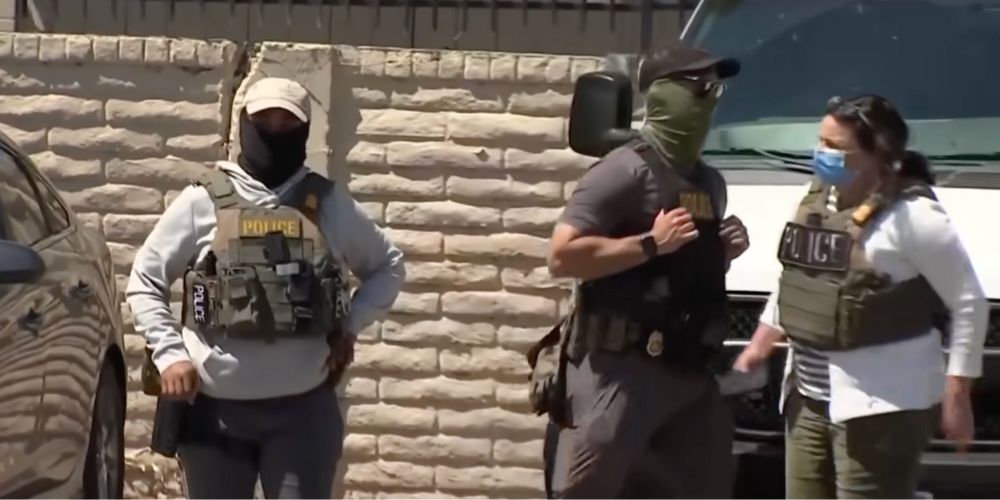
Even as Democrats move to give state investigators more undercover flexibility, they are advancing bills aimed at limiting anonymity and secrecy for federal law enforcement. Saldaña and more than a dozen Senate Democrats have proposed a bill that would prohibit law enforcement officers from wearing face coverings outside of bona fide undercover operations. If an officer detains someone while violating that rule, the detained person would be empowered to sue the officer for damages.
Separately, Brown and Saldaña are pushing to require businesses to notify employees when ICE seeks certain records that could presage immigration enforcement actions. Democrats have repeatedly criticized ICE for using masks and unmarked vehicles, arguing that such tactics are frightening, confusing, and can be indistinguishable from kidnapping to bystanders or targeted individuals.
According to federal data, assaults on ICE agents increased by over 1,150 percent from Jan. 21, 2025, to Nov. 21, 2025, compared to the same period in 2024 under the Biden administration.
WA State GOP Chairman Rep. Jim Walsh (R-Aberdeen) told the outlet he sees a clear contradiction in the Democrats’ approach. To Walsh, confidential IDs for AGO investigators resemble the very tools Democrats criticize when used by ICE and other federal authorities. “We will look at the proposal on its own merits, as we should with every bill, but it is very difficult not to see the irony,” he said. “I'd like Brown to at least acknowledge the inconsistency of his position and maybe walk back some of his criticisms of ICE if he wants these same tools for his investigators.”
Walsh stressed that he considers confidential IDs “legitimate tools” for law enforcement and said he is open to the AGO using them, if oversight is in place. “It’s a short bill,” he said. “I don't see anything wrong with it, but I guess my questions for the AG would be: Are you going to ensure there's proper oversight of how these tools are used?”
Faulk said the risk of misuse is “extremely small,” given the limits on what the IDs can do and the fact that they are designed only to help investigators “pass a cursory identification check” without exposing their real identities.
Powered by The Post Millennial CMS™ Comments
Join and support independent free thinkers!
We’re independent and can’t be cancelled. The establishment media is increasingly dedicated to divisive cancel culture, corporate wokeism, and political correctness, all while covering up corruption from the corridors of power. The need for fact-based journalism and thoughtful analysis has never been greater. When you support The Post Millennial, you support freedom of the press at a time when it's under direct attack. Join the ranks of independent, free thinkers by supporting us today for as little as $1.
Remind me next month
To find out what personal data we collect and how we use it, please visit our Privacy Policy




Comments