
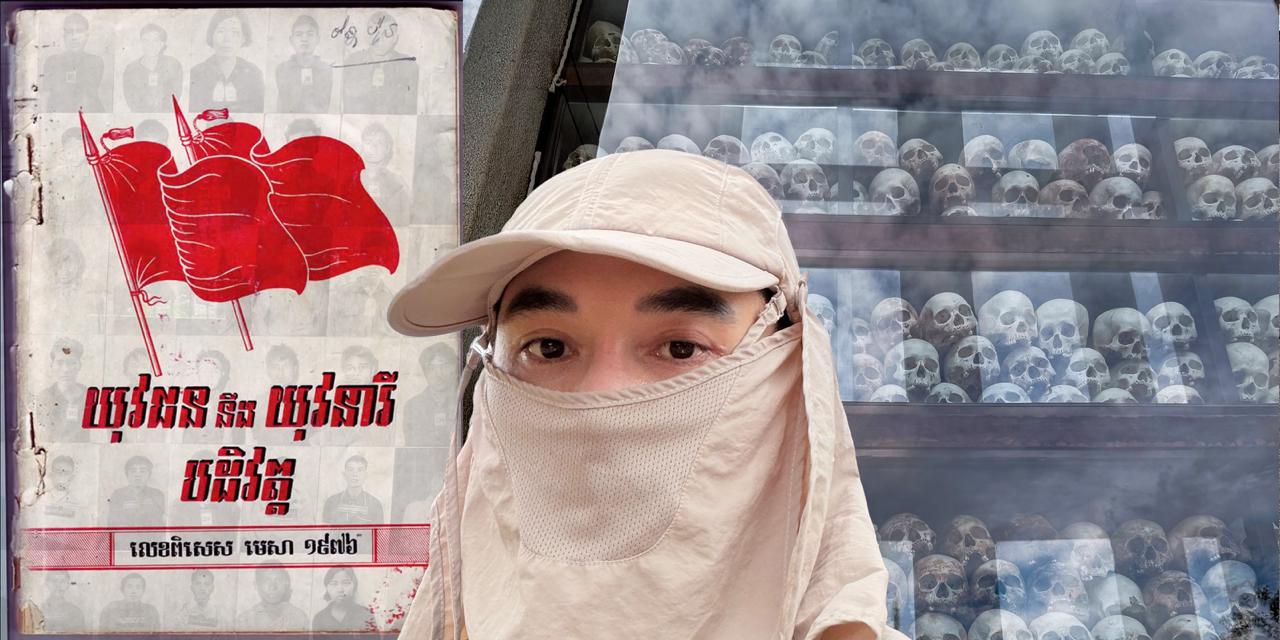
I traveled to Phnom Penh to understand one of communism's darkest and most violent chapters.

Ahead of the Oct. 13 release of my book about the Zizian AI-doomer trans death cult, I traveled to Southeast Asia.
Most of my short social media posts about the trip highlighted the incredible foods I sought out and enjoyed with gluttony: pandan leaf desserts, fragrant water from rare young coconut varieties, noodle soups, coconut palm heart salads and stir-fries to my heart's content. Those lighthearted, apolitical posts also served another purpose: They helped mask how deeply disturbed I was feeling beneath the surface.
Among the places I visited were Tuol Sleng, also known as S-21, and Choeung Ek, the killing fields, in Phnom Penh, Cambodia.
S-21 and Choeung Ek remain two of the most notorious sites of the mass atrocities committed by Cambodia's communist Khmer Rouge regime in the 1970s.
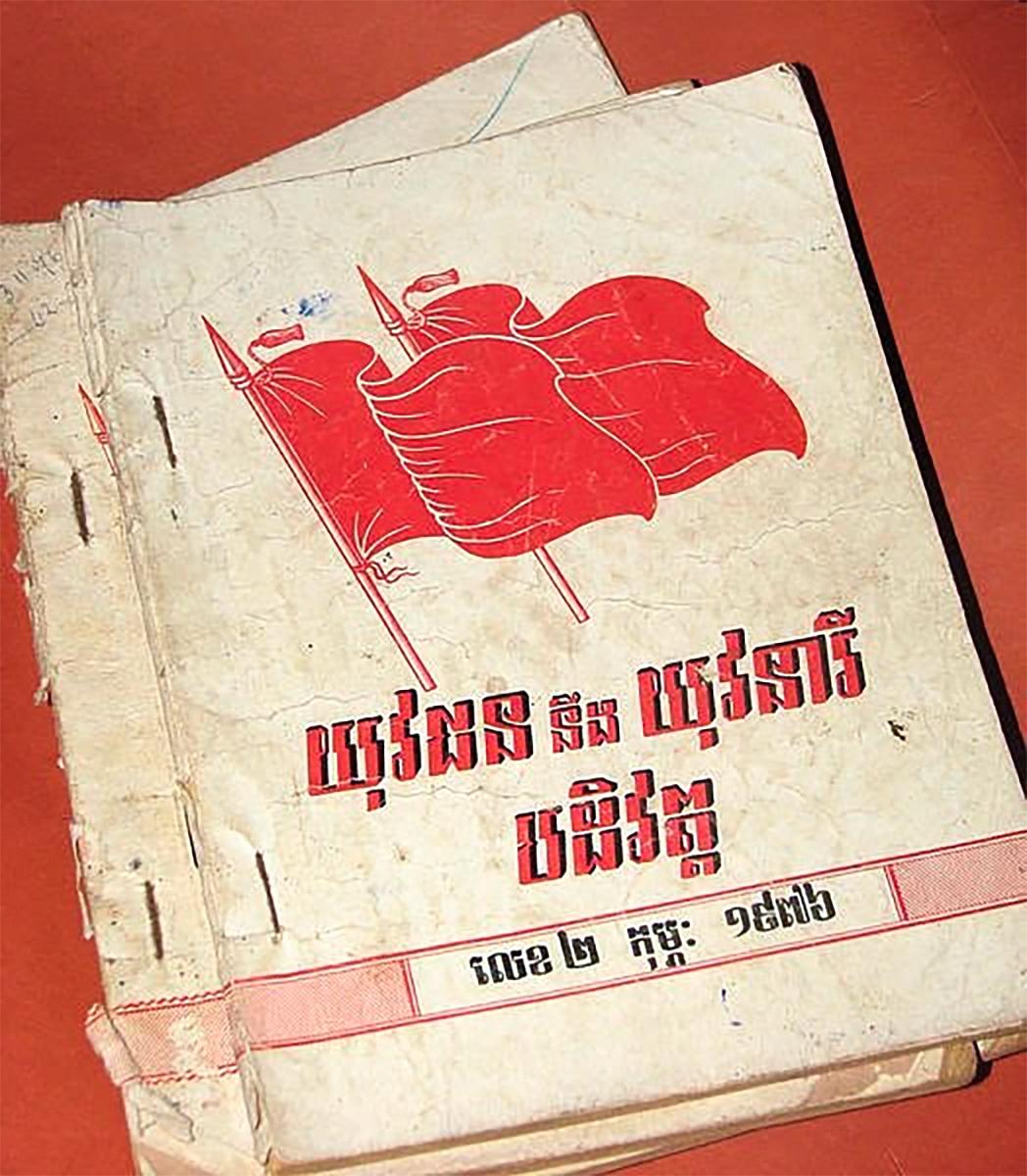
The 'Revolutionary Flag' journal was one of the internal propaganda texts of the Communist Party of Kampuchea, also known as the Khmer Rouge.
As a journalist who writes about far-left violent extremism and has experienced some of that violence myself in Portland, Ore., I was ashamed of how little I knew about how revolutionary communist violence had played out in Cambodia.
I was familiar with the history of communist violence in Vietnam because my own parents experienced it after the fall of Saigon. My father was sent to a "re-education" prison camp, while my then-teenage mother and her family were relocated to do agricultural labor. I wrote about some of this family autobiographical history in my first book, Unmasked: Inside Antifa's Radical Plan to Destroy Democracy.
But my knowledge of what occurred in neighboring Cambodia was embarrassingly limited to what little I had picked up over the years from articles about the genocide.
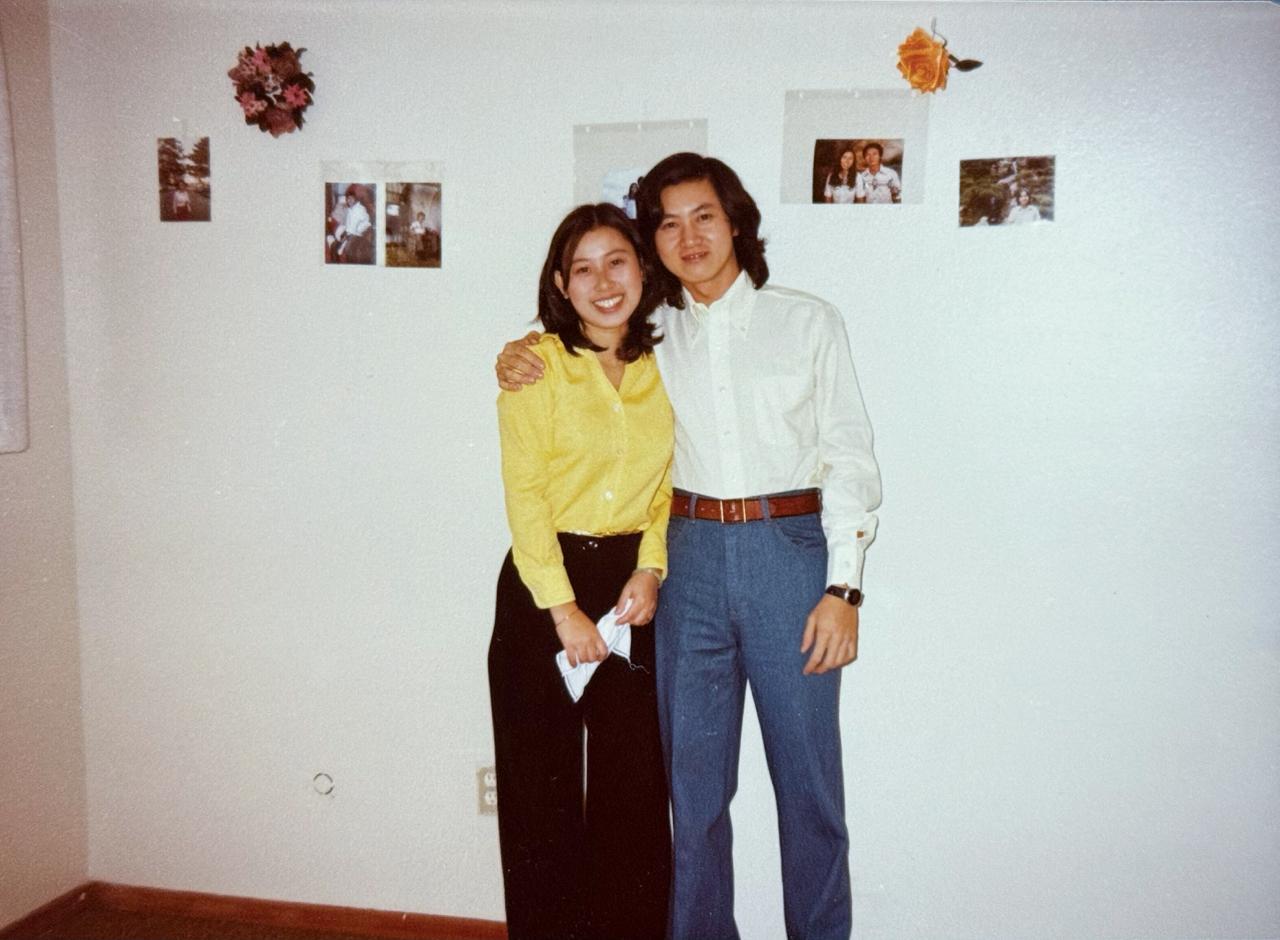
My parents shortly after being settled in the U.S. as refugees from Vietnam.
Year Zero
On April 17, 1975, after years of civil war, Khmer Rouge communist forces led by Pol Pot seized the capital Phnom Penh. Less than two weeks later, Saigon fell to North Vietnamese communist forces.
The Khmer Rouge had a revolutionary vision of agrarian communism that required destroying the existing social order by any means necessary. Money and private property were abolished. Families were separated. Cities were emptied. Millions of people were forcibly relocated to the countryside and put to work in agricultural collectives.
The start of this revolution became known as "Year Zero."
Phnom Penh's population was relocated en masse almost immediately after the communist victory. Urban residents with no farming experience were forced into agricultural labor amid severe shortages of food and medicine. Hundreds of thousands died from starvation, disease and overwork.
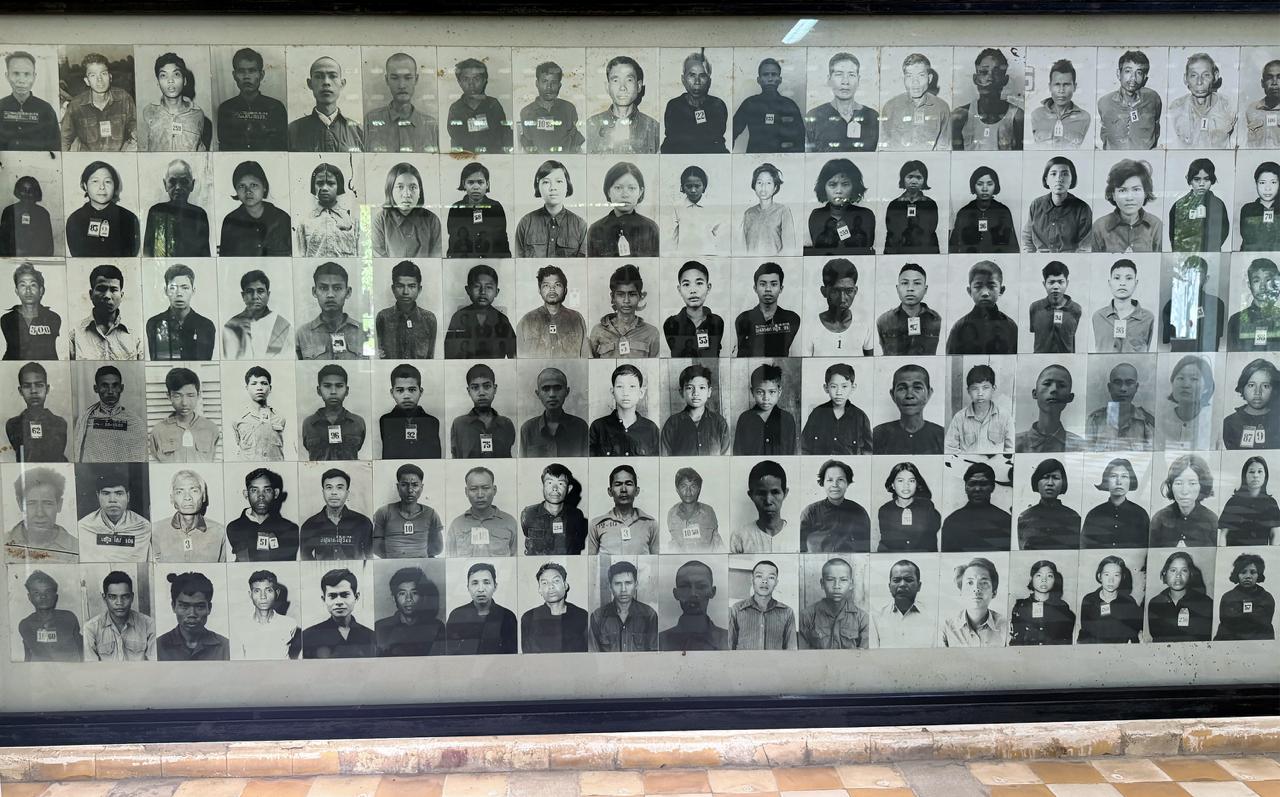
Room after room at S-21 displayed thousands of photos of former inmates. Many were children imprisoned with their families. Photo: Ngo
To maintain its revolutionary order, the Khmer Rouge built an enormous security apparatus. Nearly 200 prisons and interrogation centers operated across Cambodia. People accused of betraying the revolution, spying or simply being politically untrustworthy could be arrested, tortured and killed. As paranoia consumed the regime, even committed Khmer Rouge cadres were purged as supposed traitors.
One of the most notorious prisons was Security Prison 21 (Tuol Sleng), or S-21, in the middle of Phnom Penh. It had previously been a school.
Today, life around the former prison gives little indication of what lies behind its walls. Cafes, homes, restaurants and busy commercial streets are near the site. But stepping inside felt like stepping back into 1979. I was taken aback by how much of S-21 has been preserved.
On the ground floor of one building, metal beds remain where prisoners were chained and tortured. On the walls are graphic photographs showing what was discovered in January 1979. You can look at a bed in one of those photographs, then look down and see that same bed on the same tiled floor in front of you.
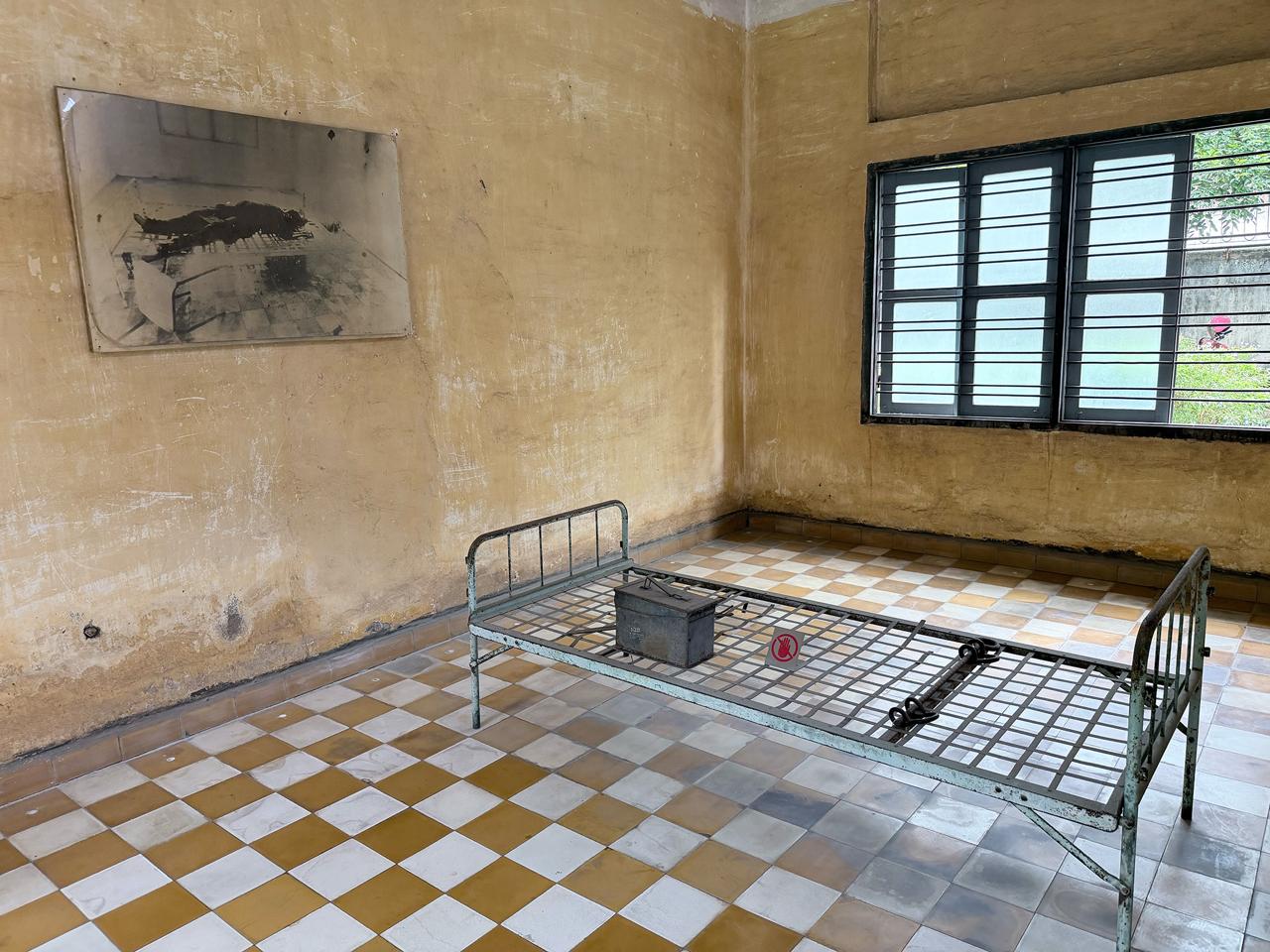
A photograph on the wall shows a dead body found on one of the beds that was used in the torture interrogation rooms. Photo: Ngo
In another building, room after room contained photographs of prisoners who were later killed: young men, women, foreigners and children. A tribunal identified 728 Vietnamese victims. There were also eight Westerners from the U.S., U.K., Australia and New Zealand who were captured in the Gulf of Thailand and executed.
The Khmer Rouge were meticulous bureaucrats. Prisoners arriving at S-21 were photographed and documented. I saw the chair they were made to sit on, fitted with a device that pressed against the back of the head, forcing each prisoner into an awkward, stiff position for the camera that documented the beginning of their final days.
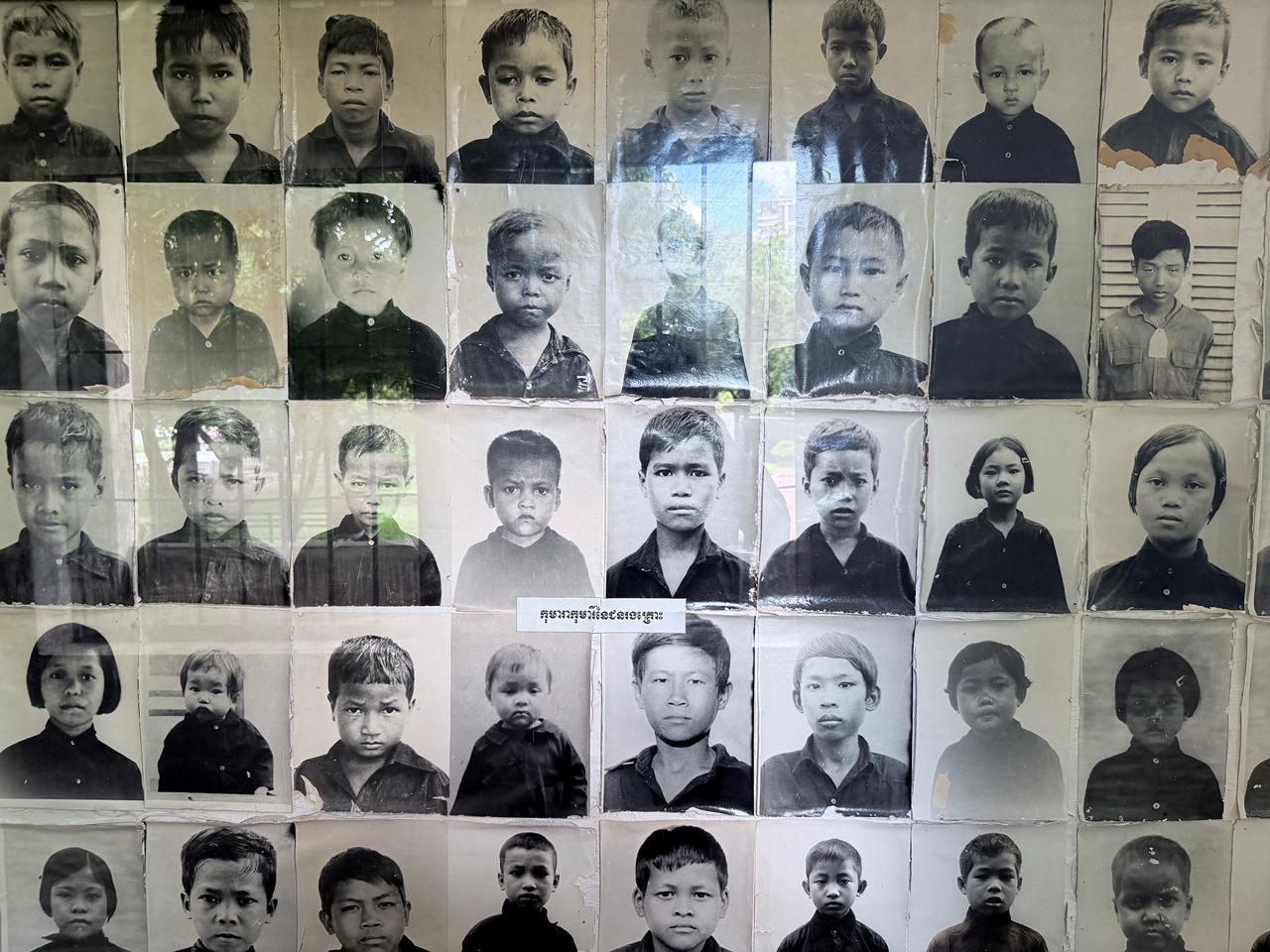
The Khmer Rouge kept meticulous records through its sprawling security apparatus. Photo: Ngo
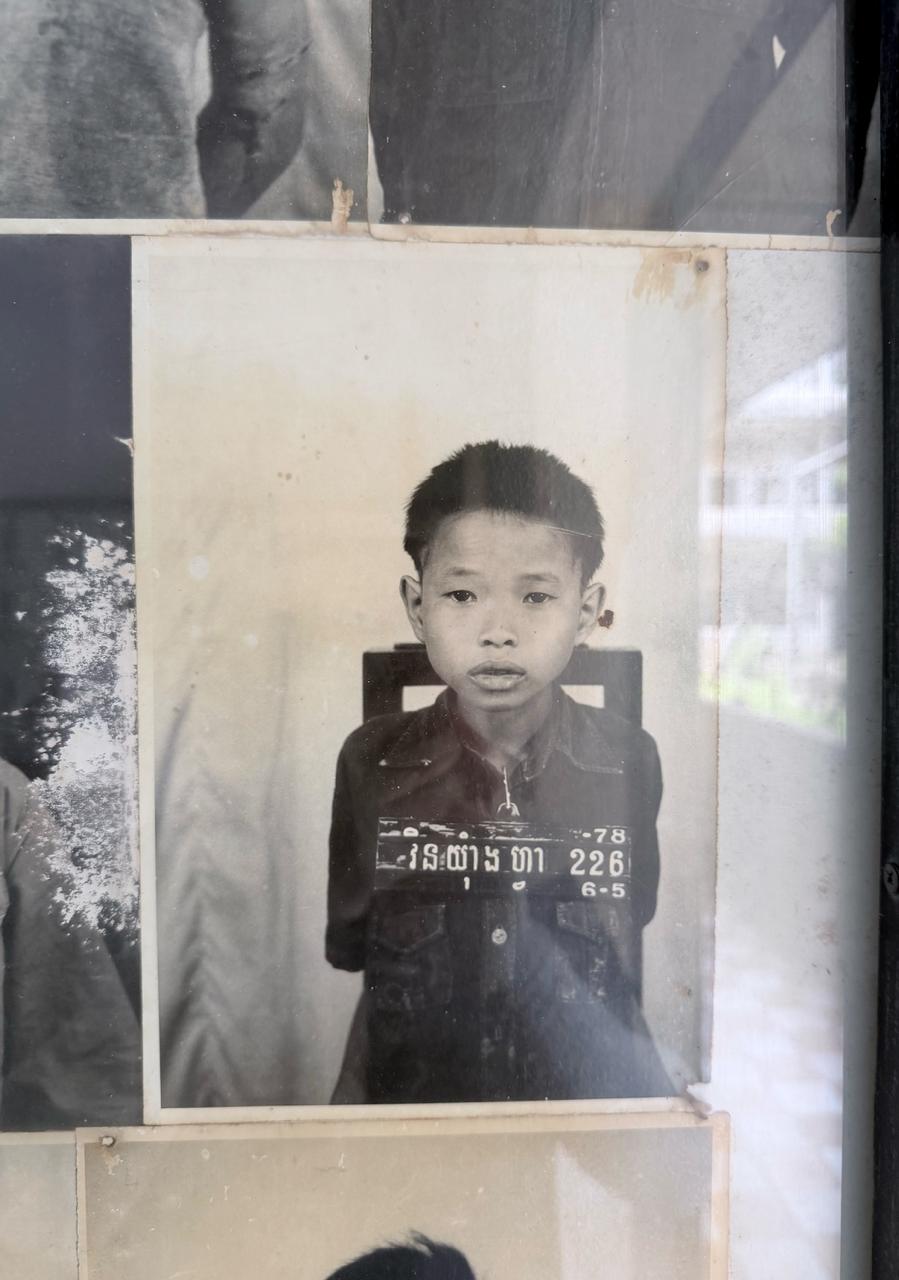
A child prisoner at S-21 in 1978.
Thousands of those photographs survived because the regime did not have enough time to destroy its extensive records before Phnom Penh was captured in January 1979 by Vietnamese forces, after relations between the two neighboring communist regimes had deteriorated into warfare.
Many photos taken by prison staff were of inmates who were killed in custody. Those photos, displayed inside for museum visitors, are extremely graphic.
Historians estimate that up to 20,000 people passed through S-21. Almost no one was spared once they were arrested. Only a tiny number survived.
Seeing hundreds of faces of people photographed shortly before they were tortured and murdered is something I can't forget.
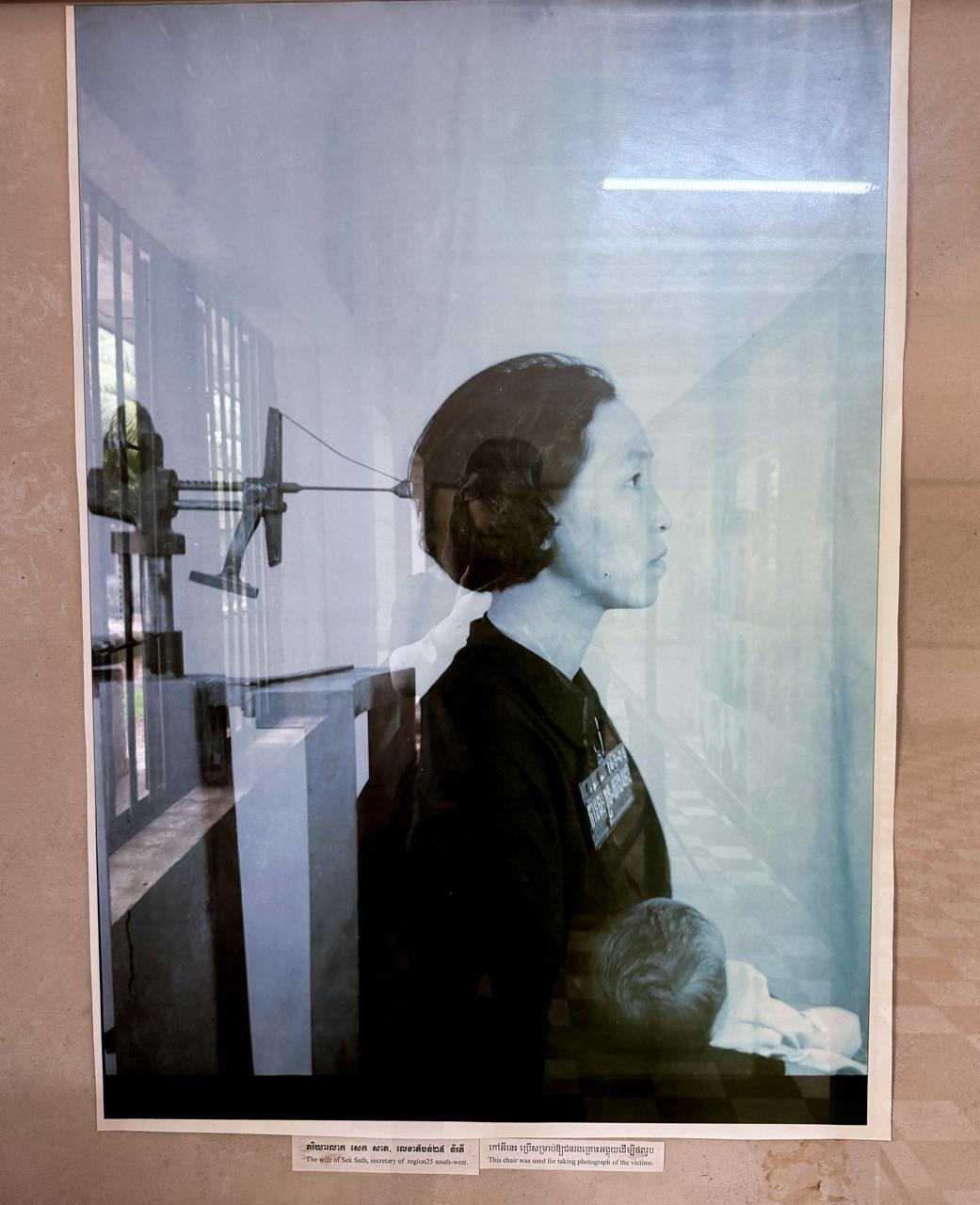
A female inmate holds her baby while her head is pressed against a device for a booking photo at S-21. Photo: Ngo
Some looked terrified. Others appeared strangely calm, perhaps resigned to whatever they understood was coming or perhaps ignorant of the horrors ahead.
One of the prison buildings at S-21 still has the original barbed wire stretched across its three-story exterior. It was installed not only to prevent escapes from the cells but also to stop desperate prisoners from jumping to their deaths.
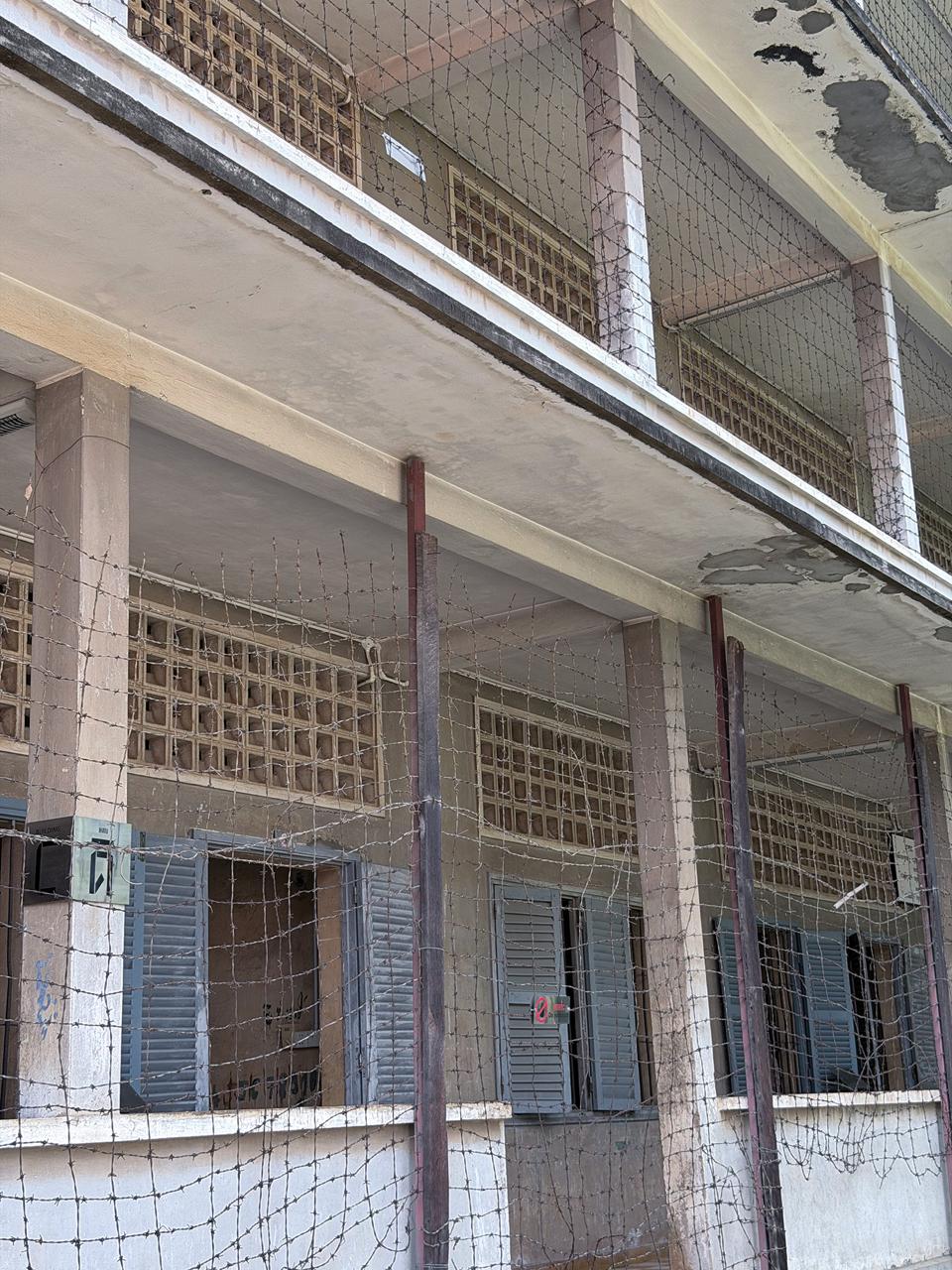
This barbed wire was used to prevent escapes.
Some of those cells are barely two meters deep and less than a meter wide. Some were constructed from crude brick walls; others from wooden partitions.
The Khmer Rouge tortured prisoners until they produced the confessions interrogators wanted, often forcing them to implicate others and creating an expanding network of supposed enemies.
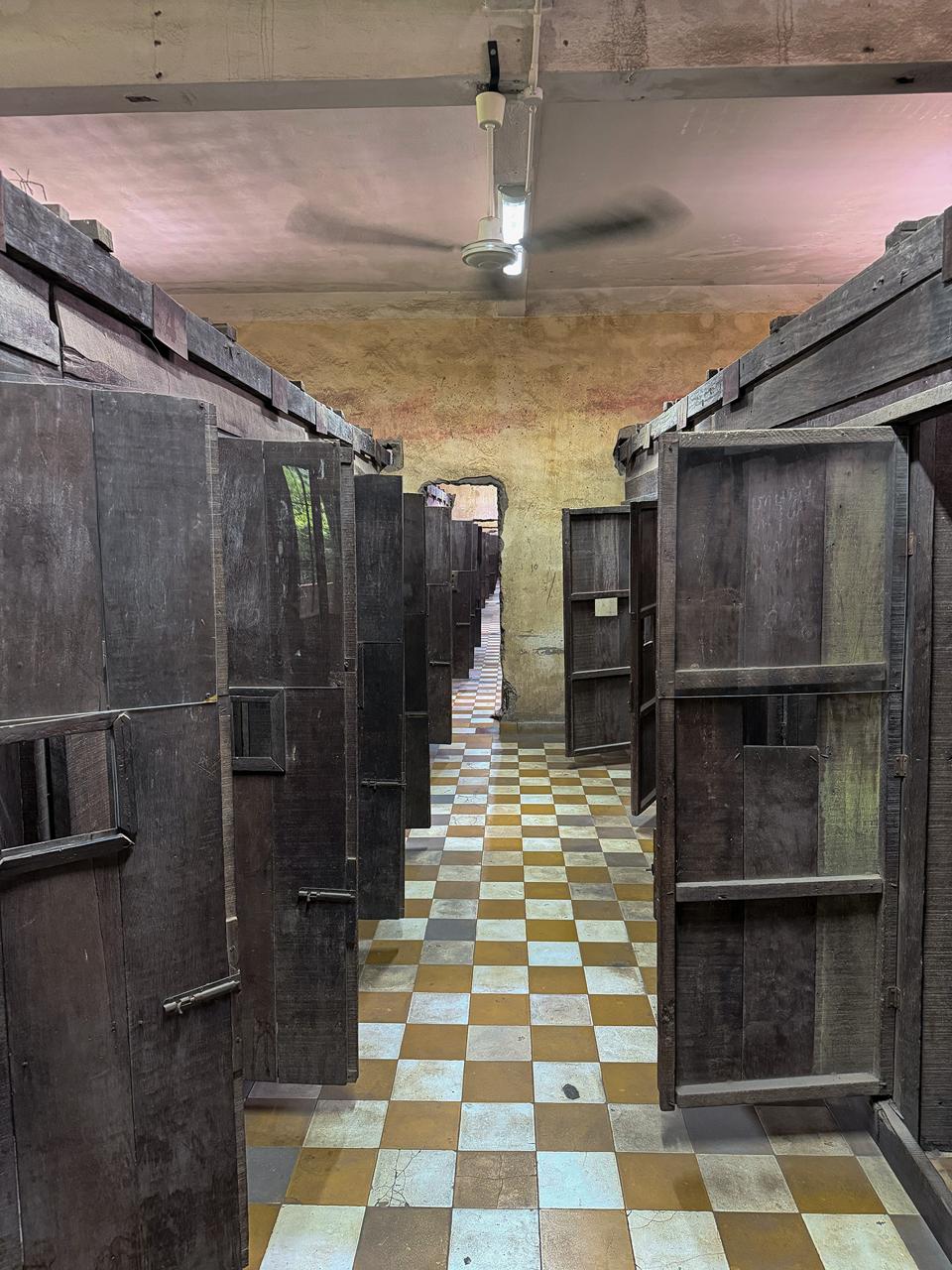
One of the prison blocks at S-21. Photo: Ngo
Prisoners were beaten, electrocuted, submerged in water and suspended by their arms in torture campaigns. Some of the former school's exercise equipment was repurposed for violence.
I stood in front of some of the instruments and tools used on them.
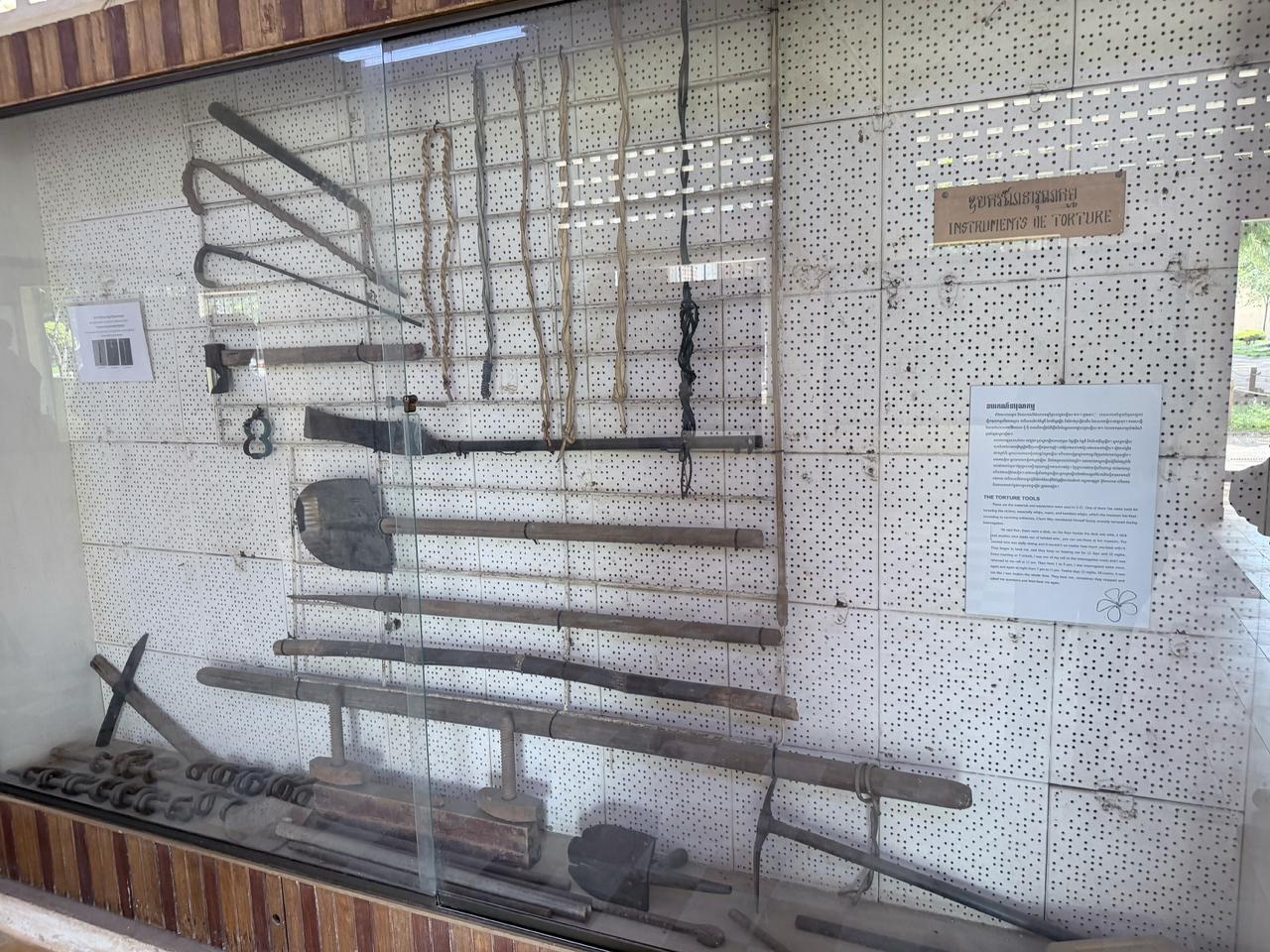
Tools used to torture prisoners. Photo: Ngo
In the courtyard, one of the 12 people who survived S-21 when Phnom Penh fell in 1979 was there to meet visitors. Norng Chanphal, now in his 50s, was just nine years old when he was imprisoned there with his younger brother and mother after his father, a former Khmer Rouge cadre, was arrested and killed.
I shook his hand.
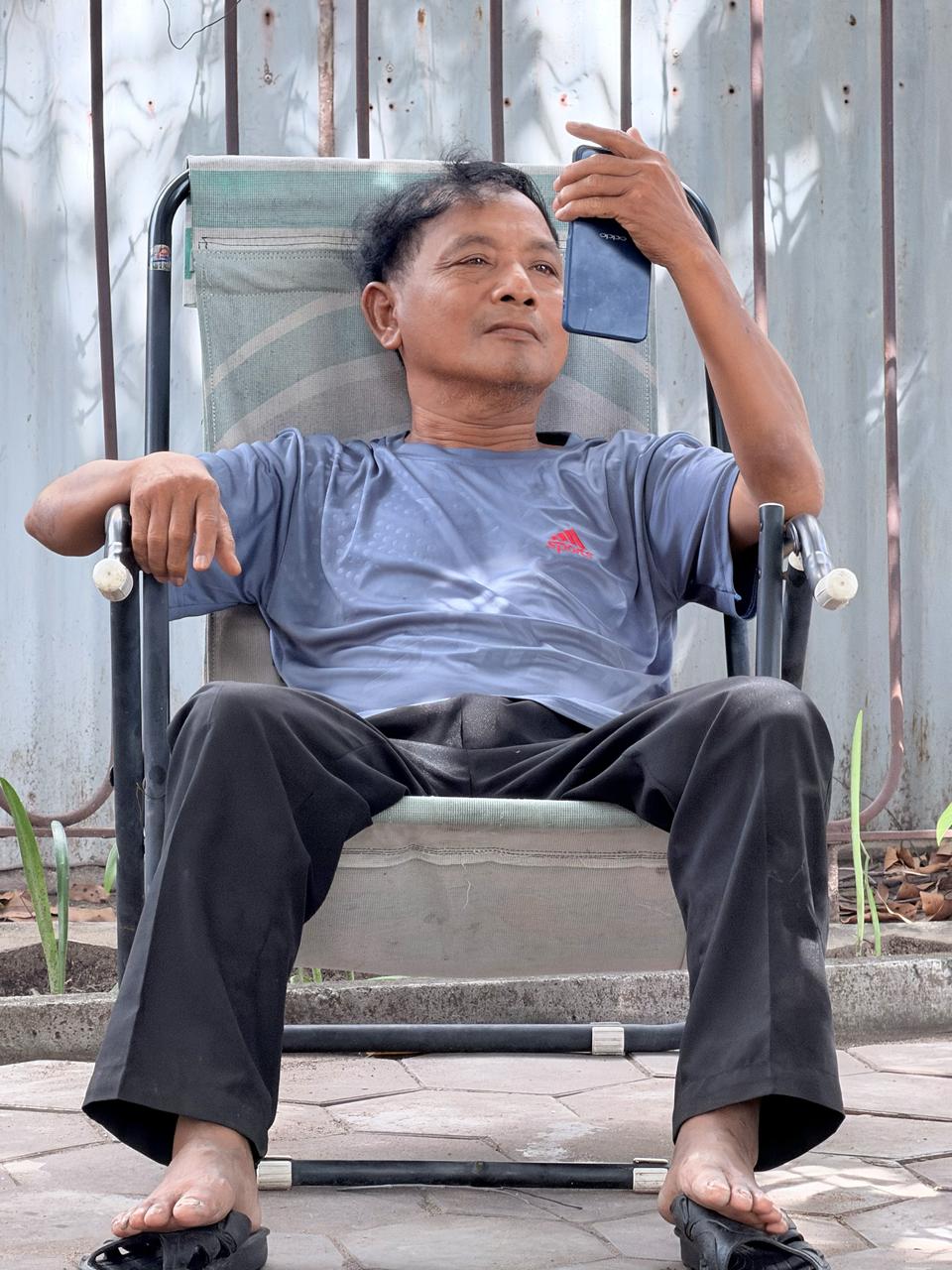
Norng Chanphal, one of four known former child inmate survivors, is a regular guest at the S-21 museum that visitors can speak to. Photo: Ngo
The Khmer Rouge's dragnet was expansive: killing an alleged enemy of the revolution was not enough. Their spouses and children were also often killed under the regime's policy of guilt by association. They eliminated people, including babies, who they feared might someday seek revenge.
Nearly two million people died under Khmer Rouge rule, representing roughly a quarter of Cambodia's population. The nation still hasn't recovered.
S-21 was only one part of the regime's death machinery.
The Field
To make killings systematic, execution sites in rural areas were also established across the country.
For prisoners sent to prisons like S-21, detention overwhelmingly ended in death. Many were eventually transported to Choeung Ek, an execution site about 15 kilometers outside Phnom Penh.
I arrived by car after about a 35-minute drive.
At first glance, Choeung Ek looked like a peaceful grove. There were toddy palm fruit trees and well-maintained grass.
Then I noticed the ground. These were once killing fields—and it shows.
Across the terrain were depressions where the earth had collapsed into the exhumed mass graves. Those who first discovered the killing site described the graves as swollen mounds rising from the earth, pushed upward by gases released from thousands of decomposing bodies.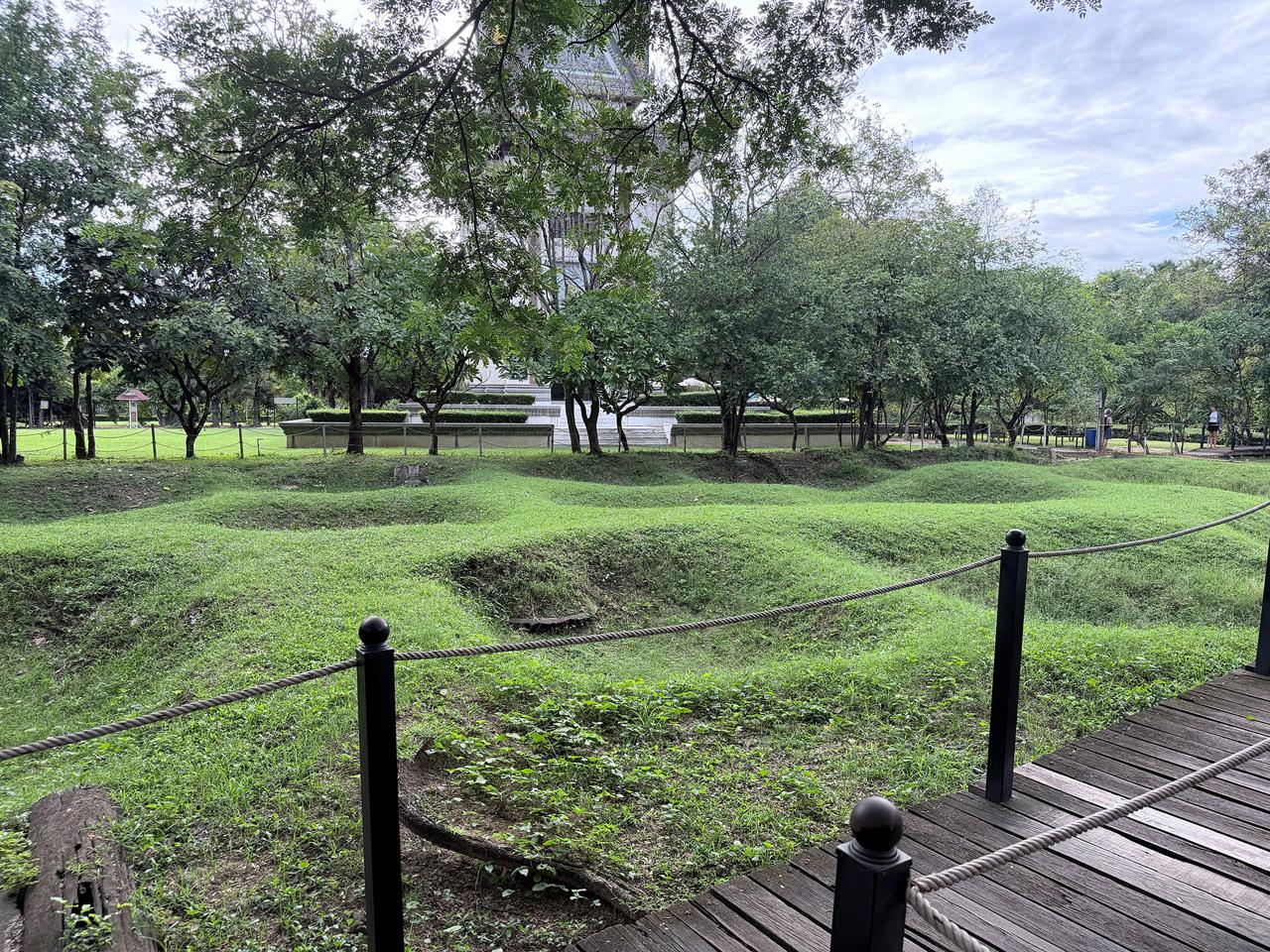
Even decades later, the depressions and mounds from exhumed mass graves are still visible. Photo: Ngo
One sign at a grave site reads:
"Mass grave of 166 victims with out [sic] heads." These victims were likely executed regime cadres who faced heavier punishment and mutilation as a warning to other comrades.
Nearby, a sign beside a large tree explains that a loudspeaker was hung from it that would play socialist songs to drown out the sounds of people being executed.
Another mass grave I walked by had once contained the bodies of women and children. Beside it stands what is now known as the "Killing Tree," where, according to witnesses and former guards, executioners killed children by simply smashing their heads against its trunk.
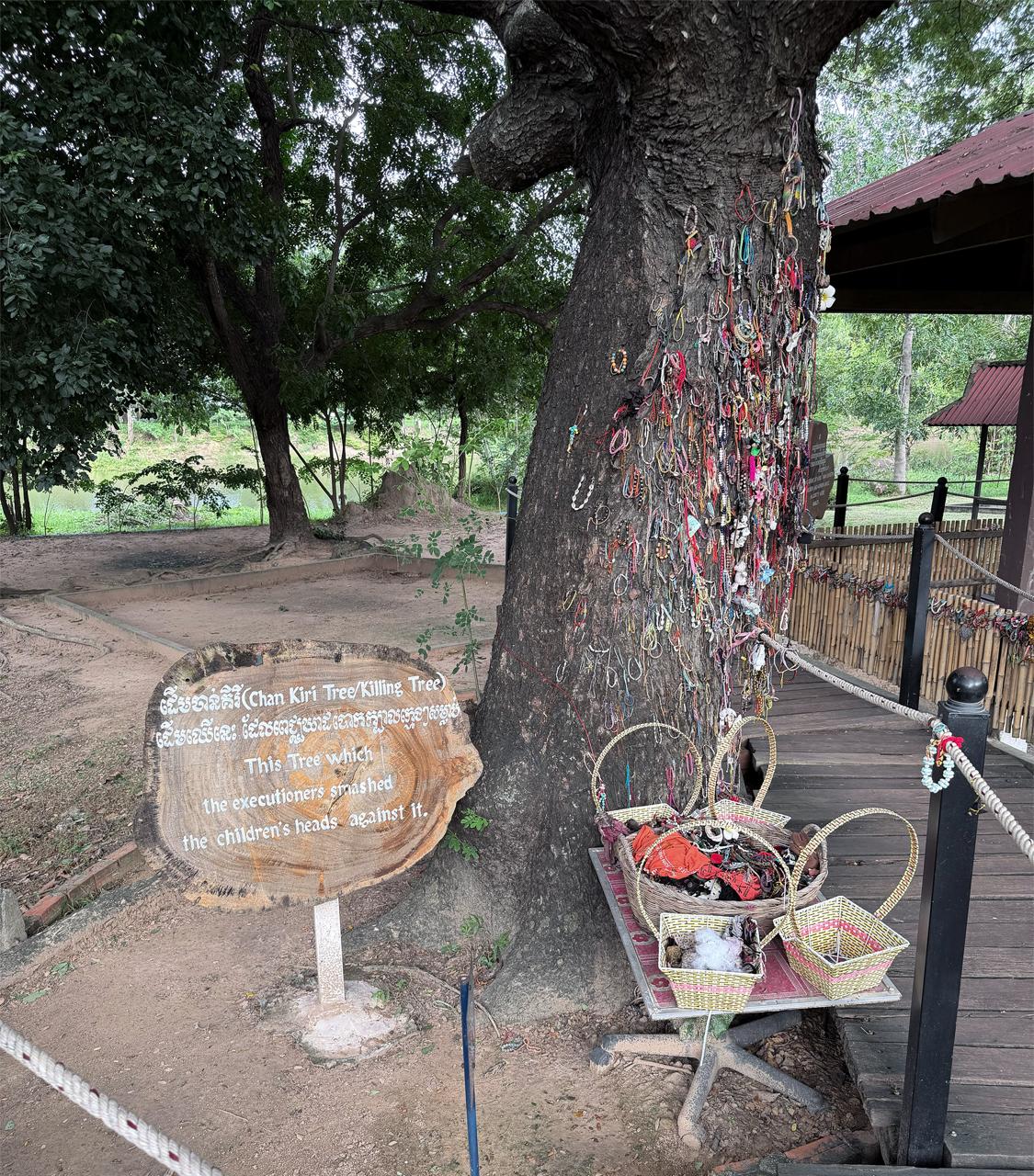
Sign: 'This Tree which the executioners smashed the children's heads against it.' Photo: Ngo
A tall Buddhist memorial stupa now stands in the middle of the memorial site. Inside are thousands of victims' skulls and other remains recovered from Choeung Ek.
Standing before so many human bones, it became impossible for me to process that each one belonged to an individual person whose life was violently extinguished.
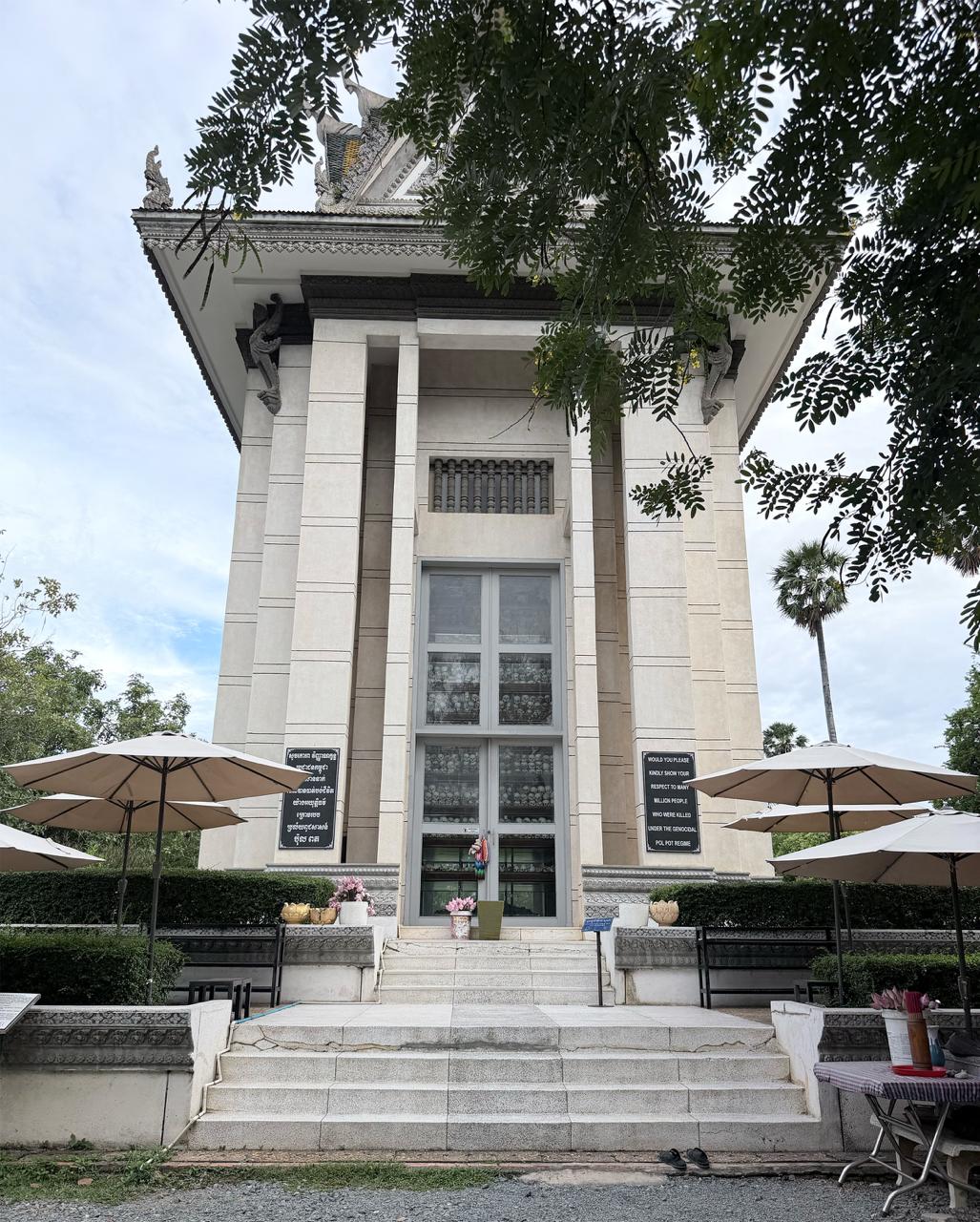
The stupa at the center of the killing field houses over 5,200 skulls of victims exhumed from mass graves. Photo: Ngo
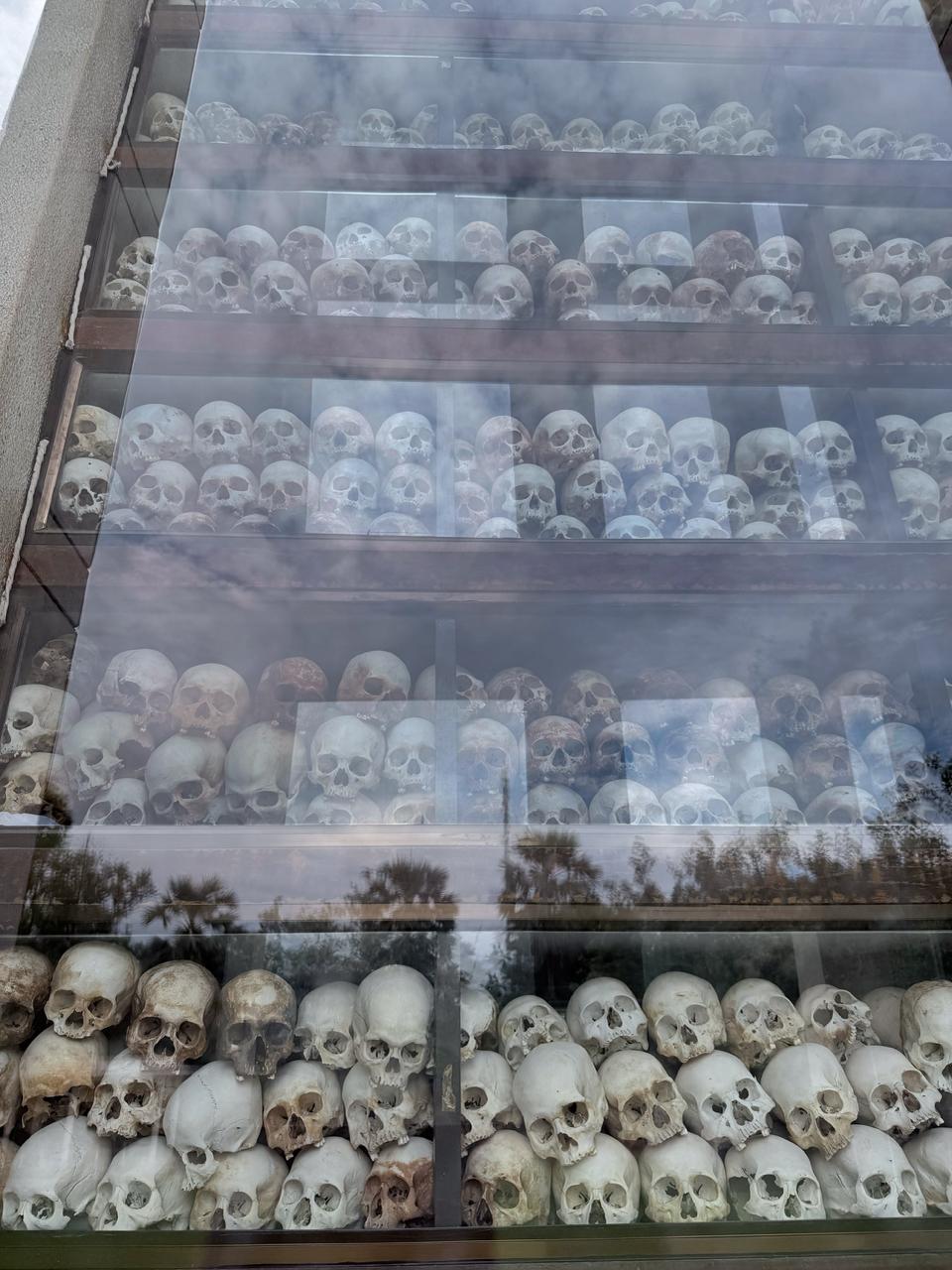
Remains of thousands of victims of the Khmer Rouge. Photo: Ngo
Something Familiar
I have obviously never witnessed anything remotely comparable to the violence inflicted on Cambodia. But standing at these sites, I did recognize something at the level of ideology: the process by which political enemies are stripped of their humanity until violence against them becomes not merely permissible, but virtuous and required.
That part felt familiar.
In my years covering Antifa and other far-left violent extremists, I have repeatedly encountered a cult of ultra-violence in their propaganda, writings and online communities.
Years ago, I was taken aback by the brutality of some Antifa propaganda used for recruitment and radicalization: people shown in drawings to be slowly decapitated, brains bashed in, bodies mutilated and blood gushing out. The targets were broadly labeled "Nazis" or "fascists," terms elastic enough to encompass increasingly large categories of political opponents, like anyone who voted for Donald Trump.
Within those far-left spaces, violence was celebrated as righteous and necessary for bringing about the conditions for their revolutionary future, masked as community "self-defense."
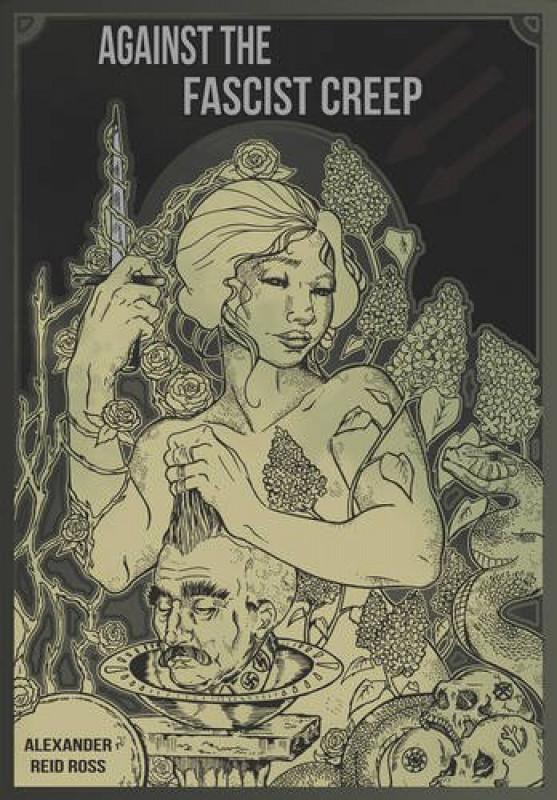
A book from Antifa extremist Alexander Reid Ross, who testified against me in my lawsuit against Rose City Antifa, shows a figure next to skulls, holding a blade and grabbing a freshly beheaded human.
The Khmer Rouge did not begin with killing fields.
That came after a victorious communist movement had divided society into categories of workers who "deserved" to exist and those whose elimination was deemed necessary to protect the revolution.
Contemporary America is not Cambodia in 1975. But history does not have to repeat itself exactly for its warnings to remain relevant.
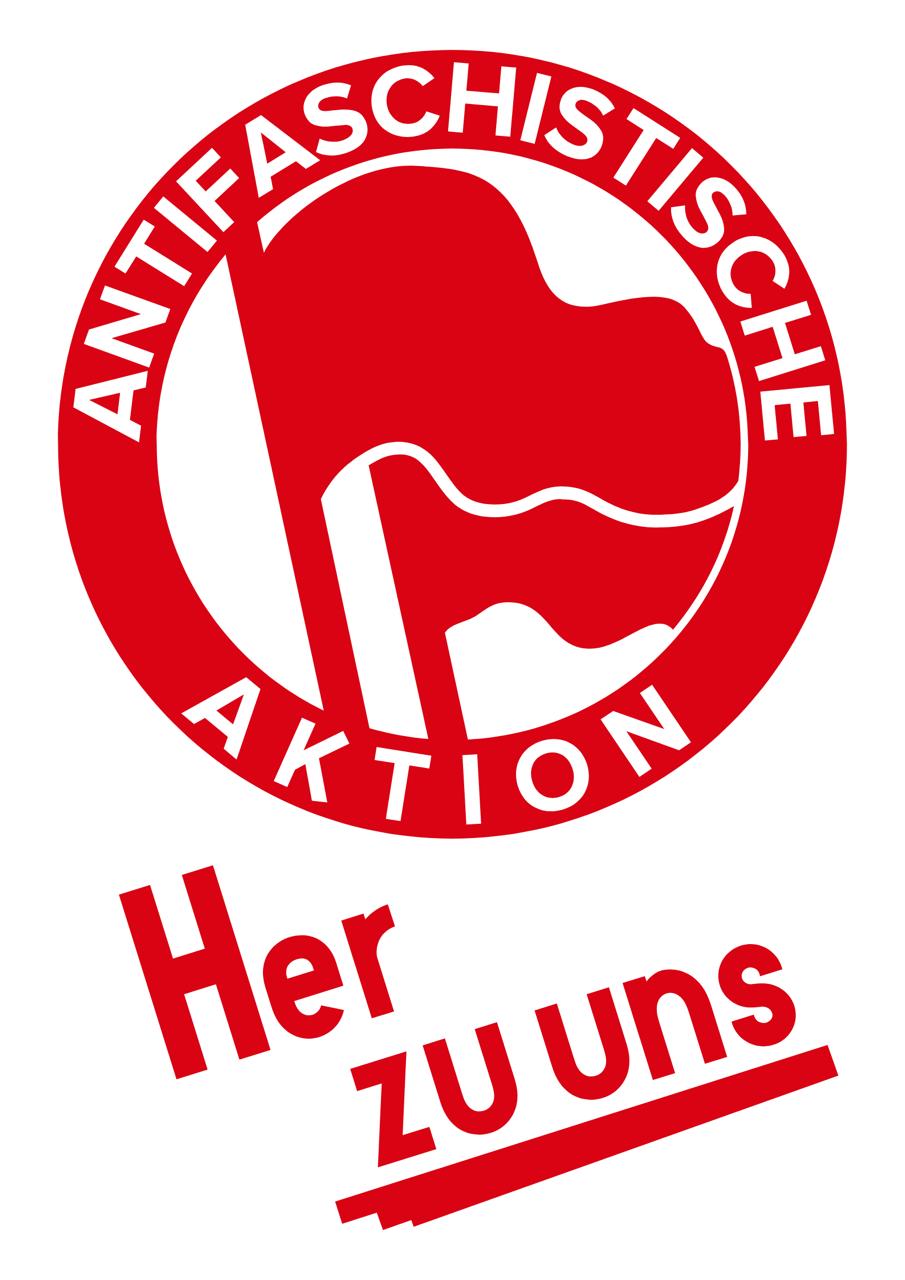
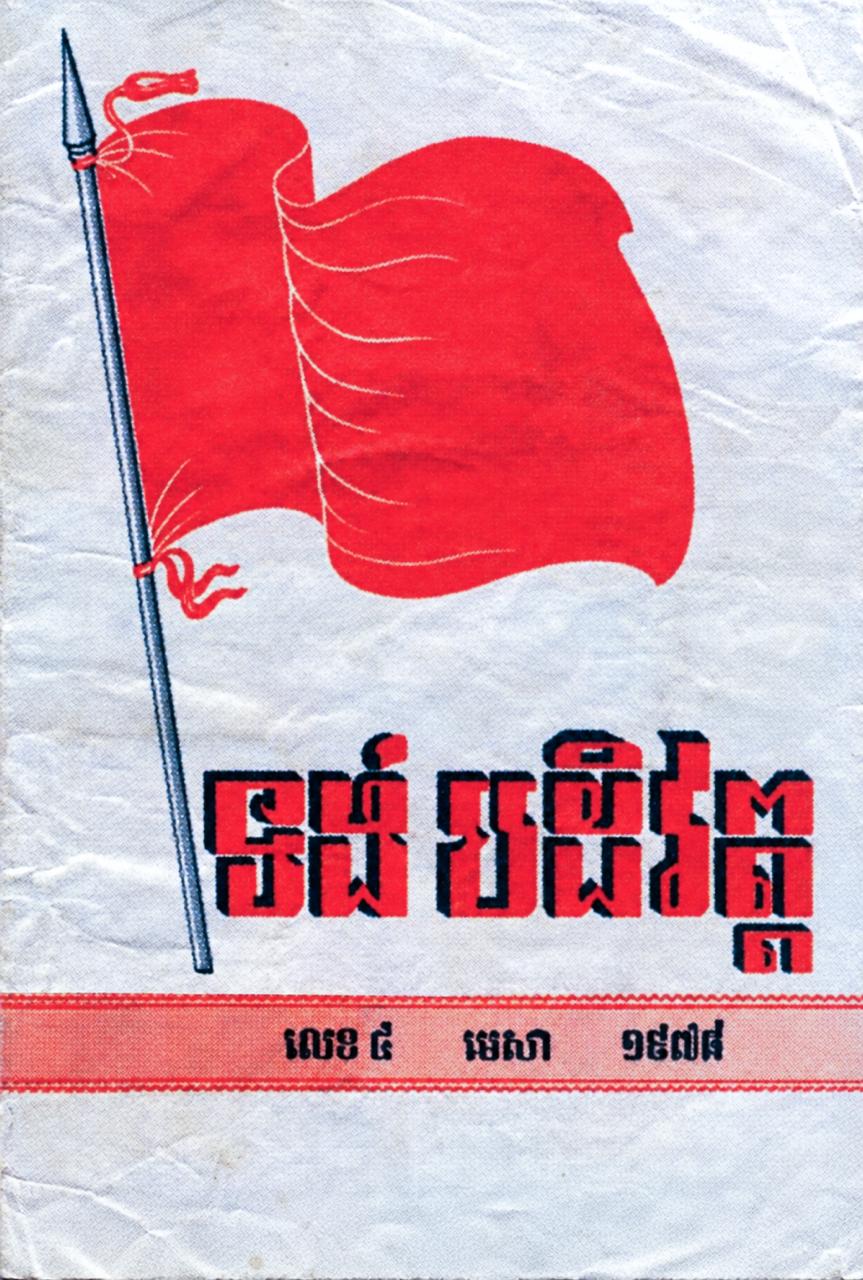
Propaganda for the Khmer Rouge shares a visual similarity with Antifa symbols
Recent left-wing political killings and attacks in the U.S. have shown how quickly many can turn murder into celebration.
When UnitedHealthcare CEO Brian Thompson was shot and killed in Manhattan in 2024, gunman Luigi Mangione became an immediate folk hero to large segments of the American left. His image appears on signs and merchandise, supporters gather in crowds outside his court appearances, and they openly celebrate the killing as an act of deserved political retribution.
The same reaction became painfully personal to me after the 2025 assassination of Charlie Kirk, someone whom I knew.
In the aftermath, people celebrated his death through memes, costumes, videos, re-enactments and parties.
In Portland, Ore., where I am from and from which I had to flee due to Antifa attempts on my life, communist DSA operative and city council member Mitch Green was revealed to have encouraged more leftist violence during the 2020 BLM-Antifa riots that consumed the city.
"I think the left should riot more," he tweeted in December 2020. He made the statement months after nightly riots, arson attacks and political violence had engulfed Portland, including the August 2020 fatal shooting of Trump supporter Aaron "Jay" Danielson by career criminal and Antifa volunteer security guard Michael Reinoehl.
Green is running for re-election and is likely to win again.
The celebration of murderous political violence should not be dismissed as merely spicy social media behavior. When a political culture celebrates and glorifies violence, it creates an environment in which others will feel justified in carrying it out themselves.
At the end of my visit to Choeung Ek, I brought a lotus flower to the stupa and bowed before it.
I couldn't think of any words. I was stunned and numb.
I spent the previous weeks traveling through Southeast Asia eating foods I loved, seeing family, visiting temples and reconnecting with a part of the world tied to my own family's history.
Now I stood before thousands of skulls of victims of those who believed they were creating a new and better society.
I thought briefly about the slogan used by Antifa and DSA supporters today: "A better world is possible."
When a political movement teaches that entire categories of people are obstacles to this better world, history gives us every reason to pay attention.
Andy Ngo is the author of the forthcoming investigative true-crime book, The Zizians: Inside a Trans Death Cult.
Powered by The Post Millennial CMS™ Comments
Join and support independent free thinkers!
We’re independent and can’t be cancelled. The establishment media is increasingly dedicated to divisive cancel culture, corporate wokeism, and political correctness, all while covering up corruption from the corridors of power. The need for fact-based journalism and thoughtful analysis has never been greater. When you support The Post Millennial, you support freedom of the press at a time when it's under direct attack. Join the ranks of independent, free thinkers by supporting us today for as little as $1.
Remind me next month
To find out what personal data we collect and how we use it, please visit our Privacy Policy





Comments