Sting’s non-binary nepo baby daughter cast as MALE character in upcoming ‘Sense and Sensibility’
“Audiences are apparently expected to pretend that a woman can put on a man’s suit, scrape back her hair in a bun and play a male part convincingly.”
“Audiences are apparently expected to pretend that a woman can put on a man’s suit, scrape back her hair in a bun and play a male part convincingly.”
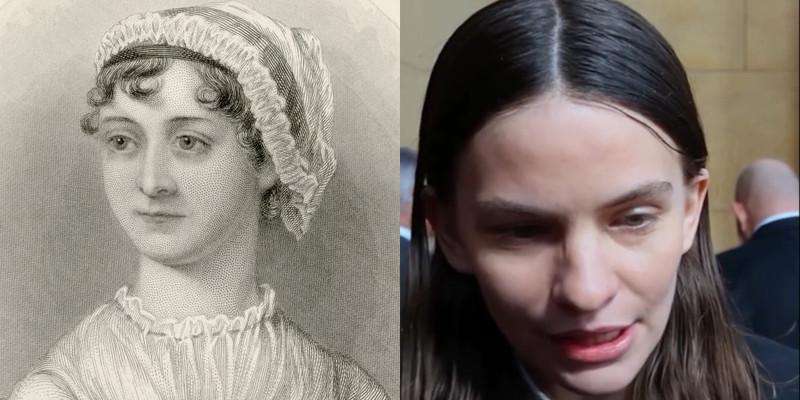
Jane Austen’s classic novel “Sense and Sensibility” is the latest victim of Hollywood’s efforts to foist LGBT ideology on unwitting viewers in a bid to normalize the alarming transgender trend once viewed as a clinical mental disorder.
Austen has famously been celebrated in literary tradition as an early feminist, breaking the glass ceiling for female authors of the 19th century while pointedly opting not to publish her work under a male pseudonym.
The original 1811 publication of “Sense and Sensibility” did not give Austen’s name, in deference to the scandal it may have created, but instead credited her anonymously on the title page by saying the book was written “By a Lady.”
“What genius, what integrity it must have required in face of all that criticism, in the midst of that purely patriarchal society, to hold fast to the thing as they saw it without shrinking. Only Jane Austen did it and Emily Brontë,” author Virginia Woolf wrote in her essay “A Room of One’s Own.”
Yet, the new Focus Features adaptation of “Sense and Sensibility,” starring Daisy Edgar-Jones and Esmé Creed-Miles, forces womanhood back into the proverbial attic with the appearance of Eliot Paulina Sumner, the nonbinary daughter of classic-rock legend Sting, as Mr. Palmer.
Fans of the story’s 1995 Ang Lee adaptation may recall “House” star Hugh Laurie’s turn as the “sardonic, long-suffering husband of the relentlessly cheerful Charlotte Palmer,” noted a scathing review of the new remake by Spiked’s Jane Murray.
Loading this lets X set cookies and collect data.
View on XSumner’s portrayal, by contrast, proved to be a problematic distraction, with viewers unable to suspend disbelief, Murray said.
“It’s not just her high-pitched voice that’s a problem,” Murray wrote. “As soon as her face filled the screen, I was distracted by how pretty she was. She has fine, delicate features that even the most handsome male actor could never hope to match.”
Sumner similarly spoiled the otherwise phenomenal artistry in Netflix’s 2024 miniseries “Ripley,” an updated adaptation of Patricia Highsmith’s 1955 novel “The Talented Mr. Ripley.”
Other high-profile, controversial castings of transgender actors in decidedly masculine roles include Elliot (née Ellen) Page in Christopher Nolan’s recent adaptation of “The Odyssey.”
The issue, Murray observed, was not simply one of casting against type, a tradition dating back at least to Shakespearean days, when boy actors were tasked with playing all the female parts.
Rather, it was the lackluster effort at any sort of meaningful character transformation, with the filmmakers appearing, rather, to want to rub the subversion of gender roles in viewers’ faces.
“I have no problem with actors playing people who are nothing like them,” Murray wrote. “...Instead, audiences are apparently expected to pretend that a woman can put on a man’s suit, scrape back her hair in a bun and play a male part convincingly.”
Far from being unique, Sumner is one of many celebrity children, commonly referred to as “nepo babies,” who have sought attention outside the shadow of their famous parents by attempting to change genders.
Libby’s Desk
Commentary and must-reads from Libby’s desk, straight to your inbox.
TPM Newsletter
The Post Millennial’s top stories, delivered to your inbox.