

minute read
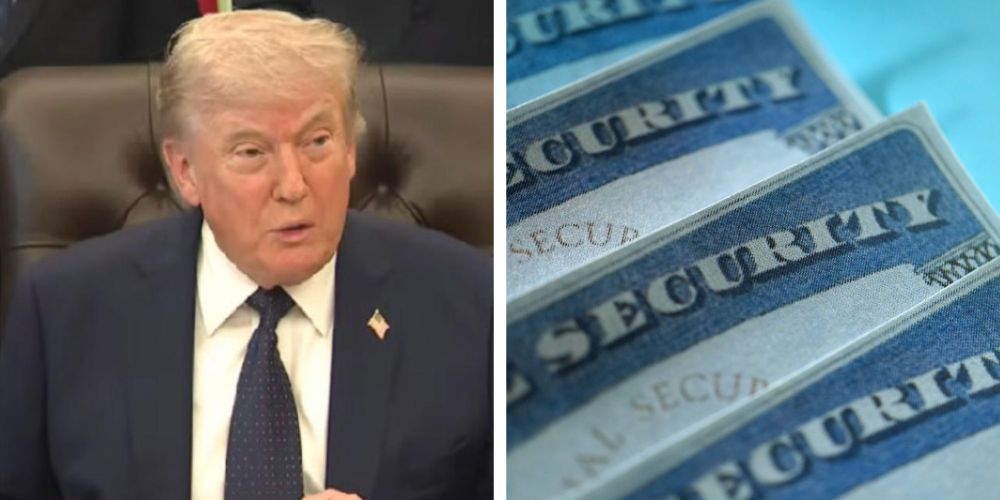
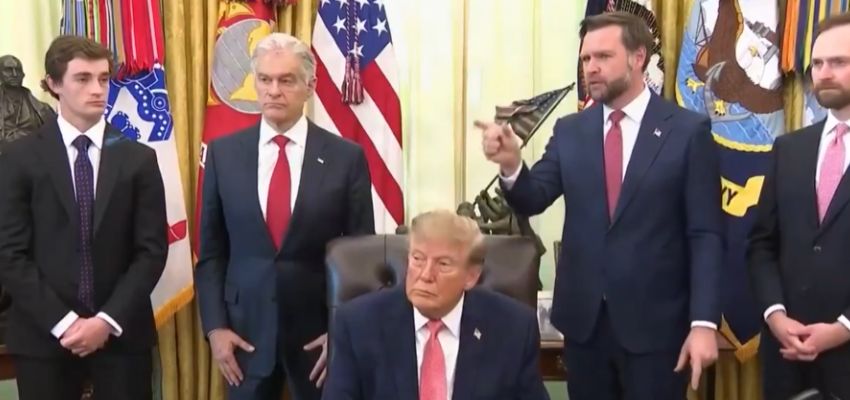
The federal government is backing away from its usual role in student loans and financing higher education. Provisions in President Donald Trump's "One Big Beautiful Bill," which was signed into law on Independence Day, has provisions that begin to reverse the federal government's role in the matter.
According to the Wall Street Journal, the bill includes restrictions on how much students can borrow as well as how they pay back their loans. The move has pushed some to reassess where they are getting loans from, and going to private lenders, who usually charge higher interest on student loans.
GOP lawmakers have argued that the reforms will curb the amount of spending the federal government has in higher education as well as force colleges and universities to cut down on their price tags.
At the same time, the Trump administration has started pushing borrowers late on payments to resume paying off their debts after the Biden administration paused student loan payment requirements because of the Covid-19 pandemic. Biden also attempted to cancel large swaths of debt for student borrowers.
Starting on July 1, 2026, a $100,000 cap on borrowing for master's degrees as well as $200,000 cap for professional degrees in such fields as law, medical, and dentistry will be implemented, as well as a cap of $20,000 annually and $65,000 per child for Parent PLUS loans. The graduate PLUS program, which would usually allow graduate students to borrow up to the full cost of their attendance, will be axed from the available programs.
Private lenders, who have mostly stayed out of graduate lending after the government started offering to pay for the complete cost of education, see an opportunity to fill the gap.
“If the government backs away from providing in-school loans, Grad PLUS, etc., we’ll absolutely capture that opportunity,” CEO of SoFi Anthony Noto said in April. “We’d be very happy to step in for the government.”
The bill also gets rid of most current student loan repayment options, and student borrowers will have two choices to pay back their loans: a fixed payment plan or the Repayment Assistance Plan, which is based on discretionary income with minimum monthly payments.
According to the Wall Street Journal, the bill includes restrictions on how much students can borrow as well as how they pay back their loans. The move has pushed some to reassess where they are getting loans from, and going to private lenders, who usually charge higher interest on student loans.
GOP lawmakers have argued that the reforms will curb the amount of spending the federal government has in higher education as well as force colleges and universities to cut down on their price tags.
At the same time, the Trump administration has started pushing borrowers late on payments to resume paying off their debts after the Biden administration paused student loan payment requirements because of the Covid-19 pandemic. Biden also attempted to cancel large swaths of debt for student borrowers.
Starting on July 1, 2026, a $100,000 cap on borrowing for master's degrees as well as $200,000 cap for professional degrees in such fields as law, medical, and dentistry will be implemented, as well as a cap of $20,000 annually and $65,000 per child for Parent PLUS loans. The graduate PLUS program, which would usually allow graduate students to borrow up to the full cost of their attendance, will be axed from the available programs.
Private lenders, who have mostly stayed out of graduate lending after the government started offering to pay for the complete cost of education, see an opportunity to fill the gap.
“If the government backs away from providing in-school loans, Grad PLUS, etc., we’ll absolutely capture that opportunity,” CEO of SoFi Anthony Noto said in April. “We’d be very happy to step in for the government.”
The bill also gets rid of most current student loan repayment options, and student borrowers will have two choices to pay back their loans: a fixed payment plan or the Repayment Assistance Plan, which is based on discretionary income with minimum monthly payments.
Sign in to comment
Powered by The Post Millennial CMS™ Comments
Join and support independent free thinkers!
We’re independent and can’t be cancelled. The establishment media is increasingly dedicated to divisive cancel culture, corporate wokeism, and political correctness, all while covering up corruption from the corridors of power. The need for fact-based journalism and thoughtful analysis has never been greater. When you support The Post Millennial, you support freedom of the press at a time when it's under direct attack. Join the ranks of independent, free thinkers by supporting us today for as little as $1.
Remind me next month
To find out what personal data we collect and how we use it, please visit our Privacy Policy



Comments