
"The court understands that this puts defendants in a bind because they are subject to two contradictory orders... One of the orders has to give."

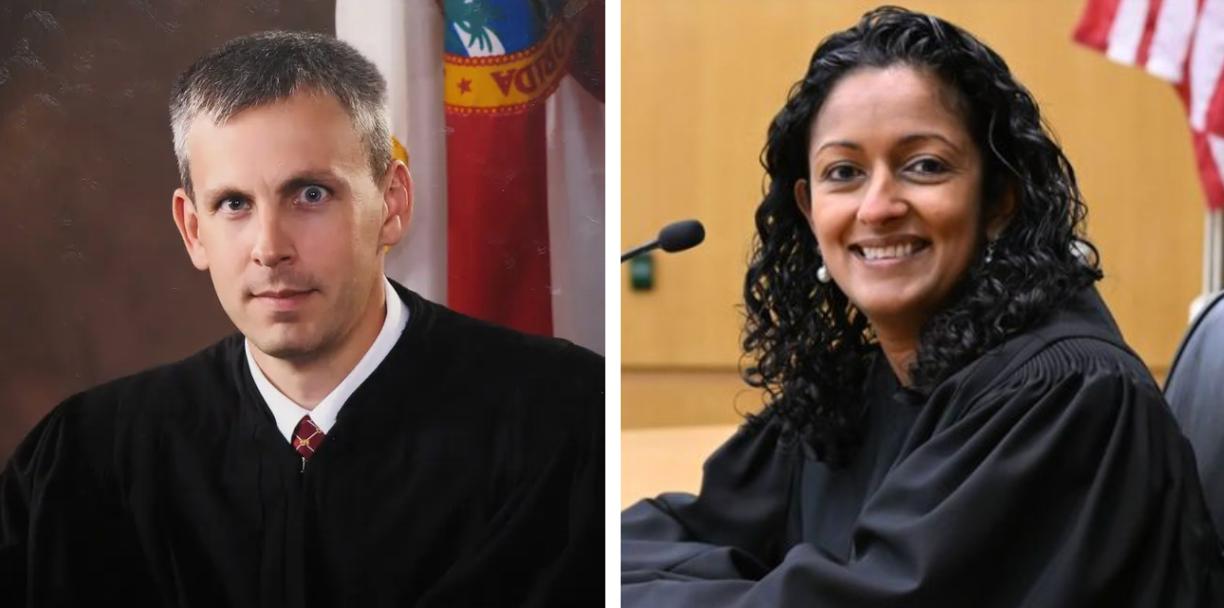
DHS is required by law to "to verify individuals’ immigration status upon request of a state." States, led by Florida, wanted to use the SAVE data, which brings in information from the Social Security Administration, to do just that. For that to work, the system needed to be upgraded to provide better search capability, and it was. Judge Sparkle L. Sooknanan said that states could not use the upgraded search capability. Judge T. Kent Wetherell II said they can.
Sooknanan said that the modifications to the search function were in violation of the Social Security Act and the Privacy Act and ruled they could not be used. This was trouble for the four states that brought suit, as they could no longer comply with state law to verify citizenship of voters.
The ruling from Wetherell requires DHS to restore Florida, Ohio, Iowa, and Indiana's ability to use the SAVE system's bulk-upload and Social Security number search functions to verify citizenship and immigration status for maintaining voter rolls.
The SAVE database, historically used to verify eligibility for immigration-related benefits, was expanded under the Trump administration to assist states in identifying noncitizens on voter rolls by allowing election officials to conduct bulk citizenship checks and searches using Social Security numbers.
Last month, Sooknanan blocked those enhancements nationwide and expressed concern that outdated citizenship records could lead to eligible voters being improperly flagged.
Wetherell reached the opposite conclusion, finding that DHS had violated a binding settlement agreement with the states by disabling the features. "Defendants are plainly in violation of the settlement agreement because it is undisputed that they disabled the bulk-upload and SSN-search features that the agreement expressly required the SAVE system to have," Wetherell wrote. "The fact that defendants disabled those features to comply with [the judge's] order does not change the fact that they violated the agreement."
The Florida lawsuit was originally filed against the Biden administration after state officials argued they were unable to verify the citizenship status of registered voters efficiently. After President Donald Trump returned to office, the Department of Justice settled the case, agreeing to modernize the SAVE system, integrate Social Security data, and provide participating states with expanded verification tools.
Wetherell approved that settlement in December and retained jurisdiction to enforce it. Following the DC court's injunction, Florida, joined by Ohio, Iowa, and Indiana, asked the court to compel DHS to honor the agreement.
In Tuesday's order, Wetherell acknowledged that DHS now faces conflicting federal court directives. "The court understands that this puts defendants in a bind because they are subject to two contradictory orders — one from this court requiring them to include certain features in the SAVE system and one from Judge Sooknanan prohibiting them from doing so. One of the orders has to give," he wrote.
"This court is not bound by Judge Sooknanan's order, and with all due respect, the court disagrees with the conclusions in that order," he added.
Wetherell went beyond simply enforcing the prior settlement, writing that he believed the DC court had incorrectly interpreted federal law. He concluded that the SAVE system's bulk-upload and Social Security search functions do not violate either the Social Security Act or the Privacy Act, finding that federal immigration law authorizes the sharing of citizenship information with state governments and that the Privacy Act's "routine use" exception applies. The judge further wrote that states' "sovereign interests in ensuring that non-citizens are not on their voter rolls" outweighed the concerns raised by the plaintiffs challenging the system.
The Washington case was brought by the League of Women Voters and the Electronic Privacy Information Center, which argued that repurposing the SAVE database for voter roll maintenance exceeded its intended purpose and relied on citizenship records that may not always be current.
In a friend-of-the-court brief filed by Democracy Forward, the groups warned that allowing the Florida settlement to stand despite the DC ruling would permit future administrations and allied states to lock in contested policies through consent decrees.
Wetherell nevertheless declined to defer to either the DC court or the US Court of Appeals for the District of Columbia Circuit, which is currently reviewing the Trump administration's appeal. Instead, he ordered DHS to restore the disputed SAVE features for the four states and directed the department to file a status report detailing its compliance by July 14.
State of Florida v. US DHS and Markwayne Mullin, Secretary by The Post Millennial
Powered by The Post Millennial CMS™ Comments
Join and support independent free thinkers!
We’re independent and can’t be cancelled. The establishment media is increasingly dedicated to divisive cancel culture, corporate wokeism, and political correctness, all while covering up corruption from the corridors of power. The need for fact-based journalism and thoughtful analysis has never been greater. When you support The Post Millennial, you support freedom of the press at a time when it's under direct attack. Join the ranks of independent, free thinkers by supporting us today for as little as $1.
Remind me next month
To find out what personal data we collect and how we use it, please visit our Privacy Policy






Comments