BREAKING: Judge Graf strikes down defense motion to remove death penalty from Tyler Robinson case
Graf said it would “risk an improper judicial intrusion into the executive branch’s prosecutorial discretion.”
Graf said it would “risk an improper judicial intrusion into the executive branch’s prosecutorial discretion.”
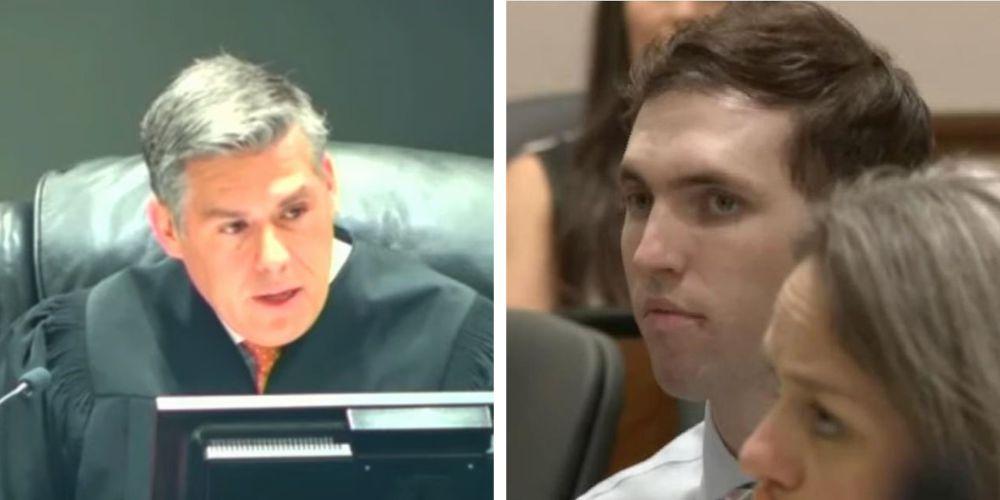
In a Friday hearing, Judge Tony Graf struck down a motion from the defense team representing Tyler Robinson, the man charged with killing Turning Point USA founder Charlie Kirk, to remove the death penalty from the case. The defense filed the motion seeking to strike the death penalty as a sanction if a ruling of contempt was reached against the prosecution, with Graf finding Deputy Utah County Attorney Christopher Ballard in civil contempt.
Graf said, "The court finds that statements to TMZ regarding ample evidence in overcoming the presumption of innocence violated Rule 3.6 A and were not protected by Rule 3.6 C safe harbor, because Mr. Ballard knew of the order, possessed the ability to comply, and intentionally made the volitional statements in question."
"A reasonable attorney invoking Rule 3.6 C may respond only to the specific prejudice requiring correction. The prejudice identified here concerned the public misunderstanding of the ATF inconclusive forensic finding. Once that misunderstanding had been fully addressed, further commentary concerning the overall strength of the prosecution’s evidence did not materially assist in correcting specific misimpressions."
Ballard had been quoted by TMZ as stating, "generally when a bullet fragment analysis comes back as inconclusive, that means the fragment did not contain enough detail for the examiner to say one way or the other. There's just not enough there to determine whether the bullet was fired by a particular firearm. We have ample evidence to demonstrate beyond a reasonable doubt that Tyler Robinson committed this murder, and we will present some of that evidence at the upcoming preliminary hearing, and we will present all that evidence at trial."
He struck down the defense's motion to strike the death penalty as a sanction, saying it would "risk an improper judicial intrusion into the executive branch's prosecutorial discretion." He added, "The court finds that striking the death penalty is grossly disproportionate to the misconduct and legally unavailable in this civil contempt framework."
He said going forward without remedial measures would not "adequately protect the integrity of future proceedings," however, "the court rejects punitive sanctions that would intrude upon prosecutorial charging authority or materially alter the underlying criminal proceedings."
The remedy, Graf said, would be that the court would consider increased potential juror questioning and other means to counter the statements, and the court will compensate Robinson for attorney's fees for the filings.
Graf said that Ballard had communicated with media outlets following the late March filing from the defense after media outlets, "relying upon the defense’s filing," had "generated highly sensationalized and factually inaccurate headlines."
Graf said "the court finds that Mr. Ballard did not engage with the media out of a malicious desire" to "intentionally taint the jury poll. Mr. Ballard testified that he believed his statements were necessary to respond to public reporting concerning the ATF report."
Graf said the defense "initiated the media frenzy by stating in a public filing that the ATF was unable to identify the bullet to the rifle. The media twisted this phrase to mean the bullet did not match factual and credibility findings. The court finds that the defense’s characterization in its March 27 motion to continue was technically accurate, bt highly prone to misinterpretation by framing the results as unable to identify."
This is a breaking story.
Libby’s Desk
Commentary and must-reads from Libby’s desk, straight to your inbox.
TPM Newsletter
The Post Millennial’s top stories, delivered to your inbox.


