Federal judge blocks ICE from making arrests without warrants in Oregon
This decision would impact a practice called “collateral arrests,” where federal agents identify more illegal immigrants while taking a target into custody.
This decision would impact a practice called “collateral arrests,” where federal agents identify more illegal immigrants while taking a target into custody.
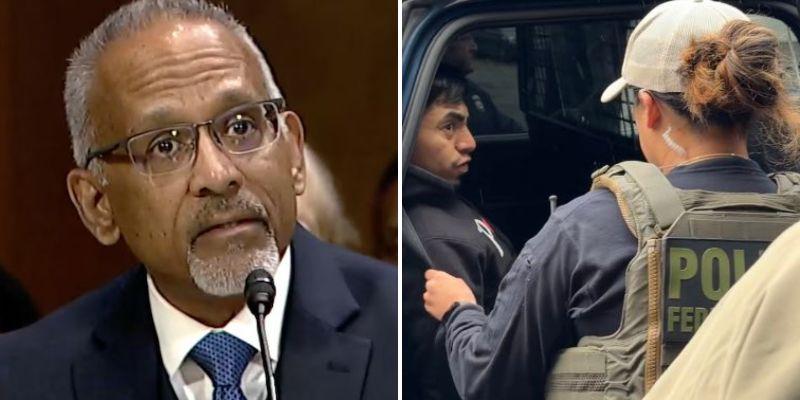
US District Court Judge Mustafa Kasubhai ruled on Wednesday that Immigration and Customs Enforcement (ICE) agents cannot make arrests without warrants in the state of Oregon. The preliminary injunction stems from a class action lawsuit filed against ICE, the Department of Homeland Security (DHS), and the Department of Justice (DOJ).
ICE agents now must obtain a warrant to apprehend a subject unless an individual poses a risk of escape, the judge ruled. This decision would impact a practice called "collateral arrests," where federal agents identify more illegal immigrants while taking a target into custody. Additionally, ICE cannot detain a subject on the sole suspicion that they may be in the country illegally.
Judge Kasubhai described recent immigration arrests in Oregon as "violent and brutal," detailing agents drawing their weapons during targeted operations. He also expressed concerns about due process violations.
"Due process calls for those who have great power to exercise great restraint," Kasubhai wrote. "That is the bedrock of a democratic republic founded on this great Constitution. I think we're losing that." Oregon joins Colorado and Washington, D.C., where courts have issued similar rulings. The Trump administration has filed appeals.
The day-long hearing included testimony from plaintiff Victor Cruz Gamez, 56, who was arrested by ICE and held in a detention facility in Tacoma, Washington, for three weeks before a lawyer secured his release. Gamez, who has been in the US since 1999, told the judge that he had produced his driver's license and work permit when he was pulled over, but was detained anyway.
He recounted the impact his apprehension had on his family. Gamez said his family did not open the door of their home for three weeks after his return.
"I'm concerned, as a public servant, and as someone who has to, by virtue of my oath, to uphold the constitution, when I see actions and behavior on behalf of our executive branch that does not observe that same commitment," the judge said.
Judge Kasubhai's ruling comes one day after another ruling out of the same federal courthouse that prohibits the use of tear gas and crowd control munitions on agitators at the ICE facility in South Portland. The facility has been under siege by rioters since June 2025.
Libby’s Desk
Commentary and must-reads from Libby’s desk, straight to your inbox.
TPM Newsletter
The Post Millennial’s top stories, delivered to your inbox.


