MAHA WIN: Walmart to remove synthetic dyes from store-brand foods by 2027
Great Value alone is found in 90 percent of US households.
Great Value alone is found in 90 percent of US households.
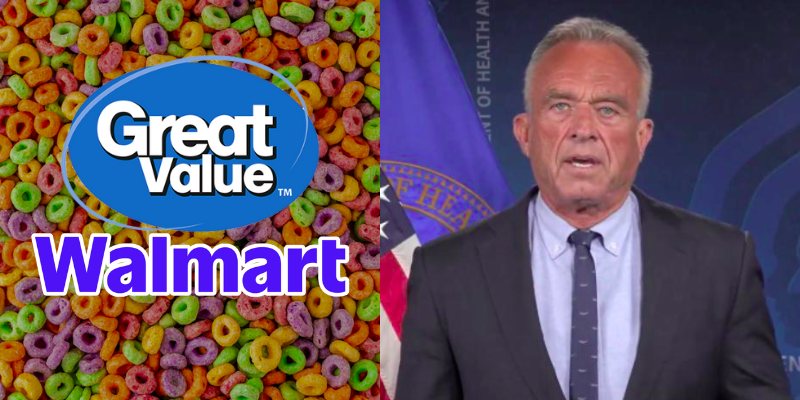
Walmart announced Wednesday that it will phase out synthetic dyes from all of its private-label food products by January 2027. The change applies to brands such as Great Value, Marketside, and Bettergoods. Great Value alone is found in 90 percent of US households, according to NielsenIQ.
The shift means reformulating more than 1,000 products, though Walmart says most of its store-brand foods are already dye-free. Scott Morris, senior vice president of Walmart’s private food brands, said the decision reflects customer demand. “They’re looking for simpler ingredients, simpler nutrition panels,” he said, according to NBC News.
In addition to dyes, Walmart plans to cut 30 other ingredients, including certain preservatives, fat substitutes, and artificial sweeteners. Some of these additives are already banned in California, such as potassium bromate and propylparaben.
The Food and Drug Administration has encouraged companies to move away from artificial colors by 2027, but so far has relied on voluntary commitments. Other major food makers, including PepsiCo, Kraft Heinz, and General Mills, have announced similar moves.
At Walmart’s Culinary Innovation Center in Bentonville, Arkansas, developers showed off products that had been reformulated. Cupcake frosting made with spirulina and beets looked nearly identical to the artificially dyed version. But cereals such as Great Value Fruit Spins appeared more muted, especially in blue, green, and purple shades. Sports drinks that once came in neon colors will now be cloudy white, though bottles may use colored sleeves to keep the familiar look.
Product developer Andie Garcia admitted color is a big factor in buying sports drinks but said the blue shade couldn’t be replicated naturally. “Color drives the decision,” she said.
Walmart insists that taste and quality will stay the same even if products look different. “The customer is continuously telling us that it’s not necessary everywhere,” Morris said.
Some studies have linked synthetic dyes to hyperactivity in children, though the FDA says they are generally safe. Renee Leber of the Institute of Food Technologists said companies will have to convince consumers to accept the visual changes.
Libby’s Desk
Commentary and must-reads from Libby’s desk, straight to your inbox.
TPM Newsletter
The Post Millennial’s top stories, delivered to your inbox.


