Rwandan refugee living in Ohio convicted for lying about participation in Tutsi genocide
Nshimiye "participated in attacking Tutsi men and women, including by striking them on the head with a club" then came to the US as a refugee in 1995.
Nshimiye "participated in attacking Tutsi men and women, including by striking them on the head with a club" then came to the US as a refugee in 1995.

A refugee immigrant from Rwanda has been convicted on four counts of perjury over the “concealment of material information concerning his involvement in the 1994 Rwandan genocide.” Eric Tabaro Nshimiye was convicted for lying to a federal jury during the 2019 trial of Jean Leonard Teganya, who was convicted of genocide in their home nation of Rwanda. Nshimiye came to the US as a refugee before gaining citizenship, despite having been a perpetrator of ethnically motivated violence and killings.
Nshimiye was a medical student and the time and he and Teganya were both well-known student members of the Hutu ruling party. Victims testified that Nshimiye was a direct participant in the massacres, revealing that he clubbed a man to death and participated in road blocks where Tutsis were designated for death.
Teganya was prosecuted for asylum fraud in 2017. At trial, Nshimiye said that neither of them had participated in genocide. These lies now make up the basis for perjury and obstruction-of-justice convictions.
Nshimiye left Rawanda in 1994 and went to Kenya before he was able to gain refugee status in 1995, settling in Uniontown, Ohio. However, if he had disclosed his role in the Rwandan genocide, he would not have been given entry.
Following Nshimiye’s entry into the US under false pretenses, the Justice Department said, he “continued to provide false information about his involvement in the Rwandan genocide” and used that false information to obtain citizenship.
The Department of Justice presented evidence that Nshimiye “participated in attacking Tutsi men and women, including by striking them on the head with a club.” These actions were carried out during the brutal civil war in Rwanda, in which Hutu and Tutsi ethnic tribes massacred each other. The Tutsis were the minority tribe in Rwanda, and some 800,000 of them were killed by the majority Hutus over about 100 days.
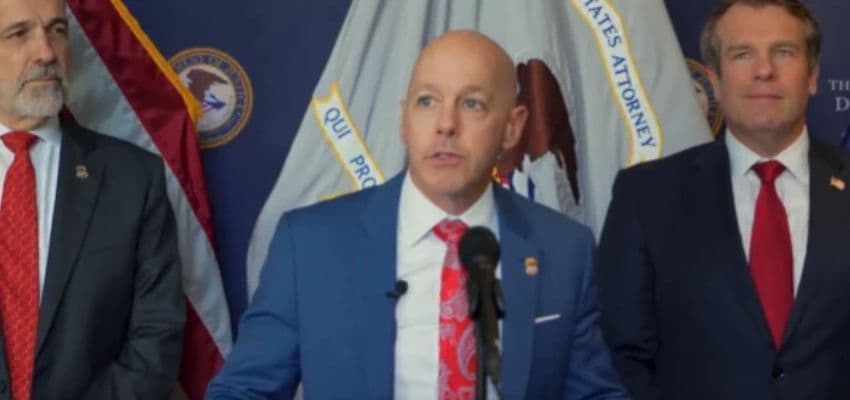
“For nearly three decades, this defendant concealed his involvement in the 1994 Rwandan genocide and the heinous acts of violence he committed, including clubbing people to death,” said Assistant Attorney General A. Tysen Duva for the Justice Department’s Criminal Division.
“Then, he lied to immigration officials in order to become a U.S. citizen, and he lied to a federal jury to protect himself and a fellow perpetrator of the Rwandan genocide,” Duva added. “Now, he will face the consequences of his crimes thanks to the courage of the survivors in this case and the diligence of our prosecutors and law enforcement partners who have ensured that Nshimiye will not be able to escape his past.”
Leah B. Foley, U.S. Attorney for the District of Massachusetts, said Nshimiye’s “web of lies and deception” had finally caught up with him.
“He obtained refuge in this country by lying to immigration officials about his involvement in the Rwandan genocide and the appalling acts he committed on the Tutsi community,” Foley said. “The United States protects victims not violent criminals. This verdict ensures Nshimiye can no longer hide behind his lies.”
Jeffrey Grimming, acting special agent in charge of Homeland Security Investigations New England, called him a “wolf in sheep’s clothing, masquerading as a refugee here in the United States in an affront to the thousands of Rwandans terrorized and displaced by the genocide he violently participated in.”
He dedicated the verdict “to the victims who bravely shared their stories, traveling across the world to relive the most horrifying moments of their lives and bring Nshimiye to justice. We are deeply grateful for their contribution and their sacrifice.”
Nshimiye will face a maximum penalty of five years in prison for each of the four perjury counts and a maximum penalty of 10 years in prison for one count of obstruction of justice.
A federal district court judge is expected to sentence him on Jan. 26, 2027, taking under consideration U.S. Sentencing Guidelines and other statutory factors, the DOJ said.
Loading this lets Rumble set cookies and collect data.
View on RumbleLibby’s Desk
Commentary and must-reads from Libby’s desk, straight to your inbox.
TPM Newsletter
The Post Millennial’s top stories, delivered to your inbox.