Seattle judge who vowed ‘resistance’ RELEASES teen charged in fatal Bite of Seattle shooting
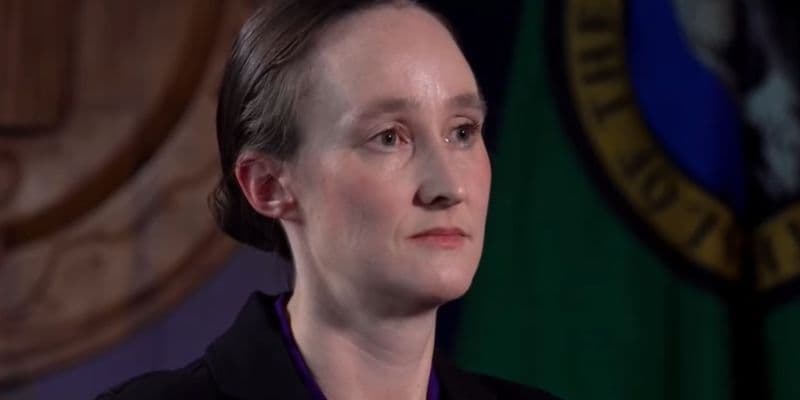
“What does resistance look like when you wear a black robe?” Judge Galvan asked, stating that the judicial system is “complicit in perpetuating oppression.”
“What does resistance look like when you wear a black robe?” Judge Galvan asked, stating that the judicial system is “complicit in perpetuating oppression.”
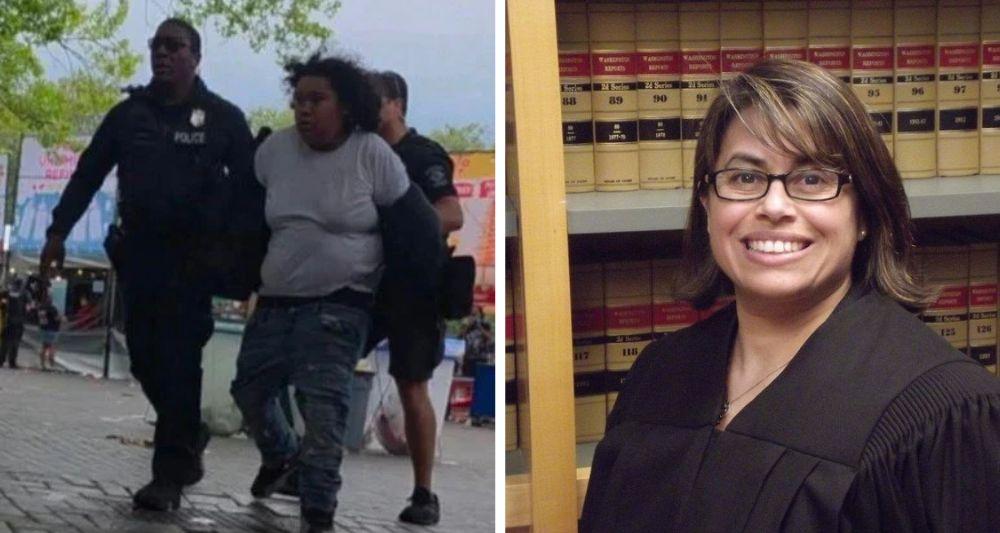
A Seattle judge who previously released an armed robbery suspect accused of disemboweling a teenager has ordered a 15-year-old charged in the deadly Bite of Seattle shooting, released from juvenile detention to electronic home monitoring. King County Superior Court Judge Veronica Galván authorized the release Wednesday, despite prosecutors arguing that the teenager endangered the public by bringing a gun to the crowded food festival and firing into the crowd. Three people were killed in the July 26 shooting at Seattle Center.
Loading this lets X set cookies and collect data.
View on XThe teenager, arrested at the scene and charged three days later, faces first-degree assault with a firearm and second-degree unlawful possession of a firearm. He has not been charged with murder. Under Galván’s order, he will live with his father and stepmother, remain under adult supervision around the clock, continue mental health treatment, and avoid contact with those injured in the shooting.
According to KOMO News, prosecutors allege he fired at least three times. His ghost gun had a 33-round-capacity magazine and a base plate reading, “1 SHOT, 1 KILL.” Defense attorneys said no ballistic evidence connects his gun to any death or injury, and a witness said another person fired first. Galván cited a possible self-defense claim.
Court records also describe a video showing the teenager with a group displaying 11 firearms before the festival, including two weapons later recovered at the scene. One, a separate Glock handgun, was connected to the death of Carlos Villalba, 44.
Prosecutors additionally warned that the defendant’s brother allegedly tampered with or removed an electronic monitor in an unrelated case. Their mother did not respond when supervisors contacted her.
Additional ballistic testing remains pending. A compliance review is scheduled for November 10, followed by a December status hearing and a January hearing on whether to prosecute him as an adult.
Galván previously publicly questioned the institution in which she serves. She asked on Facebook: “What does resistance look like when you wear a black robe?” She described the justice system as “complicit in perpetuating oppression.”
Her decision to release the teen suspect adds to a record of releases involving defendants accused of serious violence.
In December 2024, Galván released 17-year-old Millorz Canales to electronic home monitoring over prosecutors’ objections in a Seattle armed-robbery case. Two weeks later, Canales and another teenager allegedly lured a 14-year-old to an Everett park, stripped him, tied him to a tree, repeatedly stabbed and disemboweled him, and left him for dead. The victim survived and reached a nearby home for help. Canales was charged with first-degree assault, first-degree kidnapping, and robbery. His prior record included theft, criminal trespass, obstruction, and a probation violation.
Earlier that year, Galván released three juveniles arrested with loaded handguns at Seattle’s Chinatown–International District parade. Two weapons had been modified for automatic fire. The boys, ages 13, 14 and 14, were ultimately placed on electronic home monitoring despite prosecutors seeking continued detention. Some were permitted to attend activities including football practice. Prosecutors said one teenager threatened detention staff shortly before his review hearing.
Galván told prosecutors: “We’ve detained people for years, and crime is still here.” She said she wanted to allow community programs and interventions to help the teenagers change their behavior.
In February 2024, Galván also released a 12-year-old accused of participating in a ghost-gun carjacking and police pursuit. Prosecutors and a juvenile probation counselor opposed release. Galván cited his differing level of involvement and school record, while keeping his 13-year-old brother detained.
Her release decisions extend beyond juvenile cases.
In August 2019, Galván ordered Lonnie Sanderson released on personal recognizance despite prosecutors requesting that his $75,000 bail remain in place. Sanderson was accused of attacking musician and Army veteran Ryan Georg with a baseball bat near Seattle’s El Corazon nightclub. Georg suffered skull fractures, had to relearn how to speak, and reported seizures and other lasting injuries. Galván referred Sanderson to a community treatment program that did not require him to remain at the facility around the clock.
That same summer, Galván conditionally released Matthew Nathan Weed, accused of diving through an occupied Uber’s rear window, fighting its driver and trying to steal the vehicle. KIRO 7 reported that Weed was referred to the Community Center for Alternative Programs. Prosecutors said he never reported, and a bench warrant followed.
In September 2025, Galván released two brothers, ages 15 and 17, accused of severely beating Nikki Armstrong near the Renton Transit Center. She found probable cause for second-degree assault and ordered electronic monitoring, with allowances for activities including football.
Loading this lets Rumble set cookies and collect data.
View on RumbleLibby’s Desk
Commentary and must-reads from Libby’s desk, straight to your inbox.
TPM Newsletter
The Post Millennial’s top stories, delivered to your inbox.