
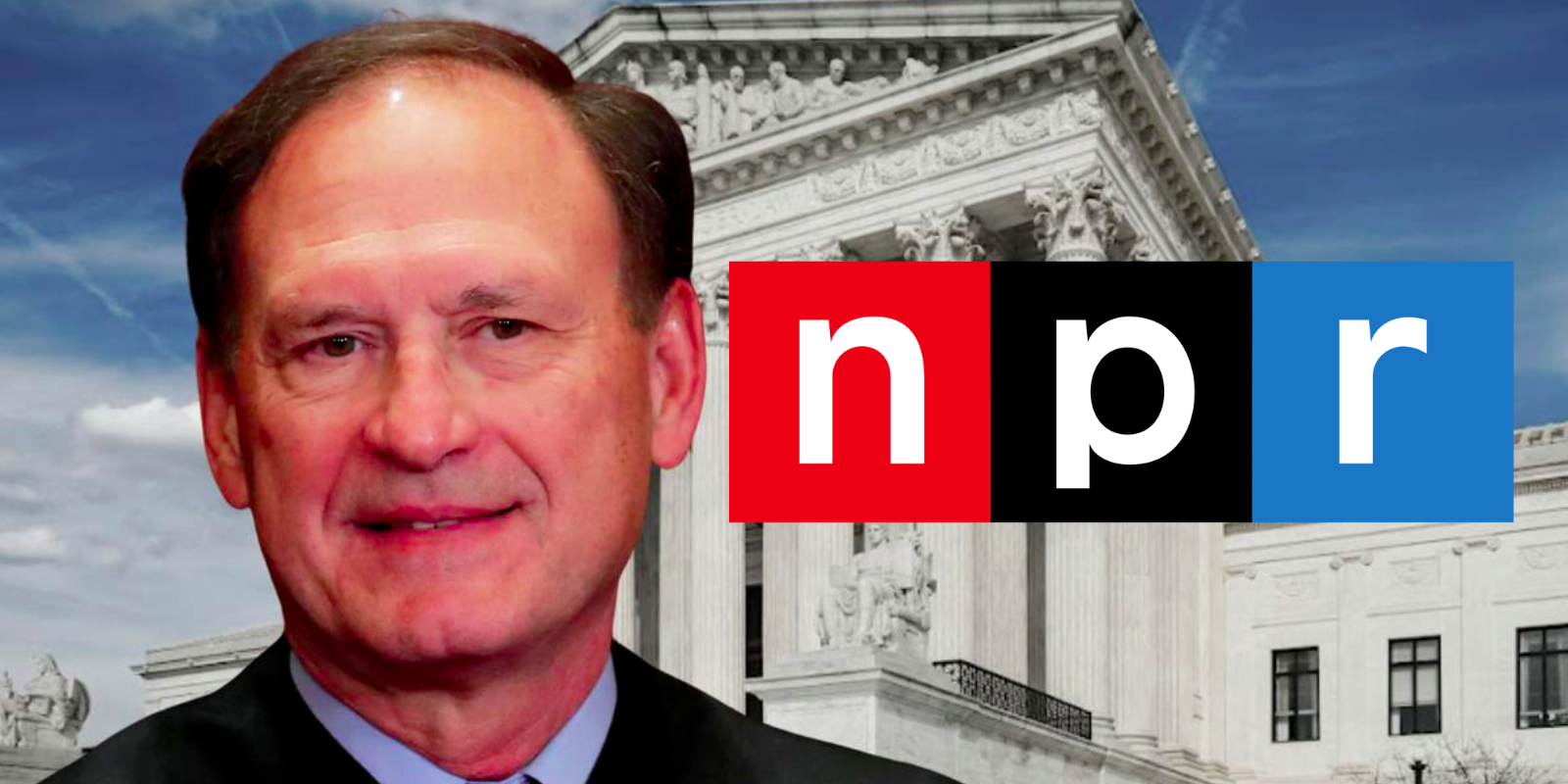
NPR’s correction stated that the story “was published in error” and that Justice Alito “has not announced his retirement.”

The original article—authored by legal affairs correspondent Nina Totenberg—stated that Alito, who has served on the Supreme Court since 2005 after being appointed by George Bush, was stepping down from the bench. The report quickly circulated, then was removed and replaced with an editor’s note clarifying that the information was incorrect.
NPR’s correction stated that the story “was published in error” and that Justice Alito “has not announced his retirement.”
The mistaken report was briefly echoed by other outlets before being similarly corrected or pulled. One reporter speculated that NPR may have received a tip that Alito could be retiring in the near future and accidentally published a pre-written article intended to be published upon announcement.
The report came amid a slew of Supreme Court decisions issued on its last opinion day of the term, including a landmark choice on birthright citizenship, which Alito strongly contested.
Writing for the majority, Chief Justice Roberts stressed that “children born of parents unlawfully or temporarily present in the United States” meet “both elements of the Citizenship Clause.” He concluded that, “Under the Constitution,” such individuals “are citizens at birth.”
In dissent, Justice Samuel Alito described the ruling as both “one of the most important decisions in the history of the Court” and “a serious mistake.” He argued that a “careful analysis of the text of the Fourteenth Amendment and the process that led to its adoption” demonstrates that it “does not degrade the concept of United States citizenship in this way.” Instead, he maintained that “the Fourteenth Amendment confers citizenship on only those children who, at birth, owe allegiance solely to this country.”
The executive order at the center of the dispute was issued by President Trump on January 20, 2025, shortly after beginning his second term. It stated that children born in the United States to parents who are in the country either unlawfully or on a temporary basis are not automatically granted citizenship.
Powered by The Post Millennial CMS™ Comments
Join and support independent free thinkers!
We’re independent and can’t be cancelled. The establishment media is increasingly dedicated to divisive cancel culture, corporate wokeism, and political correctness, all while covering up corruption from the corridors of power. The need for fact-based journalism and thoughtful analysis has never been greater. When you support The Post Millennial, you support freedom of the press at a time when it's under direct attack. Join the ranks of independent, free thinkers by supporting us today for as little as $1.
Remind me next month
To find out what personal data we collect and how we use it, please visit our Privacy Policy





Comments