
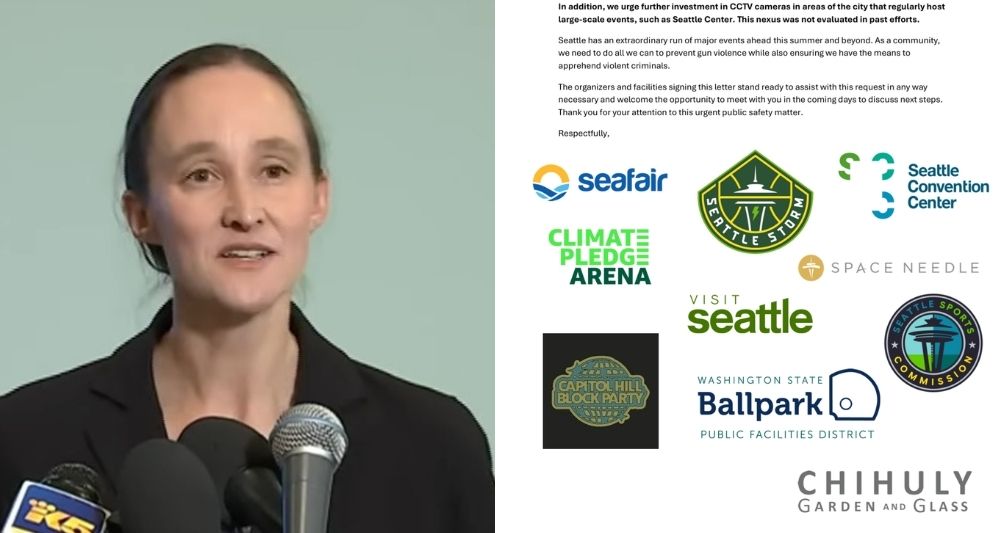
"...Last week’s violent crimes should serve as a stark reminder that any large-scale event is vulnerable to public safety threats that may endanger human lives."

In an Aug. 3 letter to Wilson, a coalition including Seafair, the Seattle Storm, Climate Pledge Arena, the Seattle Convention Center, the Space Needle, Visit Seattle, the Seattle Sports Commission, Chihuly Garden and Glass, the Washington State Ballpark Public Facilities District, and Capitol Hill Block Party called on the mayor to restore 22 closed-circuit television cameras connected to the Seattle Police Department’s Real-Time Crime Center.
The organizations warned that Seattle remains vulnerable to violence at major public gatherings and said police need every available tool to protect residents and visitors. The request comes amid growing backlash to Wilson’s handling of public safety following the July 26 shooting near Seattle Center, where three people were killed, and several others were injured during the Bite of Seattle food festival.
Barnes was attending a law-enforcement conference in Dallas when the shooting occurred. City officials then faced criticism over the nearly five-hour delay before holding a public briefing, the lack of timely information about the suspects, and Barnes’ subsequent confrontation with a reporter questioning his absence and frequent travel to his home in Chicago. Days later, Wilson asked Barnes to resign and gave him an over $700,000 severance package.
The chaos has increased scrutiny of Wilson’s decision to shut off the Stadium District cameras immediately after the FIFA World Cup.
In their letter, the organizations pointed directly to the Seattle Center shooting and another shooting on Capitol Hill the previous day that injured three bystanders. “These recent tragic events should serve as a warning that gun violence and gun availability pose a clear and present threat in our city,” the letter states.
The coalition said Seattle must also give police the tools needed to respond to active threats and identify suspects. “The World Cup taught us that Seattle is capable of hosting world-class events successfully,” the organizations wrote. “However, last week’s violent crimes should serve as a stark reminder that any large-scale event is vulnerable to public safety threats that may endanger human lives.”
“Seattle police officers need every tool at their disposal to keep these events and their attendees safe.”
Wilson ordered the Stadium District cameras deactivated immediately following the FIFA World Cup, fulfilling a promise to activists that they would operate only during the tournament. The mayor said the cameras would remain offline until an independent audit of Seattle Police Department surveillance policies and the Real Time Crime Center is completed this fall. She also said no additional police CCTV cameras would be activated while the review is underway.
Cameras in Downtown Seattle, the Chinatown-International District, and North Aurora remain operational because they were activated before Wilson took office. Wilson initially opposed turning on the Stadium District cameras, warning that the system could potentially be accessed by the Trump administration or federal immigration authorities. She later reversed course, citing credible security threats related to the World Cup, though she repeatedly declined to publicly identify those threats.
After the tournament ended, Wilson shut the cameras off despite objections from law enforcement and downtown business leaders.
The coalition said it supports the city’s privacy review but argued that the audit can proceed without disabling a proven law-enforcement resource. “We understand and respect that your administration paused the Real-Time Crime Center camera program pending a citywide audit of its data privacy policies, and we support that review being conducted carefully and with meaningful community input,” the letter states.
However, the organizations said the Seattle Center shooting demonstrated that public safety at large events must remain an immediate priority. “As such, we respectfully urge you to reactivate the 22 CCTV cameras in the Stadium District and Pioneer Square that were connected to the Seattle Police Department’s Real-Time Crime Center, while the City’s audit is underway,” the coalition wrote.
The letter also calls for Seattle to install additional cameras near Seattle Center and other locations that regularly host major events. “In addition, we urge further investment in CCTV cameras in areas of the city that regularly host large-scale events, such as Seattle Center,” the organizations wrote. “This nexus was not evaluated in past efforts.”
Seattle police have repeatedly described the Real Time Crime Center as a force multiplier that allows officers to identify suspects, reconstruct crime scenes, track fleeing vehicles, and provide real-time information during emergencies. The system recently played a significant role in identifying suspects accused of brutally assaulting 77-year-old Richard Vera in downtown Seattle.
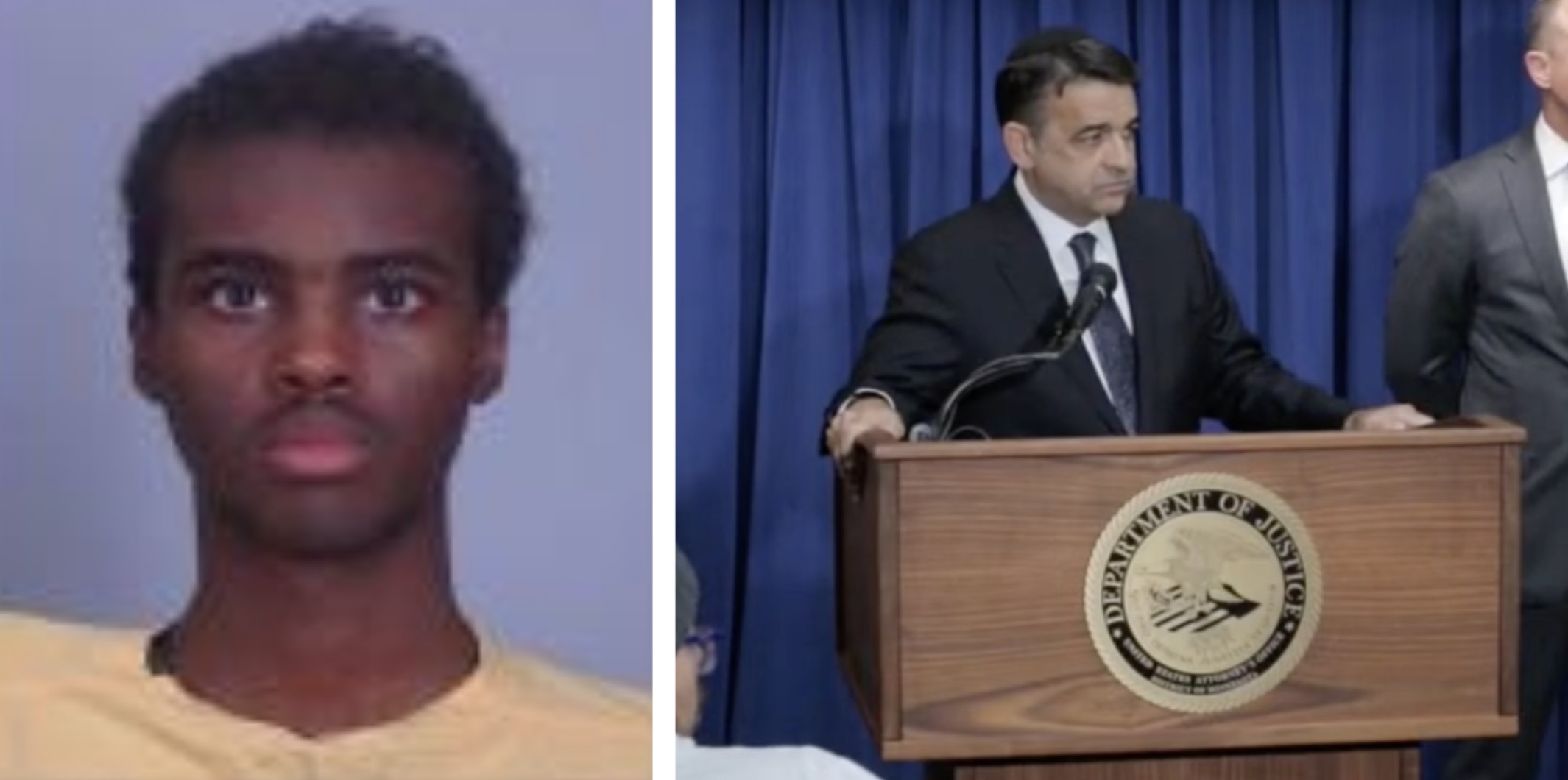
According to King County charging documents, RTCC cameras captured the April attack near Third Avenue and Pike Street. Officers reviewed the footage from their patrol vehicles and confirmed that Ahmed Abdullahi Osman was involved before arresting him at the scene.
Detectives later used the footage to identify Jes’Sean Tyrell Elion by comparing his clothing, shoes, facial features, and distinctive limp with the surveillance video. Elion was arrested after police distributed still images captured by the system.
Downtown Seattle Association President and CEO Jon Scholes previously said deactivating the cameras amounted to “blindfolding law enforcement.”
Seattle Police Officers Guild President Kent Loux also condemned Wilson’s decision, saying there was no evidence the cameras had been compromised and substantial evidence that they helped deter and solve crimes.
The venue operators responsible for hosting millions of visitors are warning that Seattle’s public-safety challenges did not disappear when the World Cup ended. “Seattle has an extraordinary run of major events ahead this summer and beyond,” the coalition wrote. “As a community, we need to do all we can to prevent gun violence while also ensuring we have the means to apprehend violent criminals.”
Powered by The Post Millennial CMS™ Comments
Join and support independent free thinkers!
We’re independent and can’t be cancelled. The establishment media is increasingly dedicated to divisive cancel culture, corporate wokeism, and political correctness, all while covering up corruption from the corridors of power. The need for fact-based journalism and thoughtful analysis has never been greater. When you support The Post Millennial, you support freedom of the press at a time when it's under direct attack. Join the ranks of independent, free thinkers by supporting us today for as little as $1.
Remind me next month
To find out what personal data we collect and how we use it, please visit our Privacy Policy
Comments