Socialists, leftists surge past incumbents in Seattle primaries
It’s a striking contrast to 2021 and 2023, when voters appeared to be swinging toward the center amid concerns over public safety and dysfunction in city governance.
It’s a striking contrast to 2021 and 2023, when voters appeared to be swinging toward the center amid concerns over public safety and dysfunction in city governance.
Seattle’s far-left political movement is gaining steam, with progressive and socialist candidates dominating early returns from Tuesday’s primary election. Longtime political fixtures are suddenly in peril as insurgent challengers ride a wave of dissatisfaction with the city’s establishment leadership.
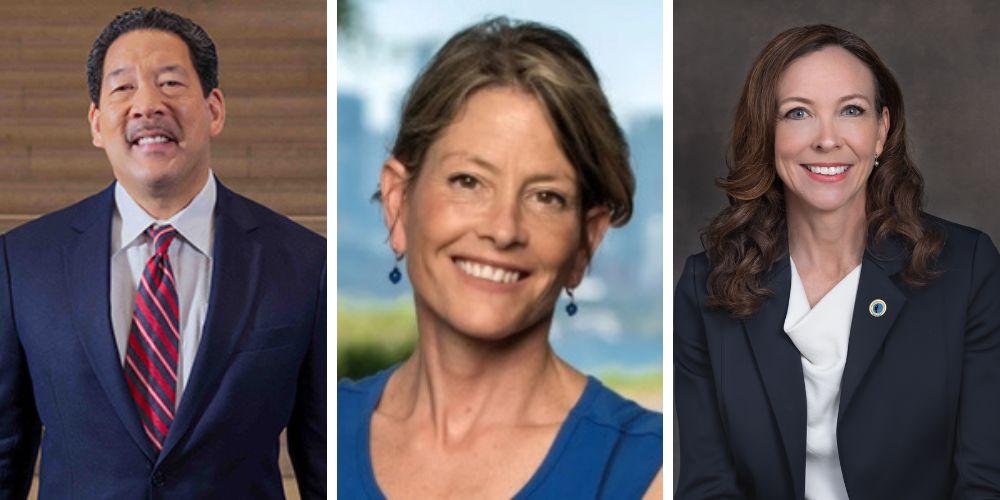
At the top of the ticket, Mayor Bruce Harrell is trailing challenger Katie Wilson by roughly 1,300 votes in the initial count. Wilson leads with 46.2 percent of the vote to Harrell’s 44.9 percent, with six other candidates trailing far behind. The top two vote-getters will advance to November’s general election.
Late ballots, which often trend more progressive, are still being counted, giving Wilson a strong chance to widen her lead. If the trend holds, Harrell, once backed by a coalition of business leaders, labor unions, and nearly every major political heavyweight in the state, could face the fight of his political life this fall.
Wilson, a longtime political organizer and fixture in City Hall, who has pledged to "Trump-proof" the city, has spent over a decade pushing for left-wing reforms. She helped spearhead efforts to tax Seattle’s largest corporations and enact sweeping labor and tenant protections. Her campaign has centered on the city’s affordability crisis and her opposition to what she characterizes as a City Hall more interested in preserving the interests of wealthy homeowners than aiding struggling renters.
“Seattle can’t afford to be governed by the same people responsible for the crisis we’re in,” Wilson has said repeatedly during her campaign.
Incumbent City Attorney Ann Davison is also trailing her challenger. Former federal prosecutor Erika Evans leads Davison 51 percent to 37 percent after Tuesday night’s count, a striking reversal for the city’s only Republican-aligned elected official.
The early margin places Davison in a precarious position heading into the general election. While her tenure has seen a renewed emphasis on prosecuting low-level crimes, a shift she argues helped reduce crime across Seattle, critics say she’s been slow to act on DUI and domestic violence cases and failed to present a broader vision for reform.
Evans, who once worked under former City Attorney Pete Holmes, has called for a more holistic approach to public safety. She supports prosecution as a tool for accountability, but argues Davison’s methods are outdated and overly punitive.
Davison’s 2021 election was itself an anomaly. She won that race after Holmes was squeezed out in a primary by challengers from both his left and right. He was broadly criticized for the lack of prosecution. In the general election, Davison defeated Nicole Thomas-Kennedy, a police abolitionist whose controversial past social media posts, including some supporting Antifa, stirred widespread backlash.
City Council races also suggest a resurgent progressive energy in Seattle politics. In citywide Council Position 9, incumbent Sara Nelson is behind Dionne Foster, a former progressive nonprofit leader, by a margin of 39.1 to 53.7 percent. Foster has painted Nelson as a “big business” politician out of step with Seattle’s values, and Tuesday night’s results suggest that message is resonating.
Alexis Mercedes Rinck, another citywide councilmember and the council’s most prominent socialist, appears well-positioned to secure reelection. She leads her closest challenger, Rachael Savage, 75.2 to 14.9 percent in a five-way race. Rinck has been buoyed by a broad coalition of progressive and establishment backers and has significantly out-fundraised her challengers.
In South Seattle’s District 2, an open seat created by the resignation of Socialist Tammy Morales has sparked a competitive four-way contest. Progressive land-use attorney Edward Lin (45.7 percent) and Mayor Harrell adviser Adonis Ducksworth (30.6 percent) are leading the field and will likely move on to the general election.
All four candidates in that race support Harrell and Rinck’s plan to overhaul the city’s business and occupation tax to raise an estimated $80–90 million annually, signaling broad support for increased progressive revenue measures.
While the general election in November will ultimately determine the future makeup of City Hall, Tuesday’s results mark a strong showing for Seattle’s left. It’s a striking contrast to 2021 and 2023, when voters appeared to be swinging toward the center amid concerns over public safety and dysfunction in city governance.
Now, with voters increasingly fed up with unaffordable housing, slow progress on homelessness, and frustration with the city’s political class, the progressive bloc is hoping to reshape Seattle from the inside out.
Libby’s Desk
Commentary and must-reads from Libby’s desk, straight to your inbox.
TPM Newsletter
The Post Millennial’s top stories, delivered to your inbox.