
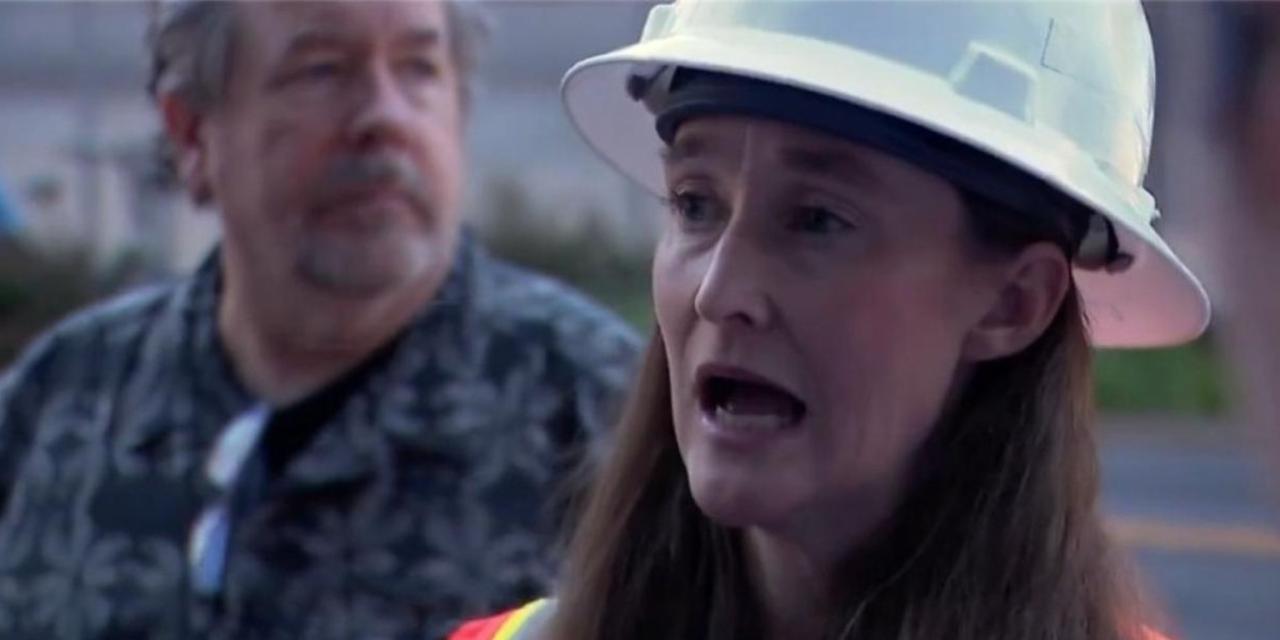
Assistant Chief Tyrone Davis told the Seattle City Council that police were prepared to brief the public hours earlier but Deputy Mayor Brian Surratt repeatedly told him to wait for Mayor Katie Wilson.

Davis, who was acting police chief during the July 26 shooting that killed three people and wounded four, told the Seattle City Council’s Public Safety Committee that SPD had stabilized the scene and was prepared to address the public approximately 90 minutes after the gunfire erupted.
“We were ready to go,” Davis told councilmembers. “I was getting ready to walk down there and handle it. I did talk to the deputy mayor (Surratt) just as a courtesy to let him know we were going to do down and conduct the interview. I was told we needed to wait for the Mayor.”
Davis said he proposed giving an initial briefing immediately and another when Wilson arrived. According to Davis, Surratt again told him not to proceed without the mayor.
The first press conference ultimately did not occur until nearly 11 pm, with Wilson appearing alongside Washington Gov. Bob Ferguson and Rep. Pramila Jayapal.
Davis said waiting accomplished nothing from a public-safety standpoint. “I will tell you this right now, what I shared in the 20-minute press conference at 11:00 pm would have been the same exact information I would have provided at 7:30 - nothing changed,” Davis said. “That’s how stable the situation was. That’s how well run our officers were. That’s how well prepared detective Pritchard and our media folks were.”
Davis’s account directly conflicts with Wilson’s description of her office’s role. “I think I've been clear for a long time now that I own, my office owns, that final delay between 9:45 and 10:45 pm when the press conference ultimately took place,” Wilson told reporters last week. “The public deserves clear, consistent communication in case of emergencies. A press conference with myself and other elected officials in no way should replace clear, consistent, informative communication throughout the night from SPD.”
Davis’s testimony puts the Mayor’s Office intervention more than two hours earlier. It is not the only evidence contradicting Wilson’s account.
SPD’s after-action report concluded that “Senior and Elected Officials distracted sworn staff from completing timely public safety information and on-scene decision making.”
The report found the first public briefing followed an 8:30 pm internal SPD briefing and a 9 pm briefing for elected officials, creating what the department called a “5-hour public information gap.” Previously released messages provide further evidence of delays involving elected officials.
Wilson’s Public Safety Director Alison Holcomb wrote as officials prepared for a later media briefing, “Mayor’s on her way. Please wait for her.” At approximately 9:57 pm, Surratt wrote, “Waiting on Gov and Jayapal.”
Additional SPD texts later revealed that then-Chief Shon Barnes, who was out of state, asked why the press conference still had not occurred. “They were delayed because they were waiting for the mayor to arrive,” SPD Chief Operating Officer Sarah Smith responded. Minutes later, Smith wrote, “Sigh. Now they are waiting for the Governor to show up before they do it. So it’s gonna happen, but they’re still just waiting for him now.” At 10:37 pm, an SPD official wrote, “The governor is just parking and getting ready to walk in.”
Previously released records did not establish who ordered SPD to delay the initial briefing. Davis’s testimony now identifies Surratt as the official who told the acting police chief not to proceed at 7:30.
The delay stands in stark contrast to the response of officers on the ground.
Officers stationed approximately 100 feet from the gunfire had a shooter in custody within 20 to 30 seconds, rendered aid, secured the campus, and evacuated thousands.
But other communications failures followed.
Seattle’s AlertSeattle emergency notification system was not activated during the shooting, and the Mayor’s Office initially released incorrect information claiming two suspects were in custody when police had arrested only one.
Other SPD texts showed Barnes writing shortly before 7 pm, “I don’t know who is in charge, but someone needs to assume command and slow down then follow active shooter protocols.” Those records also showed police privately discussing whether the shooting involved terrorism or gang violence, searching for another suspect and involving the FBI while the public received little information.
Wilson asked Barnes to resign days later. SPD’s after-action report found that mutual aid was not always properly coordinated through incident command, specifically citing the FBI, and that incident commanders were “adversely impacted due to personnel who were not present at the scene.”
The report recommends separating political coordination from police command during future emergencies: “Coordination of senior and elected officials needs its own staffing lane so it doesn’t pull commanders away from managing the physical scene.”
It also recommends giving an on-scene public information officer independent authority to issue safety alerts and separating the acting chief’s tactical responsibilities from Mayor’s Office liaison duties.
Powered by The Post Millennial CMS™ Comments
Join and support independent free thinkers!
We’re independent and can’t be cancelled. The establishment media is increasingly dedicated to divisive cancel culture, corporate wokeism, and political correctness, all while covering up corruption from the corridors of power. The need for fact-based journalism and thoughtful analysis has never been greater. When you support The Post Millennial, you support freedom of the press at a time when it's under direct attack. Join the ranks of independent, free thinkers by supporting us today for as little as $1.
Remind me next month
To find out what personal data we collect and how we use it, please visit our Privacy Policy


Comments