
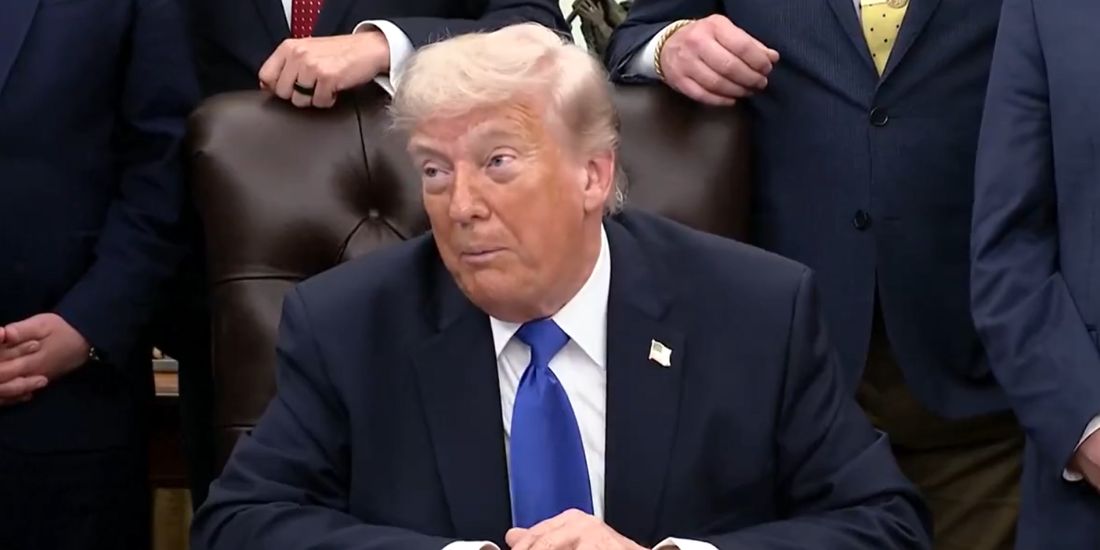
From using the alien terrorist removal court for the first time to record low border encounters, immigration is a whole new ball game under Trump.

The Alien Terrorist Removal Court
The Alien Terrorist Removal Court was created in 1996 under the Antiterrorism and Effective Death Penalty Act. The purpose of the court was to allow the Department of Justice to seek the deportation of noncitizens accused of terrorism. Under Trump the court was used for the first time ever to try Nazira Haji Zada, 47, an Afghan illegal immigrant accused of helping her son orchestrate a terror plot on behalf of ISIS.
Fining Illegal Immigrants at Broad Scale
According to the Department of Homeland Security, as of July there have been over $84 billion in civil fines issued against illegal immigrants that have refused to leave the United States. DHS has issued over 103,000 fines, with the fines being up to $998 per day. Although the US government has had the legal authority to issue these fines for decades, the Trump administration is the only admin that has actively employed systems to impose the fines at scale. The move has been unprecedented to incentivize illegal immigrants to leave the country.
TPS
The Trump administration has taken unprecedented action to stop the abuse of the Temporary Protected Status (TPS) immigration system. Around 1.8 million immigrants that previously had TPS status in the US have had that taken away and have been asked to return to their home countries. Although some presidents have allowed for TPS status for some countries to expire or end, such as Rwanda under former President Bill Clinton and Liberia under George W. Bush, Trump's actions have been unprecedented, with the administration ending TPS status for 13 different countries in Trump's second term.
Record Visa Revocations
During Trump's second term, there has been a record number of visa revocations. According to the State Department, over 175,000 visas given to foreign nationals have been revoked as they have violated terms of their visas. That is more than all visas revoked between 2001 and 2015 combined, which totaled 122,000. In the coming weeks, the Trump administration is also preparing to revoke the visas of 200,000 foreigners who have applied for or are currently seeking asylum, according to the AP, which would increase the record further.
Record Denaturalizations
During Trump's first 18 months in office during his second term, there have been 123 denaturalizations filed, per the DOJ. That figure is on par with the level of denaturalizations that took place between the years of 1967 and 2013, where fewer than 150 denaturalizations took place, per the NYU Law Review.
Record Low in Refugees Coming to US
According to Pew Research, during Trump's second term, refugee admissions have dropped to a record low. The Cato institute pins the figure at a drop of about 90 percent in comparison to the Biden administration. When Trump took office, he completely cut off the refugee program before starting it back up to admit South African refugees. The drop from December 2024 to March 2026 was 125,187 to 1,341 respectively.
Military at the Border
At the Southern border, the Trump administration has used the military to occupy vast stretches over his second term in office. The Department of War has designated hundreds of miles of public lands at the border to be temporary military installations. As a result, the military can detain people for trespassing on what has now been designated as a military installation. According to the AP, the zones cover around a third of the southern border. This has given the Trump administration more flexibility in detaining illegal immigrants crossing the border as well as created a deterrence for people to cross.
The Public Charge Rule Change
The Trump administration has expanded the use of the "Public Charge Rule" for immigration, a move that will place green card holders under greater scrutiny to not be reliant on US welfare programs. Under the Biden administration, the policy was narrowed on what factors immigration officers could look at to determine if a green card applicant could be admitted to the US based on if they would be a "public charge," or reliant on welfare programs. With that broadened, immigration officers can conduct case-by-case reviews to see if applicants have gotten benefits from the US government before, their health, and other factors. The change to the rule takes effect on September 18 this year.
Powered by The Post Millennial CMS™ Comments
Join and support independent free thinkers!
We’re independent and can’t be cancelled. The establishment media is increasingly dedicated to divisive cancel culture, corporate wokeism, and political correctness, all while covering up corruption from the corridors of power. The need for fact-based journalism and thoughtful analysis has never been greater. When you support The Post Millennial, you support freedom of the press at a time when it's under direct attack. Join the ranks of independent, free thinkers by supporting us today for as little as $1.
Remind me next month
To find out what personal data we collect and how we use it, please visit our Privacy Policy






Comments