
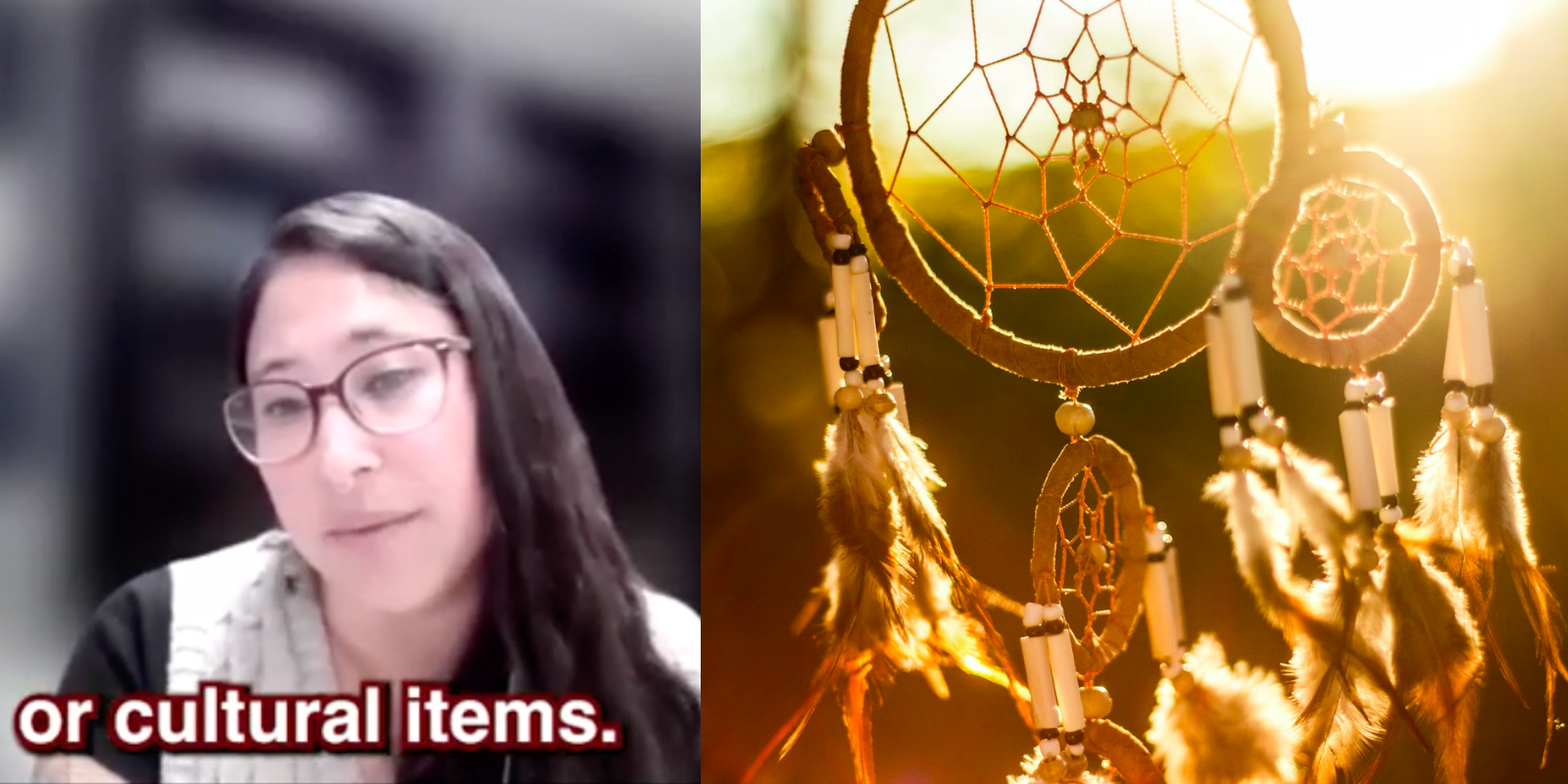
“Sometimes we are asked to periodically visit and talk to cultural items that may be considered relatives and shouldn’t be left alone or be so isolated."

Allison Fischer-Olson, UCLA’s repatriation coordinator and curator of Native American cultures at the Fowler Museum, described the requests during a webinar focused on NAGPRA compliance.
“Sometimes we are asked to periodically visit and talk to cultural items that may be considered relatives and shouldn’t be left alone or be so isolated,” she said.
NAGPRA, first enacted in 1990, governs how public institutions handle Native American human remains and certain cultural items. Originally focused on returning remains to descendants, the law has since expanded. In 2024, the Biden administration introduced regulatory changes, including what Fischer-Olson described as a new “duty of care.”
Under the updated rules, universities must consult tribes on “culturally appropriate storage, treatment, and handling of all ancestors and cultural items.” Institutions must also obtain “free prior and informed consent prior to any access, any exhibition, any research on NAGPRA eligible ancestors or cultural items,” she said.
When asked what “culturally appropriate care” entails, Fischer-Olson said tribes may request that staff not “open the box … unless a tribe is present,” and in some cases restrict access to tribe members only, even though the university owns and houses the materials.
“We do our best to implement as much as we can …” she said, adding, “Their communities know best.” The 2024 regulatory revisions also direct institutions to treat tribal knowledge as “expert knowledge. Previously, we would have relied on more traditional or Western lines of evidence,” Fischer-Olson said, citing anthropology, archaeology, and geography.
“At this point in NAGPRA, a tribe can come with their traditional knowledge… and we can consider their knowledge to be expert knowledge. That holds up, actually more strongly if you look at the regulations, than some of these previous lines of evidence that were required,” she added.
Fischer-Olson said repatriation efforts are ongoing across University of California campuses, with teams conducting searches to ensure compliance. "Each team on each campus is literally searching every room possible to make sure that there’s nothing… we leave behind,” she said.
Earlier this month, UCLA repatriated more than 700 Native American artifacts, including photo negatives, to one tribe.
Powered by The Post Millennial CMS™ Comments
Join and support independent free thinkers!
We’re independent and can’t be cancelled. The establishment media is increasingly dedicated to divisive cancel culture, corporate wokeism, and political correctness, all while covering up corruption from the corridors of power. The need for fact-based journalism and thoughtful analysis has never been greater. When you support The Post Millennial, you support freedom of the press at a time when it's under direct attack. Join the ranks of independent, free thinkers by supporting us today for as little as $1.
Remind me next month
To find out what personal data we collect and how we use it, please visit our Privacy Policy

Comments